
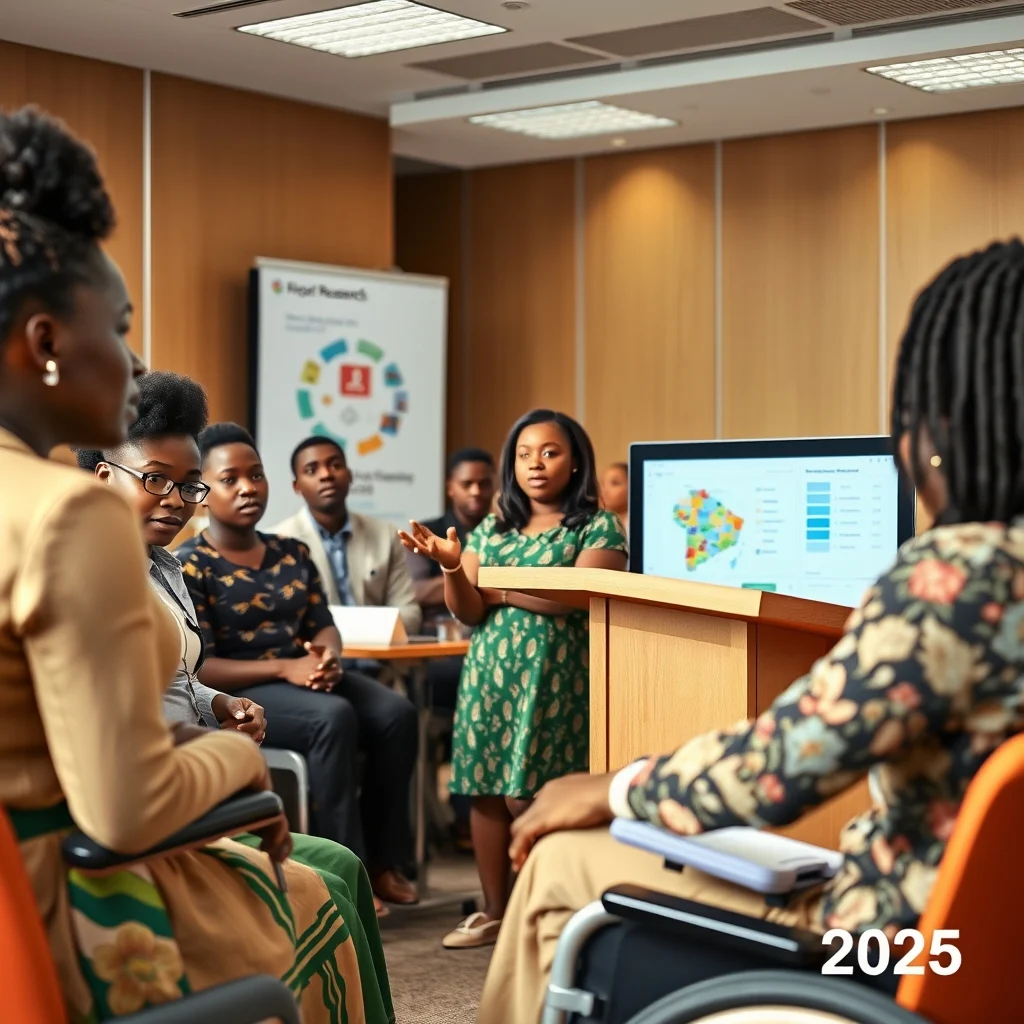
Young persons with disabilities in Ghana are demanding an end to tokenistic inclusion, calling for direct access to decision-making spaces, budget allocations, and funding mechanisms during the launch of the collaborative “Amplifying Voices” project in 2025. This initiative, spearheaded by FHL Group Africa and Community Desk International (CDI), highlighted persistent systemic exclusion, over-training without application, and invisibility in national budget planning, despite years of advocacy.
Context: The Persistent Struggle for Inclusion
For years, disability advocacy groups have strived to integrate persons with disabilities into mainstream society and governance. However, a significant gap remains between stated intentions and practical implementation. The “Amplifying Voices” project emerged from a recognition that young persons with disabilities are not a monolithic group, but a diverse community facing unique challenges based on gender, geography, the nature of their disability, and societal support systems.
Key Research Findings Unveiled
A qualitative research study, conducted in Accra using design research principles, identified four critical barriers hindering meaningful participation. These findings underscore the need for a fundamental shift in how disability inclusion is approached.
Leadership and Inclusion Gaps
Young persons with disabilities are consistently absent from crucial decision-making structures. The research emphasizes that inclusion must be intentionally designed into institutional frameworks rather than being an afterthought.
Funding and Budget Barriers
Disability inclusion initiatives are often deprioritized in national budgets. Participants urged sustained advocacy targeting Ghana’s Ministry of Finance to re-evaluate and shift funding priorities to better support this demographic.
Overemphasis on Training Without Application
A recurring issue identified is the pattern of providing extensive skills training without offering subsequent opportunities to apply these skills. This leads to frustration and diminishes the overall impact of training programs.
Inadequate Infrastructure and Accessibility
Physical spaces and public institutions continue to present significant accessibility challenges. Furthermore, assistive technologies are either underutilized or remain out of reach for many, limiting independence and participation.
Moving Beyond Tokenism: The “Amplifying Voices” Initiative
The “Amplifying Voices” project, launched in 2025, aims to transition disability inclusion from superficial consultation to genuine, rights-based participation. The initiative advocates for embedding inclusion throughout the entire lifecycle of programs, from initial design to final evaluation.
Key strategies include leveraging social media to foster engagement with young persons with disabilities and strengthening monitoring systems with clear accountability indicators. A concrete proposal gaining traction is the implementation of a direct funding card system, akin to an ATM card. This system would facilitate transparent and direct financial support to beneficiaries, bypassing intermediaries and fostering greater independence.
Expert Perspectives and Data
Patience Entsie, Program Manager at FHL Group Africa, highlighted the project’s origin in the urgent need to recognize the diversity within the disability community. The research presenter stressed that policies and programs are more effective when shaped by the lived experiences of those they aim to serve, translating evidence into actionable change.
Kwasi Manu, Co-Founder of Community Desk International, emphasized the critical need for research findings to translate into binding actions. A representative from the Ghana Federation of Disability Organisations (GFD) echoed this sentiment, urging funders to support the implementation of the recommendations, stating, “This research gives us the evidence base we have long needed to advocate with authority.”
Implications for the Future
The “Amplifying Voices” project’s first phase focused on generating crucial evidence. Future efforts will prioritize policy dialogue, cross-sector engagement, and disseminating findings to both public and private stakeholders. The push for direct funding mechanisms and integrated inclusion strategies signals a significant shift towards empowering young persons with disabilities and ensuring their voices are not just heard, but actively shape policy and resource allocation in Ghana.








Leave a Reply