
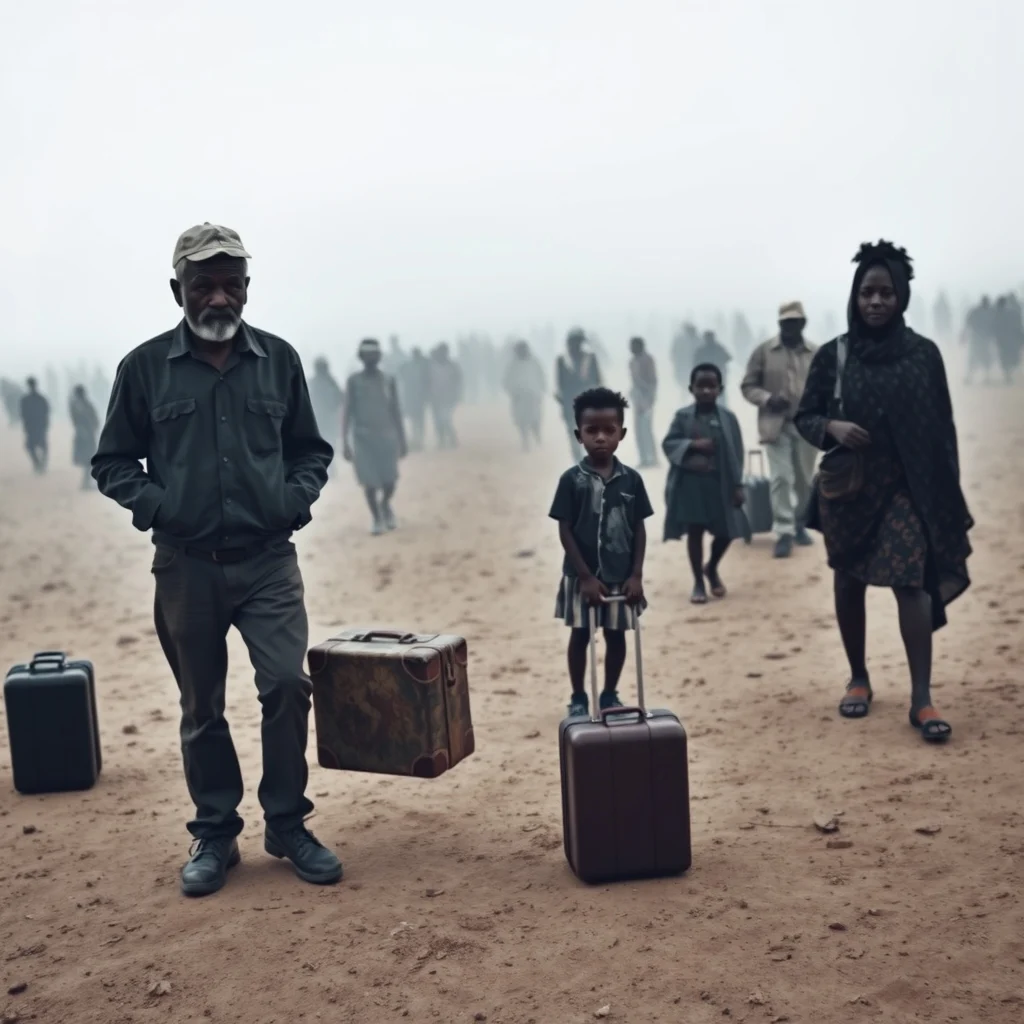
President Donald Trump has increased the annual refugee admissions ceiling by 10,000, a move intended to permit a greater number of white South Africans to immigrate to the United States. The decision, formalized in a presidential determination dated May 21, cites an emergency situation for white South Africans of Afrikaner ethnicity, alleging “incitement of racially motivated violence” by the government and political parties in the majority-Black nation.
This action comes after President Trump initially froze refugee admissions globally upon taking office in January 2025. Weeks later, a program was initiated specifically to admit white South Africans, prioritizing them over thousands of other refugees from Africa, Asia, and elsewhere. This initiative has been viewed as a departure from established humanitarian norms for refugee protection.
Context of South Africa’s Refugee Policies
The Trump administration has admitted a minimal number of non-South African refugees this fiscal year, with government figures indicating only three such admissions. This contrasts with the administration’s focus on white South African refugees.
South Africa’s foreign ministry has refuted the claims of persecution. Spokesperson Chrispin Phiri stated that the assertion of systemic persecution against white Afrikaners is “entirely without foundation.” The presidential determination did not provide specific examples of the South African government allegedly inciting racial violence.
A State Department spokesperson declined to confirm the 10,000-person increase to the refugee cap. However, they affirmed that the program is a presidential priority and that refugee levels remain at the President’s discretion.
Details of the Refugee Program Expansion
President Trump had initially set the refugee ceiling at a record low of 7,500 for the fiscal year 2026, which concludes on September 30. Despite this low initial cap, approximately 6,000 white South Africans had already been admitted by the end of April, according to government data.
The increase in the refugee ceiling to 17,500 signifies a significant adjustment to the administration’s immigration policy concerning this specific group. Reuters had previously reported on the planned expansion of this program in April.
Historical Background and Tensions
South Africa’s history includes the apartheid era, which ended in 1994. During this period, the society was racially segregated, with distinct facilities and policies for Black, white, Asian, and ‘colored’ (mixed-race) populations. Today, Black South Africans constitute approximately 81% of the population, while white South Africans, including Afrikaners, represent about 7%, based on 2022 census data.
Tensions surrounding the U.S. refugee program escalated in December when South African authorities raided a building in Johannesburg where U.S. staff were processing refugee applications. Following diplomatic meetings between the two nations, South Africa agreed to permit the U.S. program to continue its operations.
In the presidential determination to expand the program, President Trump cited “new disruptions” to refugee operations in South Africa as a factor contributing to the urgent need to admit more Afrikaners. The administration is reportedly interested in bringing white South African refugees to the White House for World Refugee Day on June 20, according to a U.S. official and internal government communications.
Implications and Future Outlook
This policy shift highlights a continued focus on specific demographic groups within the U.S. refugee system, raising questions about broader immigration priorities and international humanitarian commitments. The administration’s justification, based on alleged government incitement of violence, has been strongly denied by South Africa, setting the stage for potential diplomatic friction.
The coming months will be critical in observing the actual number of refugees admitted under the expanded ceiling and whether similar programs are considered for other groups facing complex geopolitical or social challenges. The response from international human rights organizations and other nations will also be a key indicator of the global reception to this targeted approach to refugee admissions.





Leave a Reply