
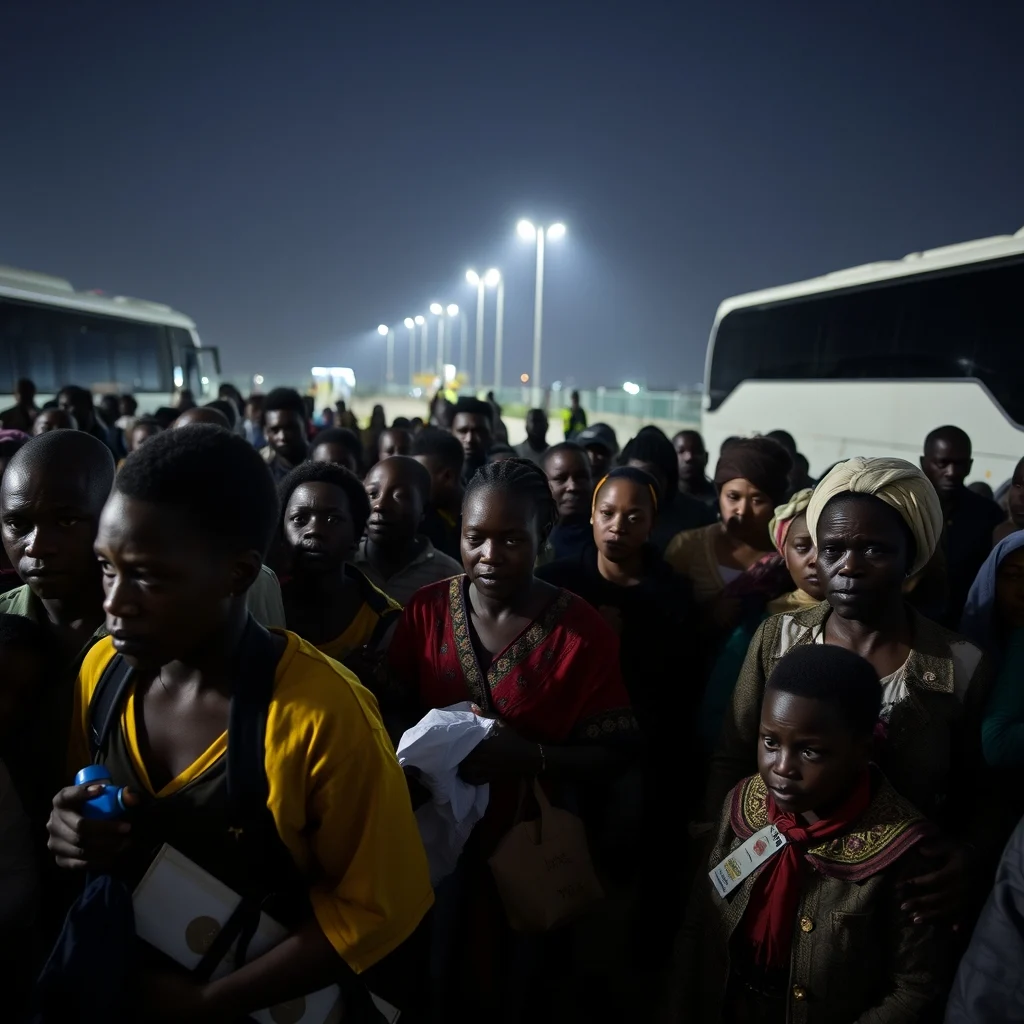
Ghanaian government authorities began repatriating the first group of 800 registered citizens from South Africa on Wednesday morning, responding to escalating anti-immigrant sentiments and fears of renewed xenophobic violence. Dozens of buses chartered by the Ghanaian embassy were observed transporting passengers, including men, women, and children of all ages, to Johannesburg’s OR Tambo International Airport in the early hours of the morning. A smaller contingent, accompanied by police, arrived separately.
Context of Rising Tensions
The repatriation follows a recent wave of protests against undocumented immigration across South African cities. These demonstrations have been organized by a group named ‘March and March,’ which advocates for immigration reform and has set a June 30 deadline for illegal immigrants to leave the country. The protests, which began in Durban and have spread to other provinces, have fueled concerns about a potential resurgence of the xenophobic violence that has plagued South Africa in the past.
Repatriation Efforts Underway
Ghanaian embassy officials confirmed that an initial 300 individuals departed on Wednesday, with the remaining registered citizens undergoing screening for subsequent flights. Few of the departing passengers were willing to speak to the media, but one individual, Rudolph, who had lived in South Africa for 10 years, cited the protests as the reason for his departure.
“It’s not comfortable for us to stay here anymore, so we have to go. I think we will find peace at home,” Rudolph told the BBC, expressing his intention never to return to South Africa. He voiced concerns that the June 30 deadline could incite further violence.
Government Response and Support
Benjamin Quashie, the Ghanaian High Commissioner, stated that the government’s primary concern is the safety of its citizens. “The Ghanaian government listened to the plight of its citizens in South Africa, who felt that their lives were in danger, who felt like the economic activity that they were engaging in had come to a standstill, who felt unwelcome in this country,” Quashie explained. He emphasized the government’s responsibility to care for its citizens abroad.
Regarding undocumented Ghanaians, Quashie mentioned that the government has a reintegration strategy in place. “The government is willing to establish them in whatever business they were doing in South Africa. In a way, we’re also helping the South African economy, because it’s clear that some of them are undocumented. So taking them out of here will let them know that we are not people who condone undocumented people in countries,” he added.
Historical Precedents and Political Undercurrents
The current wave of anti-immigrant sentiment is being analyzed by some experts as potentially linked to South Africa’s upcoming local elections in November. South Africa has a history of xenophobic violence, with significant incidents in 2008, when 62 foreign nationals were killed, and in 2019, which resulted in at least 12 deaths. The organizers of the recent protests maintain that their actions have been peaceful.
The South African government has condemned criminal acts against foreigners while acknowledging the need to address illegal immigration. Protesters argue that undocumented migrants place a strain on public services.
Future Implications and What to Watch
The ongoing repatriation highlights the vulnerability of foreign nationals in South Africa during periods of heightened social and political tension. The effectiveness of Ghana’s reintegration strategy will be crucial for the returning citizens. Observers will be watching closely to see if the upcoming local elections exacerbate anti-immigrant rhetoric and actions, and whether South African authorities can effectively balance the concerns of their citizens with the rights and safety of foreign nationals. The response of neighboring countries and international bodies to such situations will also be a key development to monitor.










Leave a Reply