
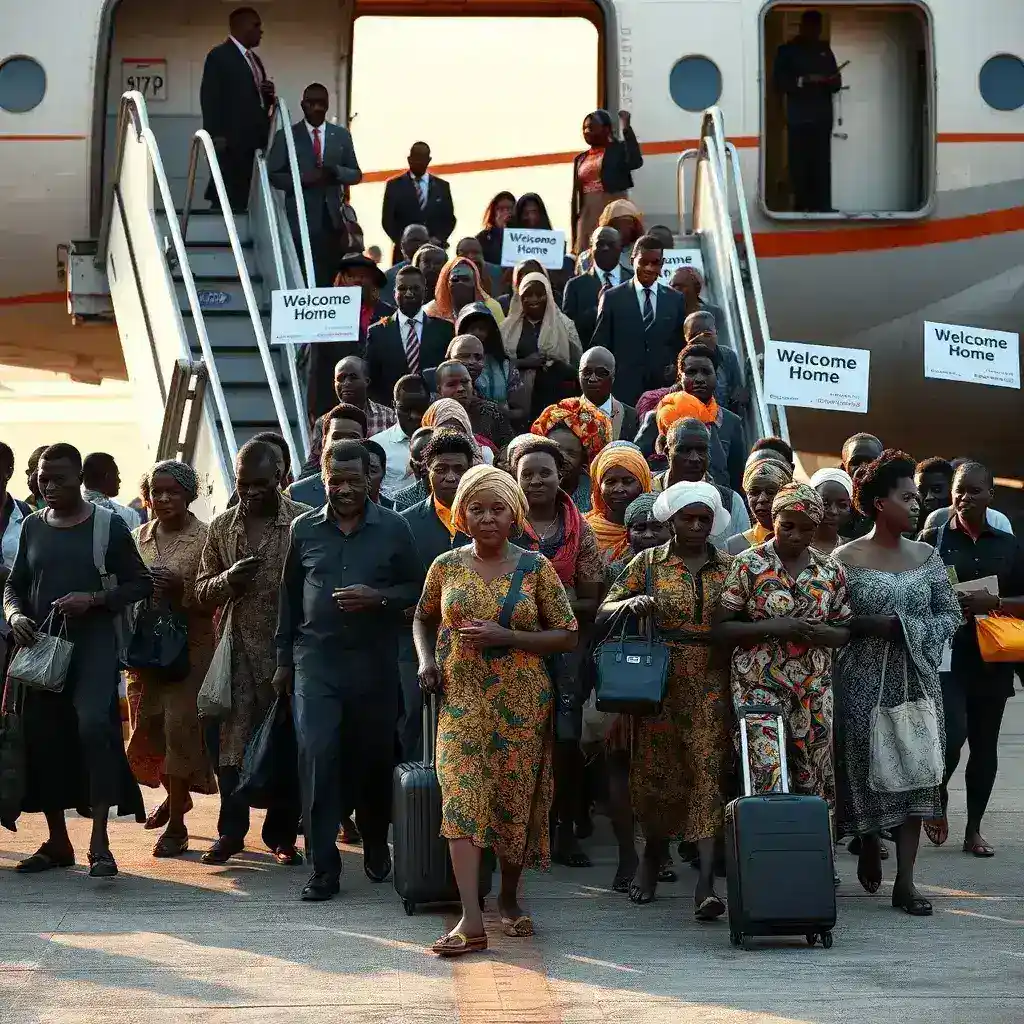
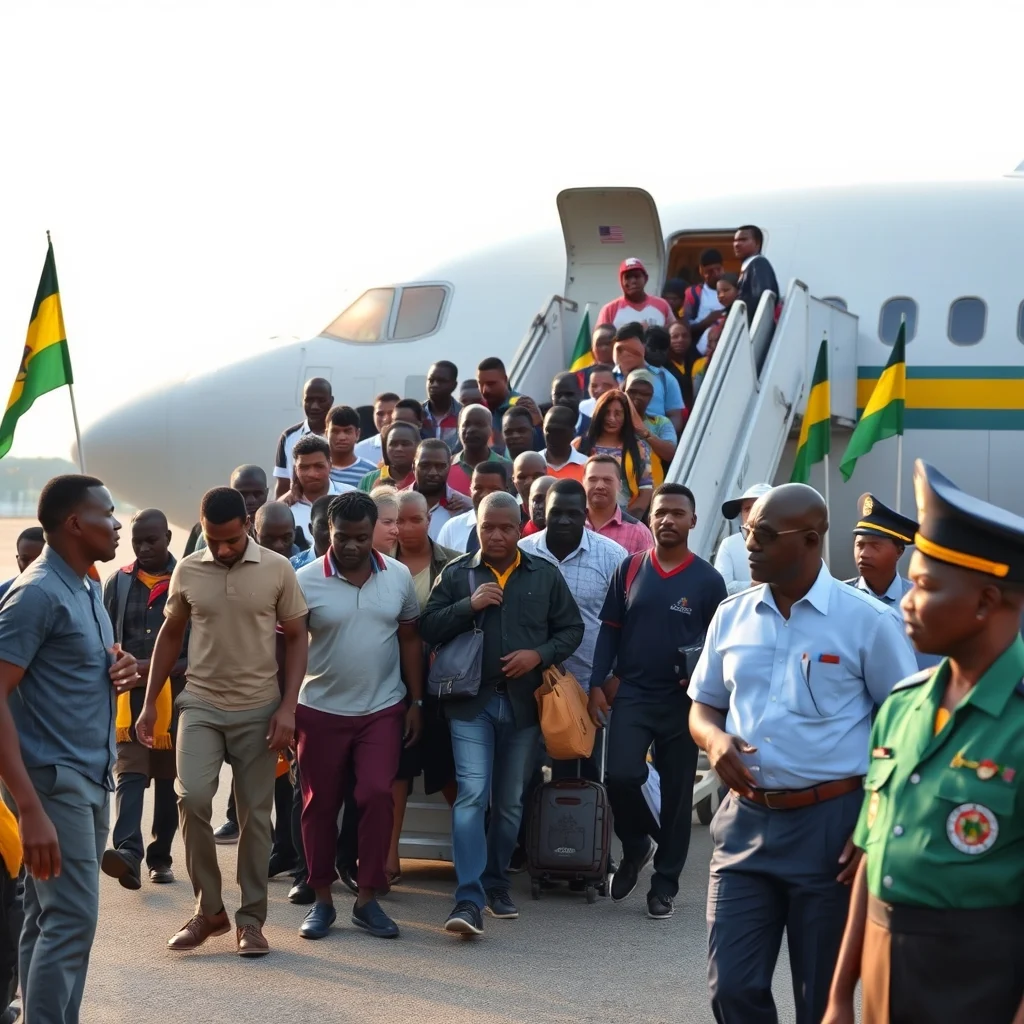
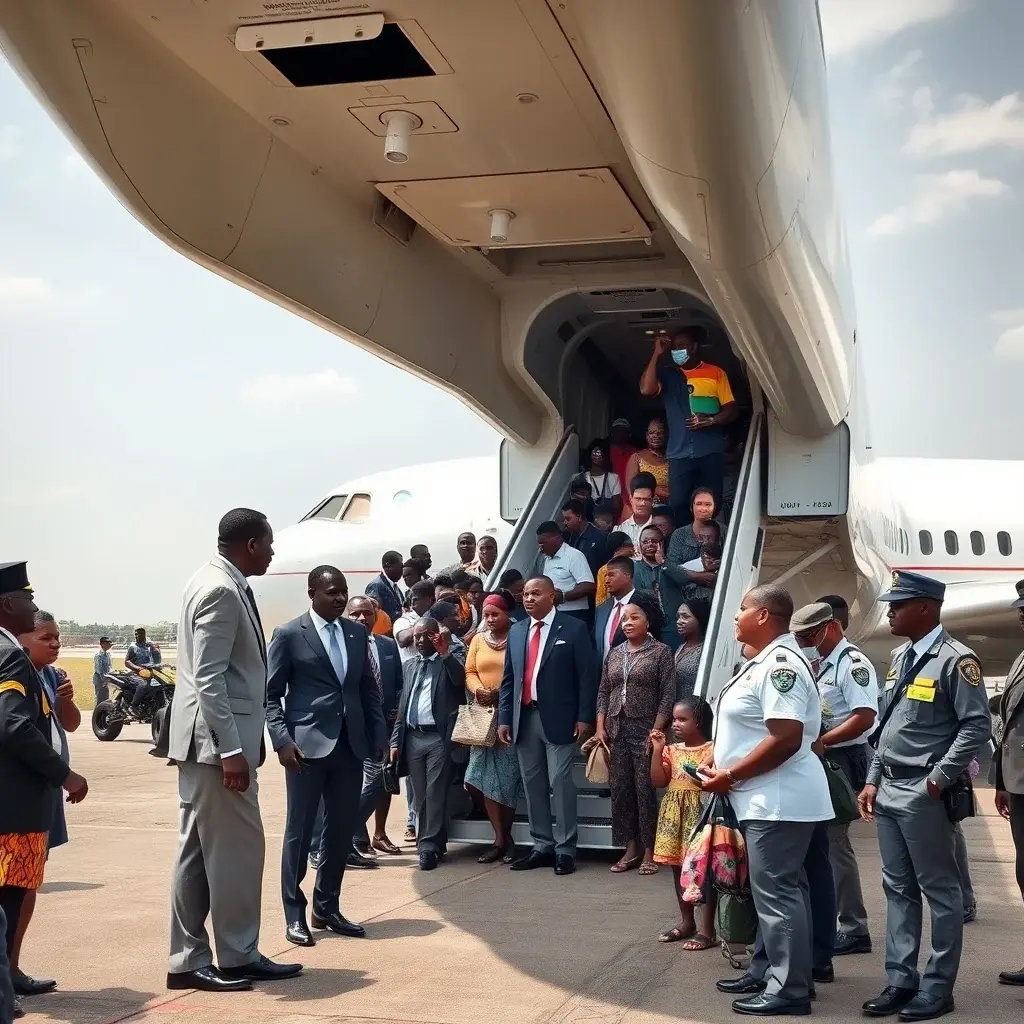
The first group of 300 Ghanaian citizens, fleeing xenophobic violence in South Africa, arrived at Accra International Airport on Wednesday, May 27, after the government pledged support for their safe return and reintegration.
The evacuation follows a surge in xenophobic incidents targeting foreign nationals in South Africa, prompting the Ghanaian government to offer assistance to any citizen wishing to return home.
Government Support Measures
Upon arrival, the evacuees are set to receive a comprehensive support package designed to ease their transition back into Ghanaian society. This package includes a “Welcome Home Financial Package” for immediate relief.
Transportation assistance will be provided to help the returnees reach their respective destinations across Ghana. This aims to alleviate the immediate logistical challenges they may face.
Further support comes in the form of a reintegration allowance, intended to help individuals rebuild their lives after a distressing departure from South Africa.
Psychosocial and Economic Support
Recognizing the trauma associated with the attacks, the Ministry of Foreign Affairs has assured that free psychosocial support services will be available. This acknowledges the emotional toll such experiences can have on victims.
In an effort to facilitate long-term stability, returnees will be registered in a special database. This initiative aims to connect them with employment opportunities and startup support programs within Ghana.
Government Commitment to Citizen Welfare
The Ministry of Foreign Affairs emphasized that these interventions underscore the government’s unwavering commitment to protecting the welfare of its citizens abroad. The action is framed as a crucial response to a crisis situation.
This proactive measure highlights the government’s dedication to ensuring the safety and well-being of Ghanaians, regardless of their location.
Broader Context of Xenophobia in South Africa
Xenophobic attacks in South Africa are not new, with recurring incidents often fueled by economic anxieties and social tensions. Foreign nationals, including those from other African countries, have frequently been targets of such violence.
These attacks have led to significant displacement, loss of property, and in tragic cases, loss of life. International bodies and human rights organizations have repeatedly called on South African authorities to take stronger action to prevent and prosecute perpetrators of xenophobic violence.
The current wave of attacks has renewed concerns about the safety of foreign nationals residing and working in the country, prompting diplomatic interventions from affected nations.
Implications for Returnees and Ghana
For the 300 Ghanaians returning, the immediate future involves accessing the promised support and navigating a return to life in their home country under difficult circumstances. The success of the reintegration programs will be crucial for their long-term well-being.
The government’s response sets a precedent for how it will handle future crises involving its citizens abroad. The effectiveness of the financial, psychosocial, and employment support will be closely watched.
This event also raises questions about the broader implications for Ghana-South Africa relations and the ongoing challenge of xenophobia across the African continent. The ability of Ghana to successfully reintegrate these citizens will be a key indicator of its capacity to support its diaspora in times of crisis.
Looking Ahead
The focus will now shift to the implementation and accessibility of the support services promised to the evacuees. Observers will be monitoring how effectively the government connects returnees with job opportunities and startup programs.
Furthermore, the situation in South Africa will continue to be monitored closely, with potential for further evacuations if the attacks persist. Diplomatic efforts to address the root causes of xenophobia in South Africa will also remain a critical area to watch.






Leave a Reply