
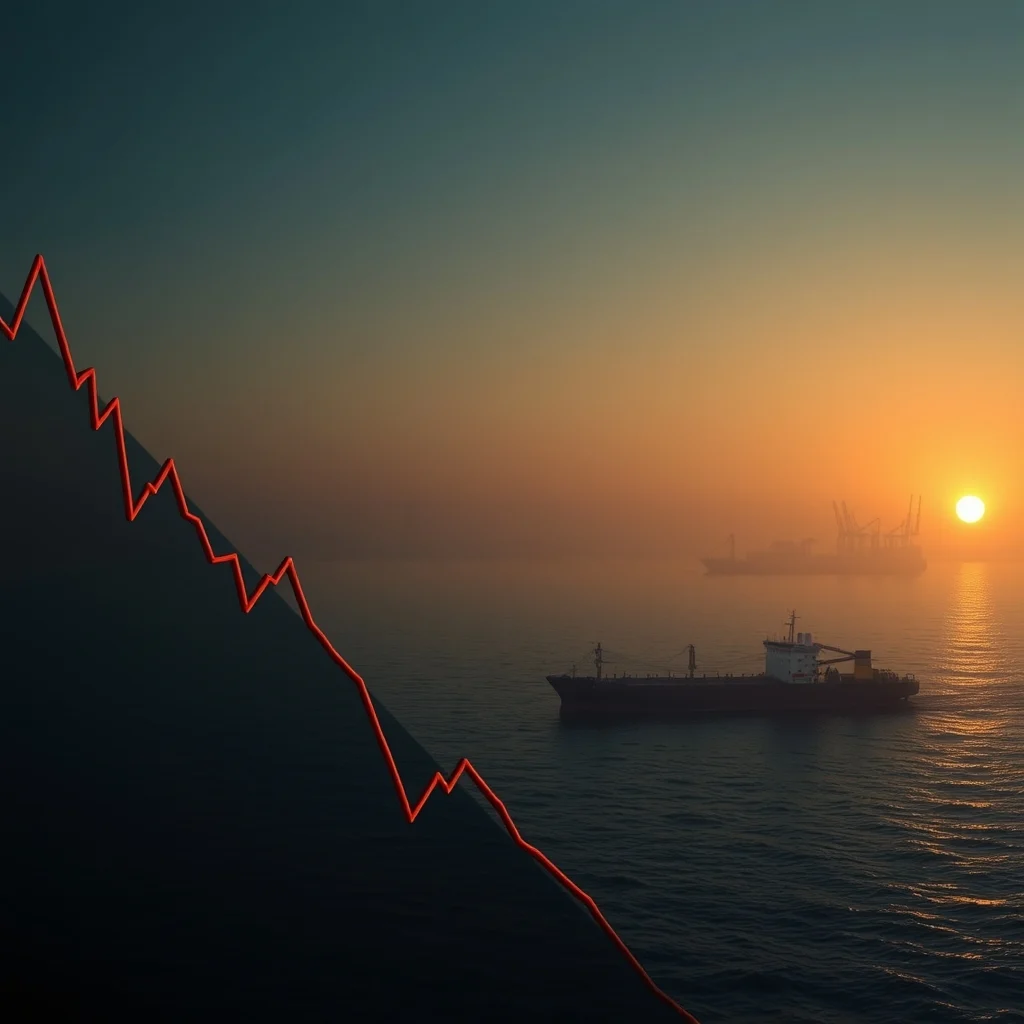
Oil futures experienced a significant drop of over 1% on Friday, marking their steepest weekly decline since early April. This downturn followed reports suggesting a potential agreement between the U.S. and Iran to extend a ceasefire, though the deal remained unfinalized. Brent crude futures for July fell 1.1% to $92.67 a barrel, while U.S. oil futures dropped 1.4% to $87.64 a barrel.
Context: Geopolitical Tensions and Market Volatility
The oil market has been highly volatile in recent weeks, reacting to conflicting signals regarding the ongoing conflict involving the U.S., Israel, and Iran. Prices have swung considerably as traders assess the potential implications of a de-escalation, particularly concerning the Strait of Hormuz.
The Strait of Hormuz is a critical maritime chokepoint, responsible for the transit of approximately one-fifth of the world’s oil and liquefied natural gas supplies. Any disruption or reopening of this vital waterway has an immediate and profound impact on global energy markets.
Details of the Reported Agreement
Sources informed Reuters on Thursday that the U.S. and Iran had reached a preliminary accord to extend a ceasefire. Crucially, this agreement reportedly includes provisions for lifting restrictions on shipping through the Strait of Hormuz. However, U.S. President Donald Trump has yet to give his final approval, and Iranian state media has indicated that the deal has not yet been finalized.
This developing news has injected uncertainty into the market. The narrative of a potential end to hostilities and the reopening of the Strait of Hormuz has fueled expectations of lower oil prices.
Expert Analysis and Market Sentiment
IG analyst Tony Sycamore commented on the market sentiment, stating, “Consensus remains the conflict is over, and a deal is coming. As long as this narrative holds, crude oil has room to extend its decline toward trendline support in the low $80s.” This suggests that if the perception of an impending resolution persists, further price decreases are anticipated.
The market’s reaction underscores the sensitivity of oil prices to geopolitical developments. The potential reopening of the Strait of Hormuz, in particular, is seen as a significant factor that could alleviate supply concerns.
Challenges to Recovery and Supply Chain Concerns
While a reopening of the Strait would offer some immediate relief, analysts caution that a full recovery in oil supply may not be instantaneous. ING analysts noted in a research note that upstream oil production has fallen significantly since the conflict began.
Producers have been forced to shut down operations to manage storage constraints. ING anticipates that the recovery in upstream production will be a gradual process rather than an immediate surge.
Furthermore, refineries in the region face their own challenges in ramping up output. Some of this critical infrastructure was reportedly targeted during earlier stages of the conflict, necessitating repairs and a phased return to full operational capacity. This suggests that even with the Strait reopened, the flow of refined products might lag behind.
Implications for the Energy Market and Consumers
The potential easing of tensions and the prospect of increased oil flow through the Strait of Hormuz could lead to lower gasoline prices for consumers in the coming months. A more stable supply chain would reduce the risk premiums currently embedded in oil prices.
For the energy industry, a prolonged period of lower prices could impact investment decisions in exploration and production. However, the gradual recovery of supply and potential lingering geopolitical risks mean that market participants will be closely monitoring further developments.
The coming weeks will be crucial in determining whether the reported ceasefire agreement is finalized and what the actual pace of recovery will be for both shipping through the Strait of Hormuz and regional oil production. Any deviation from the current narrative of de-escalation could quickly reverse the recent price declines.










Leave a Reply