
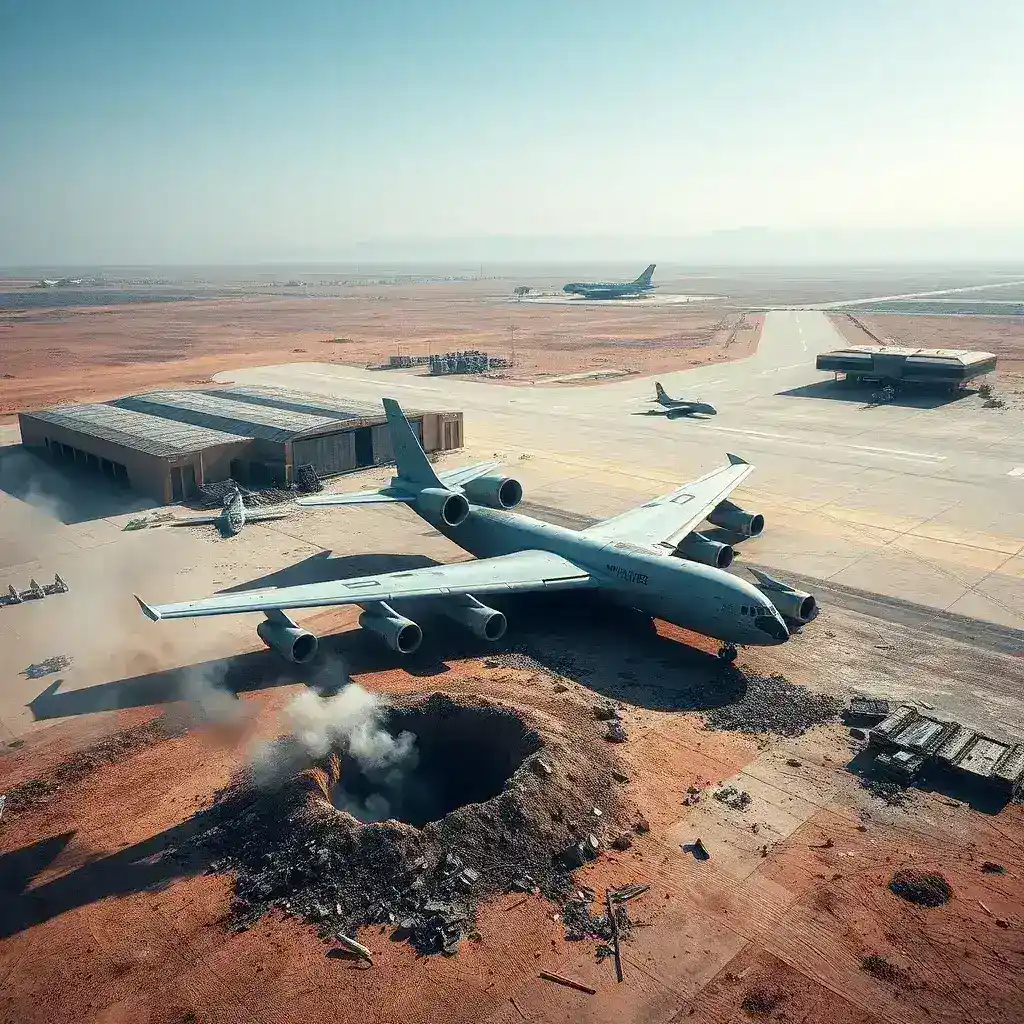
Satellite imagery and video analysis by BBC Verify reveal that Iran has damaged approximately 20 US military sites across eight Middle Eastern countries since late February, indicating a more widespread impact than publicly disclosed. These strikes, targeting key facilities in retaliation for US-Israeli actions, have inflicted millions of dollars in damage to advanced air defence systems, aircraft, and radar installations.
Context of Retaliation
The Iranian attacks are framed as a direct response to what Tehran describes as US-Israeli strikes within Iran and Lebanon over the preceding three months. The Pentagon has reported striking over 13,000 targets in Iran during what it terms ‘Operation Epic Fury’. Iran’s Supreme Leader, Mojtaba Khamenei, has publicly asserted that the region is no longer a secure environment for American bases.
Undermining Official Narratives
While the White House has suggested Iran’s military capabilities have been significantly degraded, analysts contend that the observed damage at US facilities points to more precise and effective Iranian counter-offensives than officially acknowledged. A US defense official declined to comment on the BBC Verify findings, citing operational security.
Restricting Information Flow
The US has reportedly sought to limit open-source intelligence by requesting satellite imagery provider Planet to impose an indefinite restriction on new images of Iran and much of the Middle East. Planet stated this measure was to prevent its imagery from being used by adversaries to target allied personnel.
Scope of Damage
BBC Verify, utilizing imagery from alternative international providers and older Planet data, has documented damage at facilities in Saudi Arabia, the UAE, Qatar, Kuwait, Iraq, Jordan, Bahrain, and Oman. Some analysts estimate the number of hit bases could be as high as 28.
High-Value Assets Targeted
Among the critical hardware reportedly damaged are three state-of-the-art Terminal High Altitude Area Defense (THAAD) anti-ballistic missile systems. These systems, located at airbases in the UAE and Jordan, are part of a global network with each battery costing around $1 billion and requiring a crew of approximately 100 personnel. Interceptors for these systems are valued at roughly $12.7 million each.
Vice Admiral Mark Mellett, former head of the Irish Defence Forces, described these THAAD batteries as central to a complex regional defense network that is not easily or quickly replaceable.
Air and Infrastructure Losses
Satellite analysis also indicates significant damage to US refuelling and surveillance aircraft at Prince Sultan Airbase in Saudi Arabia, with visible craters and damaged planes, including an E-3 Sentry surveillance aircraft estimated to cost up to $700 million to replace.
At Ali Al Salem Airbase and Camp Arifjan in Kuwait, Iranian attacks have reportedly destroyed fuel storage bunkers, aircraft hangars, and troop accommodation. Extensive damage to satellite communications hardware has also been identified at Camp Arifjan.
Financial and Material Costs
While the total cost of the damage is difficult to quantify, a Pentagon estimate from May placed the cost of ‘Operation Epic Fury’ at $29 billion, likely including substantial repair and replacement expenses. Democrats suggest this figure may be an underestimate.
Reports indicate that at least 42 aircraft, including F-15s, F-35s, MQ-9 Reaper drones, and an A-10 attack plane, have been destroyed or damaged since February.
Evolving Iranian Tactics
In contrast to the high-value US assets, Iran has reportedly employed inexpensive and readily replaceable drones in its strikes. Experts note a shift in Iranian tactics from initial large-scale missile barrages aimed at overwhelming defenses to more precise, targeted attacks designed to hit high-value assets.
Dr. Kelly Grieco of the Stimson Centre observed that Iran initially focused on volume but quickly transitioned to smaller, more accurate salvos to conserve resources and target specific vulnerabilities.
Complacency and Vulnerability
An analyst from MAIAR suggested that the US military exhibited early-war complacency by not adequately moving aircraft out of range as Iranian tactics evolved, noting that Prince Sultan Airbase had been targeted previously before the aircraft were ultimately damaged.
Future Implications
Supreme Leader Khamenei reiterated Iran’s stance that the region will no longer be a safe haven for American military presence, a statement made shortly before renewed tensions saw Iran claim responsibility for targeting a US base following fresh US strikes. Dr. Grieco warned that if the fragile ceasefire breaks down, existing damage to US bases highlights the vulnerability of facilities across the Gulf. Furthermore, significant consumption of US and partner air defense stocks means any renewed Iranian assault would be met with considerably fewer interceptors than at the conflict’s outset.










Leave a Reply