
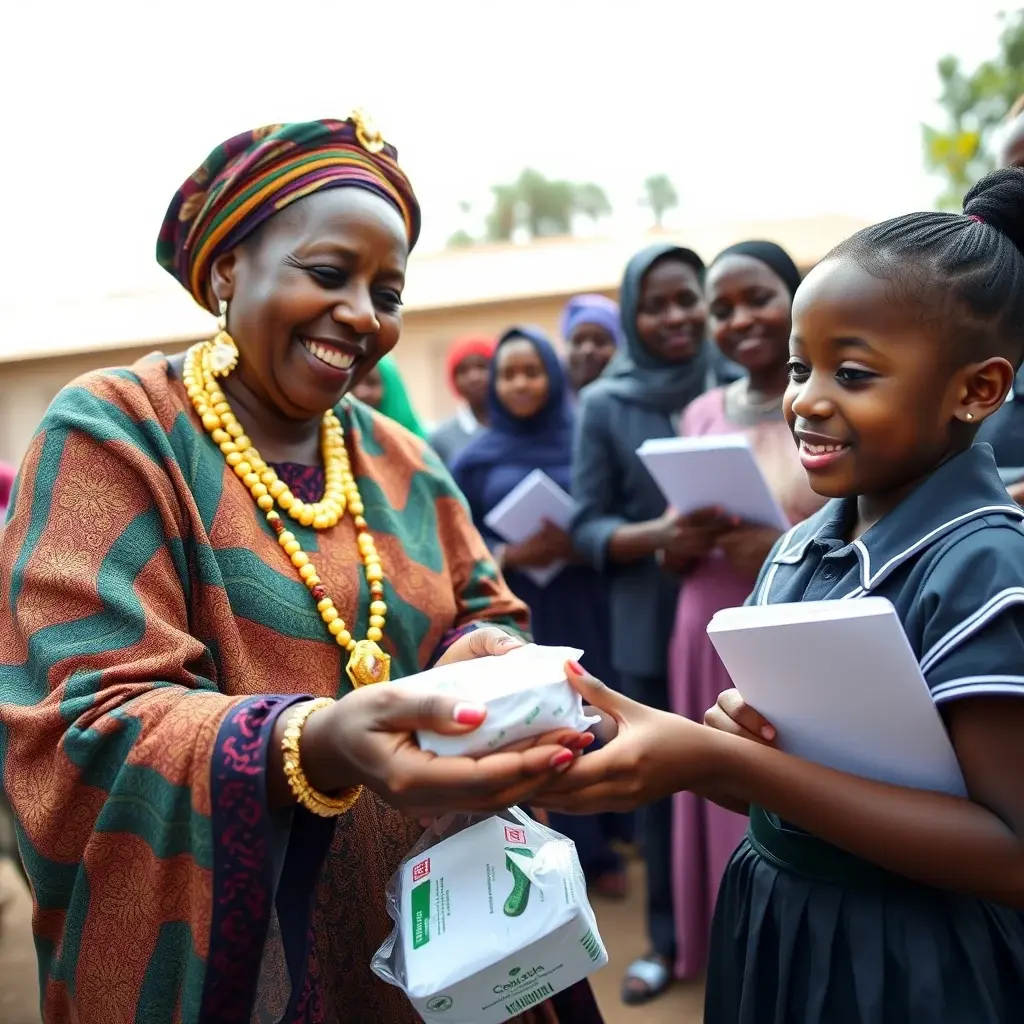
Queen Mother Nana Adjoa Amowah II led a significant community health outreach in Srafa-Aboano, Ekumfi District, Central Region on Wednesday, coinciding with World Menstrual Hygiene Day. The event aimed to combat menstrual stigma and provide essential resources to hundreds of schoolgirls from local Junior High Schools, who received free sanitary pads and exercise books.
Community-Led Initiative Tackles Menstrual Stigma
The initiative, organized by the queen mother’s palace in collaboration with the Ekumfi Queen Mothers Association and the Ekumfi District Health Directorate, marked the first of its kind in the community. Residents of Srafa-Aboano turned out in large numbers to support the program, which combined product distribution with vital educational sessions designed to dismantle long-standing taboos surrounding menstruation.
Nana Adjoa Amowah II explained the deliberate choice to host the event in Srafa-Aboano. The queen mother stated that the location provided a supportive environment for schoolchildren and parents to openly discuss menstrual hygiene. She highlighted the critical need for accessible reproductive health information in rural areas, emphasizing that bringing these conversations into the community helps to reduce shame and encourages girls to seek knowledge.
Education and Dignity at the Forefront
A key component of the outreach was an educational session led by Stella Opoku, a nursing officer from the Ekumfi District Health Directorate. Ms. Opoku guided the schoolgirls through practical lessons on proper menstrual hygiene practices. Topics covered included the correct use and safe disposal of sanitary products, maintaining personal cleanliness, and effective methods for managing menstrual discomfort.
For Nana Adjoa Amowah II, the distribution of sanitary pads was intrinsically linked to a broader mission. She articulated that the session was about more than just providing supplies; it was about imparting knowledge, restoring dignity, and assuring young girls that menstruation is a normal and manageable bodily function. The queen mother believes that understanding one’s body empowers girls with confidence.
Addressing Affordability and Misinformation
Parents in the community expressed that the program addressed a significant gap, as many households face financial challenges in affording monthly sanitary supplies. Community members described the outreach as timely, noting that persistent stigma and misinformation often lead to girls missing school or resorting to unsafe materials during their periods.
By conducting the program at the community level, Nana Adjoa Amowah II aimed to normalize conversations about menstruation. The initiative also sought to involve boys, parents, and teachers as active participants in finding solutions to menstrual challenges.
Global Context of World Menstrual Hygiene Day
World Menstrual Hygiene Day, observed annually on May 28, serves as a global platform to raise awareness about the social and economic barriers girls and women encounter due to menstruation. Its objectives include promoting access to safe, hygienic menstrual management methods and advocating for an end to stigma worldwide.
Future Commitments to Menstrual Health
Following the successful event, Nana Adjoa Amowah II pledged that the Srafa-Aboano palace would continue its commitment to menstrual health. Future plans include ongoing partnerships with health professionals and education stakeholders to conduct regular sensitization programs. The goal is to ensure that no girl in the community is hindered in her education or daily life due to menstruation.
The initiative highlights a growing trend of traditional leaders actively engaging in public health issues, leveraging their influence to address socio-cultural barriers and improve community well-being. The focus on education alongside material support underscores a holistic approach to menstrual health management.







Leave a Reply