
Accra, Ghana – A stark disconnect exists between Ghana’s economic growth and the skills of its youth, with the nation’s Technical and Vocational Education and Training (TVET) financing model failing to equip students with the competencies demanded by employers, according to Kofi Asare, Executive Director of Africa Education Watch. The warning comes amidst persistent challenges in the TVET sector, despite government efforts to expand access and improve quality.
Skills Mismatch Hinders Economic Absorption
Despite Ghana’s economy growing by 6 percent in 2025, over 1.3 million young Ghanaians between the ages of 15 and 35 are classified as Not in Employment, Education, or Training (NEET). Asare highlighted this paradox at the International Conference on Education & Humanities, arguing that the growth is not sufficiently “skills-rich,” indicating a failure to align the supply of skills with labour market demands.
The economic expansion has been largely driven by the services and extractive industries, which tend to have weaker employment effects compared to manufacturing. This structural failure, Asare contends, results in a significant skills mismatch, leaving many graduates unprepared for available job opportunities.
Inadequate Funding Plagues TVET Institutions
A core issue identified is the severe underfunding of TVET institutions. Asare stated that these institutions are expected to deliver world-class training on “poverty-level budgets.” While public pre-tertiary TVET enrolment has seen a significant rise, from 32,203 in the 2020/21 academic year to 72,200 in 2025/26, this expansion has not been matched by adequate resources.
The government has introduced a National TVET Policy framework and is working towards establishing a dedicated TVET Fund. However, the current infrastructure and funding levels are insufficient to accommodate the growing student population. Although youth aged 15-35 constitute 36 percent of Ghana’s population, only about 14 percent of secondary school students are enrolled in TVET programmes.
“The door has been opened, but the rooms inside are still not big enough, not well-equipped enough, and not funded well enough to serve the people walking through that door or assure those waiting outside of quality access,” Asare explained.
Gender Disparities Persist
The TVET sector also grapples with significant gender imbalances. Men account for over 73 percent of TVET enrolment, a disparity that Asare described as a critical oversight. “TVET expansion that does not confront gender-based barriers is incomplete,” he asserted, calling for a more inclusive approach.
The GHS33 Funding Gap: A Critical Deficit
A particularly alarming aspect of the financing model is the GHS33 annual allocation per student for practical training materials. This amount is drastically insufficient when compared to the actual cost of training. Figures presented by Asare indicate that training a student in catering or welding costs approximately GHS9,000 annually, while subjects like plumbing, electrical installation, fashion, and carpentry require around GHS6,000 per year.
The average actual cost across various trades is estimated at GHS6,500 per learner annually, leaving a staggering 94 percent financing gap. This shortfall directly impacts the quality of education. Institutions are mandated to provide 20 practical sessions per year to meet Competency-Based Training standards, but current funding only allows for about six.
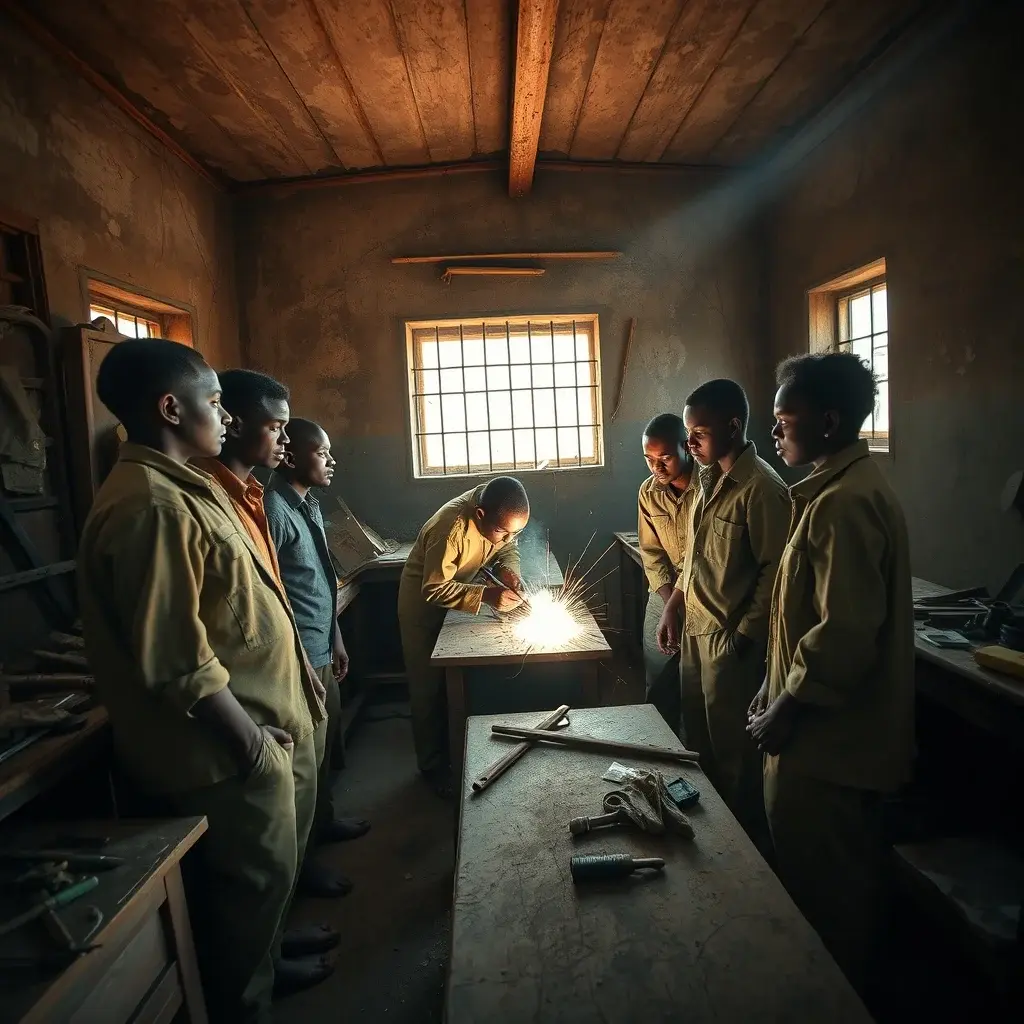
The lack of resources forces institutions to compromise on hands-on learning. Instead of dividing large classes into smaller groups for practical exercises, schools can only afford materials for a single demonstration for up to 60 students. “Sixty students watching one instructor is not skills training – it is a spectacle,” Asare criticized.
Employers Report Widespread Skills Gaps
The consequences of these financing challenges are evident in the preparedness of TVET graduates. A joint study by ACET and Eduwatch revealed that 80 percent of employers identify practical training gaps as their primary hiring challenge. Additionally, 70 percent cited deficiencies in soft skills, 40 percent pointed to a skills mismatch, and 30 percent noted graduates’ outdated knowledge of technological trends.
“In simple terms, we are training people for a market we are not listening to, with tools we cannot afford to buy, for skills that companies tell us are not job-ready,” Asare summarized. The study also found that fewer than 30 percent of TVET institutions receive crucial labour market information from the government.
Infrastructure and Digital Deficits Compound Challenges
Beyond funding, TVET institutions face significant infrastructure shortages. Data from the Ghana TVET Service indicates a need for hundreds of additional classroom blocks, workshops, and dormitories, along with over 206,000 student desks and 116,000 dormitory beds. Regional inequalities exacerbate these issues, with the North East Region experiencing a 100 percent shortfall in dining furniture for its boarding TVET institutions.
The digital readiness of these institutions is also severely lacking. Only 10 out of Ghana’s 261 TVET schools have internet access, and an estimated 3,425 additional computers are needed to meet basic ICT requirements. “We are training the workforce of the Fourth Industrial Revolution without internet access in 96 percent of our training institutions,” Asare pointed out.
Consequently, only about 20 percent of TVET students felt adequately equipped with digital skills by 2025, highlighting a critical gap in preparing them for a digitally driven future.
Call for Urgent Reforms and Investment
To address these multifaceted challenges, Asare urged for the swift establishment of a dedicated TVET Fund, significant reforms to the costing model for practical training, increased private-sector engagement, and greater investment in digital and green skills. He also advocated for the creation of a national skills anticipation system to better align training with future industry needs.
Asare emphasized that investing in TVET is crucial for Ghana’s future prosperity. With 73.5 percent of its population under 36, the nation’s youth represent either its greatest asset or its biggest crisis, depending on the ability to convert potential into capability. “The question is not whether Ghana can afford to finance TVET properly. The evidence proves that Ghana cannot afford NOT to invest properly in TVET,” he concluded.










Leave a Reply