
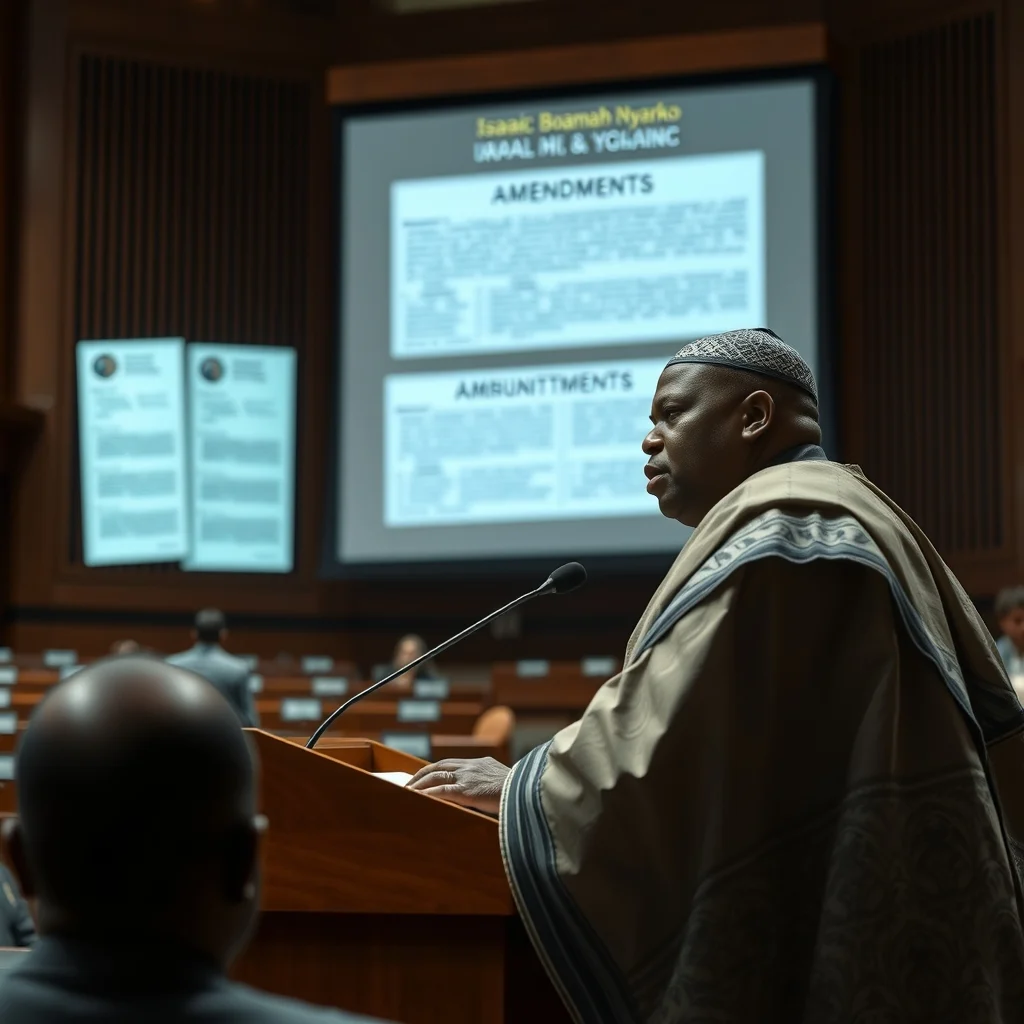
Accra, Ghana – A Member of Parliament for Effia and a member of the Finance Committee, Isaac Boamah-Nyarko, has accused the current National Democratic Congress (NDC) government of diluting the Anti-LGBTQ+ Bill through amendments introduced after its reintroduction in Parliament. Boamah-Nyarko stated on May 30 that the changes significantly alter the legislation, raising questions about the original bill’s intent and the political motivations behind its progression.
Context of the Bill’s Journey
The Anti-LGBTQ+ Bill has been a contentious issue in Ghanaian politics for several years. First introduced in the Eighth Parliament, it faced significant debate and scrutiny. The bill’s journey involved referral to the Constitutional, Legal and Parliamentary Affairs Committee, where numerous amendments were proposed.
Prior to the current parliamentary session, the bill was considered by some to be ready for presidential assent. However, its reintroduction in the Ninth Parliament by the new government has led to further proposed changes, sparking accusations of political maneuvering.
Amendments Spark Controversy
Mr. Boamah-Nyarko argued that if the previous version of the bill was deemed fit for purpose, it should have been reintroduced without substantial alterations. He expressed concern that the amendments proposed after the bill was referred to the Constitutional, Legal and Parliamentary Affairs Committee have fundamentally changed the legislation.
He contended that these amendments have weakened key provisions and validated criticisms that were raised during debates in the previous parliamentary term. This, he suggests, indicates that concerns regarding due process and legal representation, among others, were legitimate and have now been addressed by the current government.
Allegations of Political Expediency
The Effia MP alleged that the entire LGBTQ+ discussion between 2020 and 2024 was primarily for political purposes. He suggested that the previous administration, led by President Akufo-Addo, was unfairly criticized for being opposed to the legislation, despite having valid concerns about certain clauses.
Boamah-Nyarko questioned why the current government is now amending aspects of the bill that proponents had previously defended as adequate. He stated, “The amendments show that the concerns raised at the time were legitimate. If the bill was truly perfect, why are we seeing so many changes today?”
According to Boamah-Nyarko, the NDC government’s decision to amend the legislation implicitly admits that the original bill required further refinement before becoming law. This suggests a shift in the government’s approach or a response to previously dismissed criticisms.
Implications and Future Watch
These amendments have significant implications for the future of LGBTQ+ rights and protections in Ghana. The watering down of provisions, if confirmed, could alter the bill’s impact and effectiveness. It also raises questions about the legislative process and the potential for political expediency to influence policy decisions.
The development signals a critical juncture for the bill’s passage and its ultimate form. It remains to be seen how these amended provisions will be debated and voted upon by the entire Parliament. Observers will be watching closely to see if the changes align with international human rights standards and address the concerns of various stakeholders. The political ramifications of these shifts in legislative approach will also be a key area to monitor in the coming months.










Leave a Reply