
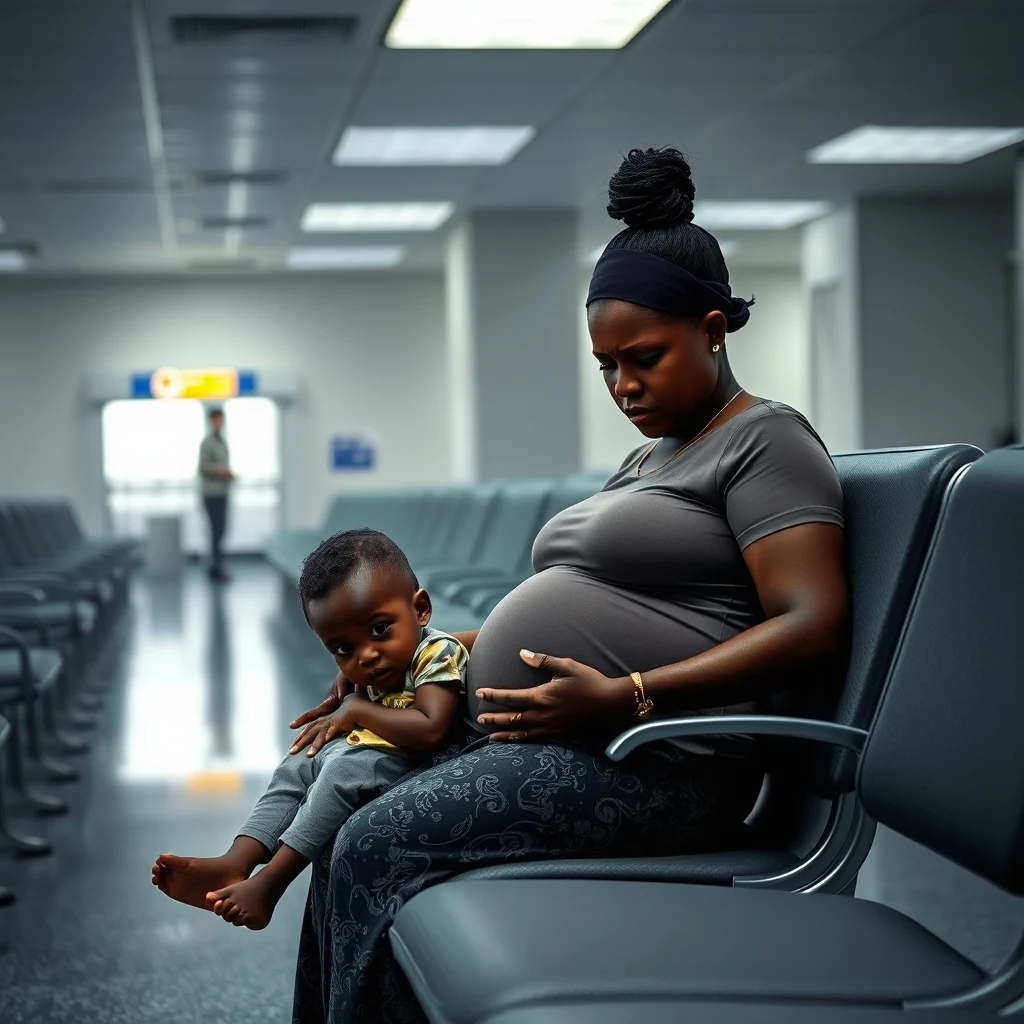
A pregnant Ghanaian teacher, Anabella Gyasi, 38, and her four-year-old son were ordered released from confinement at Washington Dulles International Airport on Friday, ending a week-long detention following their attempt to seek asylum in the United States. The pair were en route to Ohio for medical treatment for the son’s congenital physical abnormalities when they were detained by U.S. Customs and Border Protection (CBP) officers.
Context of Detention
Gyasi arrived in the U.S. on tourist visas, valid until 2028, intending to seek medical evaluation and potential surgery for her son’s condition affecting his fingers. She had an appointment scheduled at Akron Children’s Hospital. However, upon arrival at Dulles, she disclosed her fear of returning to Ghana due to persecution faced by her and her son because of his disability.
According to a government transcript, Gyasi revealed a traumatic past where her mother, a traditional priest, had urged her to kill her son at birth due to his disability. This disclosure, coupled with evidence of her online searches about asylum procedures in the U.S. and Canada, led authorities to question the validity of her tourist visa, arguing her intent was not to return to Ghana.
Asylum Claim Denied, Detention Conditions Alleged
Gyasi underwent a credible fear interview, which resulted in a negative determination. An immigration judge subsequently denied her asylum request, effectively barring her and her son from remaining in the United States. Their detention began after this disclosure, at which point they were taken into custody and placed in a holding room at the airport.
The American Civil Liberties Union (ACLU) of Virginia, representing Gyasi, alleged that they were denied adequate food and medical care during their confinement. Gyasi, who is four and a half months pregnant, was reportedly hospitalized twice due to stress-induced lightheadedness and vaginal bleeding. Attorneys claimed medical staff expressed concern over her nutritional intake and provided her with food.
Gyasi informed officials that unfamiliar food made her ill, and her son suffered from hunger pains. Her attorneys stated that requests to purchase alternative food were denied, with CBP officers only allowing them to consume the food provided. The ACLU of Virginia characterized the detention conditions as inhumane.
Government Response and Judicial Intervention
The Department of Homeland Security denied the allegations of mistreatment, asserting that all individuals in CBP custody receive appropriate care, including medical evaluations, medication, and food. However, the situation escalated to the point where U.S. District Judge Leonie Brinkema intervened.
On Friday, Judge Brinkema ordered Gyasi and her son’s immediate release from the airport holding room, stating they could not spend another night in such conditions. She mandated the Trump administration to arrange a nonstop flight back to Ghana by 2 p.m. that day.
Hours after the judge’s order, the ACLU confirmed that Gyasi and her son were on a flight returning to Ghana. Mary Bauer, executive director of the ACLU of Virginia, expressed satisfaction with the judge’s ruling, emphasizing the principle that individuals should not be detained under the alleged conditions.
Potential Policy Implications
Gyasi’s attorneys suggested that her initial scrutiny might have been heightened due to her pregnancy, potentially linking it to President Donald Trump’s stance on birthright citizenship and the rescission of an Obama-era policy that discouraged detaining pregnant women unless under extraordinary circumstances.
While Gyasi’s bid to remain in the U.S. was unsuccessful, the judicial intervention highlights concerns regarding the treatment of asylum seekers and vulnerable individuals, particularly pregnant women and children, within airport detention facilities. The case brings attention to the balance between immigration enforcement and humanitarian considerations.
Looking Ahead
The focus now shifts to the broader implications of such detentions and the accessibility of asylum processes for individuals facing persecution. It remains to be seen whether this case will influence future CBP practices regarding the detention of asylum seekers, especially pregnant women and those with children, and prompt further review of detention conditions at U.S. ports of entry.





Leave a Reply