
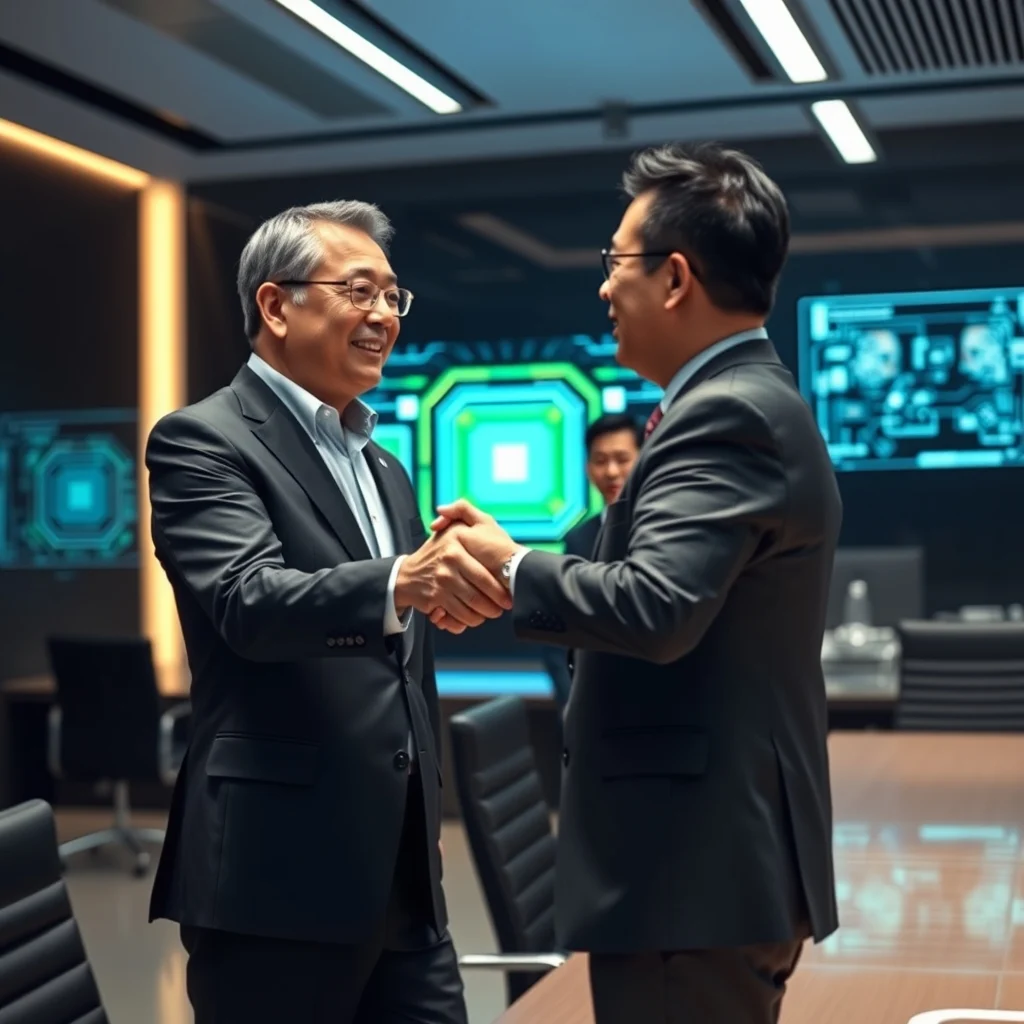
Shares of South Korean tech giants Samsung Electronics and LG Electronics surged on Monday, driven by anticipation surrounding meetings between Nvidia CEO Jensen Huang and local executives. The visits are fueling hopes for significant collaborations in the burgeoning fields of artificial intelligence (AI) and robotics, as South Korea solidifies its position as a critical player in the global semiconductor supply chain.
The positive market reaction coincided with data revealing a record high in South Korea’s semiconductor exports for June. This surge is largely attributed to the escalating demand for AI-powered technologies, which has propelled the nation’s overall exports to their most substantial increase in over four decades.
Jensen Huang is reportedly scheduled to visit South Korea later this week, with plans to meet with LG Group Chairman Koo Kwang-mo and other key industry leaders. This high-profile engagement underscores the strategic importance of South Korean technological capabilities for Nvidia, a dominant force in AI chip manufacturing.
Adding to the momentum, Nvidia hosted a “Korean Partner Night” event in Taipei on Monday, coinciding with the COMPUTEX trade show. Executives from major South Korean chipmakers, including Samsung and SK Hynix, as well as representatives from other technology firms, were in attendance alongside Huang.
The market responded robustly to the news. Samsung Electronics saw its shares climb by 9.5%, pushing its market capitalization beyond 2,000 trillion won (approximately $1.32 trillion). LG Electronics, a company diversifying into robotics alongside its established home appliance and TV businesses, experienced an impressive 28% jump in its stock price.
“Jensen’s visit to Korea has a major implication. Nvidia needs Korea,” stated Jeff Kim, an analyst at KB Securities. This sentiment highlights the symbiotic relationship developing between Nvidia’s AI chip dominance and South Korea’s advanced manufacturing and technological expertise.
Nvidia has previously announced plans to supply over 260,000 of its advanced AI chips to the South Korean government and major corporations, including Samsung Electronics and Hyundai Motor Group. This commitment further cements the nation’s role in supporting the global AI infrastructure.
Adding to the positive developments, Samsung Electronics announced on Friday that it had begun shipping samples of its latest high-bandwidth memory (HBM) chip. This proactive move places Samsung ahead of competitors in distributing a crucial component for AI data centers. Nvidia is among Samsung’s key customers for these advanced memory solutions.
Analysts note that Samsung has often traded at a discount compared to SK Hynix, partly due to perceived weaker competitiveness in the HBM market. However, the recent news regarding its HBM sample shipments appears to be bolstering investor confidence and supporting its share price gains, according to Lee Min-hee, an analyst at BNK Investment & Securities.
The strategic importance of HBM chips cannot be overstated. These memory modules are essential for the high-speed data processing required by AI accelerators, making their efficient production and supply critical for the continued expansion of AI capabilities worldwide. South Korea, with its leading semiconductor manufacturers, is at the forefront of this technological race.
The ongoing interactions between Nvidia and South Korean tech leaders signal a deepening partnership. These collaborations are expected to drive innovation in AI hardware, advanced semiconductor manufacturing processes, and the development of next-generation robotics. The success of these ventures could have far-reaching implications for various industries, from consumer electronics and automotive to healthcare and autonomous systems.
Looking ahead, market participants will be closely watching the outcomes of these executive meetings. Developments in HBM chip production, potential joint ventures in AI research and development, and the broader impact on global semiconductor supply chains will be key indicators of the future trajectory of this critical technology sector.










Leave a Reply