
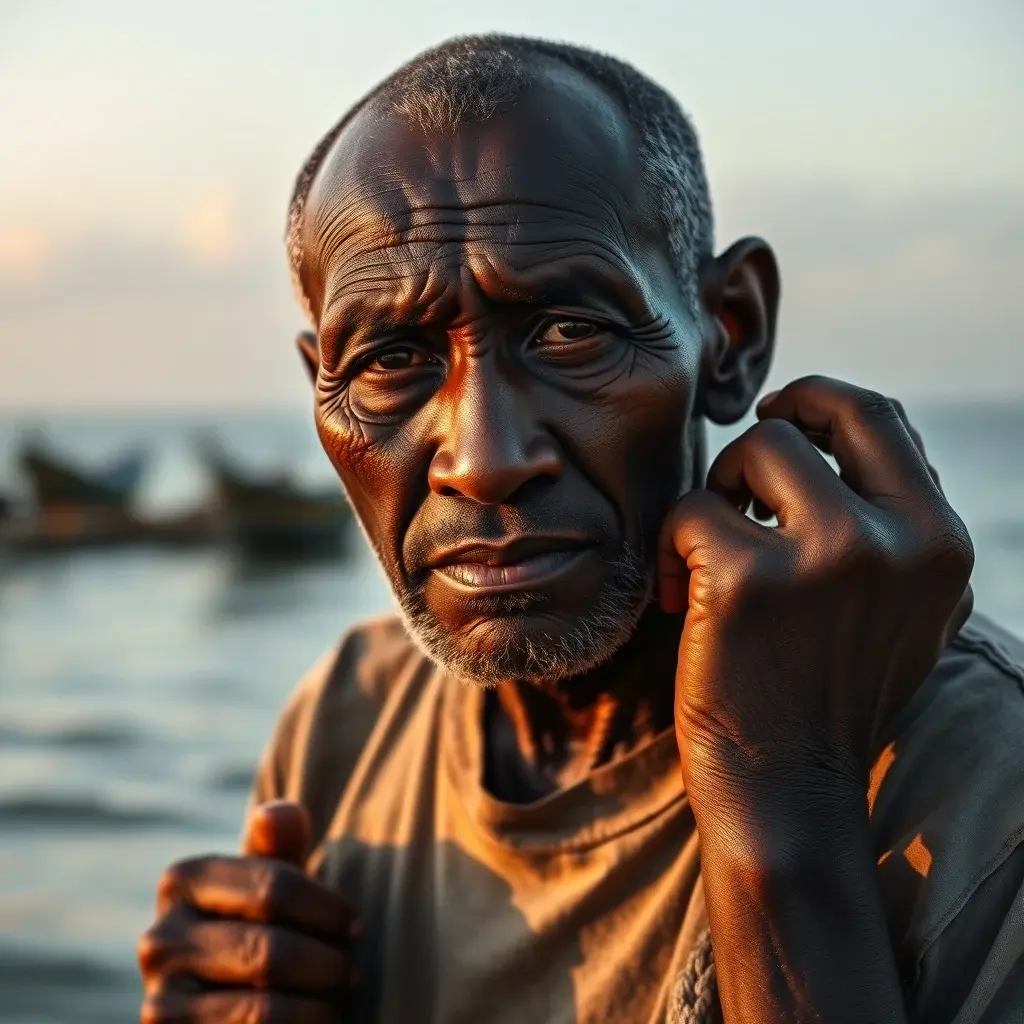
Award-winning photographer Stephen Nyamekye opened a new exhibition titled SEEN on June 6 at AkunaPod in Labone, Accra. The exhibition uses portrait photography and visual storytelling to highlight and celebrate the daily labour of Ghana’s often overlooked workers who are essential to the functioning of communities.
SEEN features a collection of carefully composed portraits and documentary-style images that shift focus from the general activity of urban life to the individuals behind it. Nyamekye captures the lives of fishermen, market women, drivers, and artisans, placing these individuals at the centre of the narrative rather than as background figures.
The exhibition delves into the interconnectedness and societal importance of various forms of labour. It illustrates the flow of goods and services, tracing the journey from farmers who produce food, to transport operators who move it, and finally to traders who make it accessible to consumers.
At its core, SEEN is a reflection on visibility, dignity, and the societal value assigned to work. Nyamekye’s photographs aim to reveal stories of resilience, discipline, and purpose through the expressions, gestures, and everyday environments of his subjects.
The exhibition challenges viewers to re-evaluate the people they encounter daily and the often invisible systems sustained by ordinary workers. Organizers state that SEEN is grounded in themes of humanity, community, and recognition.
The initiative seeks to stimulate conversations about which contributions are acknowledged and which efforts are frequently taken for granted. In an era where visibility is often dictated by social media trends and public attention, SEEN offers a more profound and quiet form of recognition.
The exhibition provides a powerful testament to those whose work continues to shape society, offering a counterpoint to fleeting digital fame. Members of the public are encouraged to visit AkunaPod on First Norla Street in Labone to engage with the narratives presented.
The focus on the essential but often unseen labour force comes at a time when discussions about economic contribution and social equity are prominent. By bringing these individuals into the visual foreground, Nyamekye prompts a re-evaluation of societal priorities and the definition of value.
The visual language employed in SEEN, characterized by its documentary approach and empathetic portraits, aims to foster a deeper connection between the audience and the subjects. This approach seeks to humanize the statistics and economic discussions often associated with labour.
Nyamekye’s work has previously been recognized for its ability to capture the essence of everyday life and its inhabitants. SEEN continues this tradition by focusing on the dignity and strength found in consistent, often physically demanding, work.
The choice of AkunaPod as a venue further emphasizes the exhibition’s commitment to community engagement and accessible art. By situating the exhibition in a public space, it encourages broader participation and dialogue.
As audiences engage with the images, they are invited to consider the broader implications of labour in their own lives and communities. The exhibition serves as a reminder of the complex networks that support daily existence and the individuals who maintain them.
The exhibition’s success could influence how other cultural institutions and artists approach the documentation and celebration of working-class individuals. It sets a precedent for recognizing the contributions of those who form the bedrock of society, moving beyond superficial narratives.
What to watch next will be the public’s response to SEEN and whether it sparks a wider conversation about the recognition of essential workers in Ghana and beyond. The potential for similar exhibitions or initiatives focused on other underrepresented groups also remains a key area to monitor.










Leave a Reply