
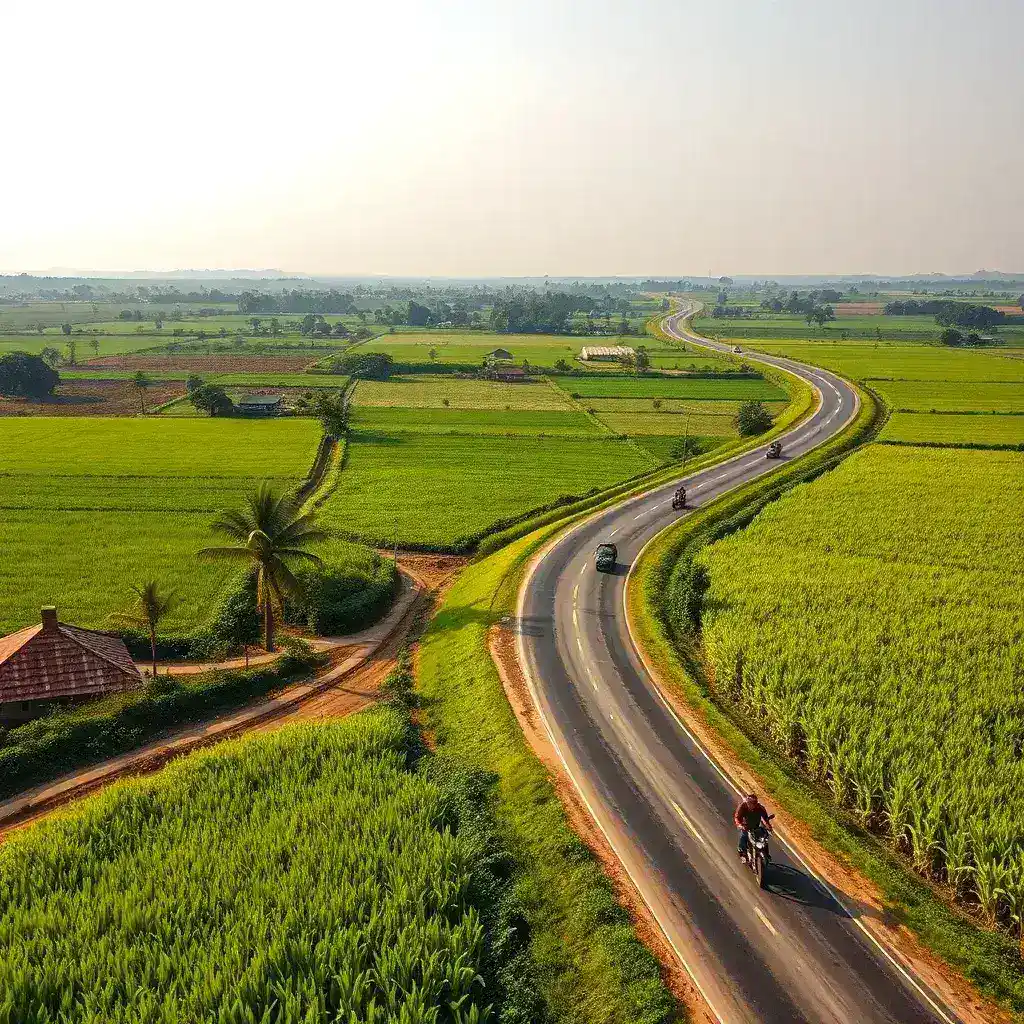
The World Bank announced on Thursday the approval of $500 million in financing for the Ghana Market Access and Connectivity Project (GMACP), an initiative poised to significantly improve rural road infrastructure and market access for over 550,000 people across Ghana.
Addressing Decades of Rural Connectivity Challenges
Poor road conditions and insufficient maintenance have long hampered rural livelihoods in Ghana, according to the World Bank. These persistent issues limit farmers’ access to markets, inflate transportation costs, and lead to substantial post-harvest losses, impacting food security and economic growth.
The GMACP directly confronts these challenges by focusing on the rehabilitation and maintenance of critical feeder roads in selected regions. This effort aims to establish all-season connectivity between agricultural production zones and vital markets.
Project Scope and Targeted Regions
The project will be implemented by Ghana’s Ministry of Roads and Highways. It plans to rehabilitate and maintain over 1,000 kilometers of rural roads. The initiative will concentrate on regions identified as major producers of staple crops essential for national food security, including maize, rice, yam, and cassava. These areas are the Upper West, Northern, Savannah, Oti, Volta, Eastern, Ashanti, Bono, and Western regions.
The selection of these regions is strategic, as they are central to Ghana’s food security but have historically suffered from poor market connectivity. By improving these routes, the project anticipates enabling farmers to reach buyers more efficiently.
Economic and Social Impact
Improved road infrastructure is expected to facilitate farmers’ transition into higher-value agricultural activities and unlock local employment and income generation opportunities throughout agricultural value chains. The project aims to reduce post-harvest losses, strengthen these value chains, and ultimately contribute to lower food prices and enhanced food security.
Robert Taliercio, World Bank Division Director for Ghana, Liberia, and Sierra Leone, stated, “This project will improve access to markets and opportunities for rural communities while strengthening Ghana’s agricultural competitiveness and resilience.”
The GMACP is projected to directly benefit over 550,000 individuals, including approximately 350,000 farmers, 250,000 women, and 310,000 youth. Furthermore, the civil works and road maintenance activities are expected to generate more than 5,000 direct jobs and over 25,000 indirect jobs.
Sustainability and Future Maintenance
A key feature of the GMACP is its incorporation of climate-resilient designs for roads and drainage systems, ensuring their durability against climate risks over the long term. Sustainability is a core pillar of this investment.
The project will also focus on operationalizing the Road Maintenance Trust Fund (RMTF) and introducing Performance-Based Contracts for road maintenance. Technical assistance will be provided to bolster institutional capacity, ensuring the long-term functionality of the rehabilitated road network beyond the project’s completion.
Looking Ahead
The success of the Ghana Market Access and Connectivity Project will be a critical indicator for future investments in rural infrastructure across West Africa. The focus on climate resilience and sustainable maintenance models, particularly through Performance-Based Contracts and the Road Maintenance Trust Fund, could set a new standard for development projects in the region. The efficient implementation and measurable impact on farmer incomes and market access will be closely watched by governments, international organizations, and the agricultural sector as a whole.





Leave a Reply