
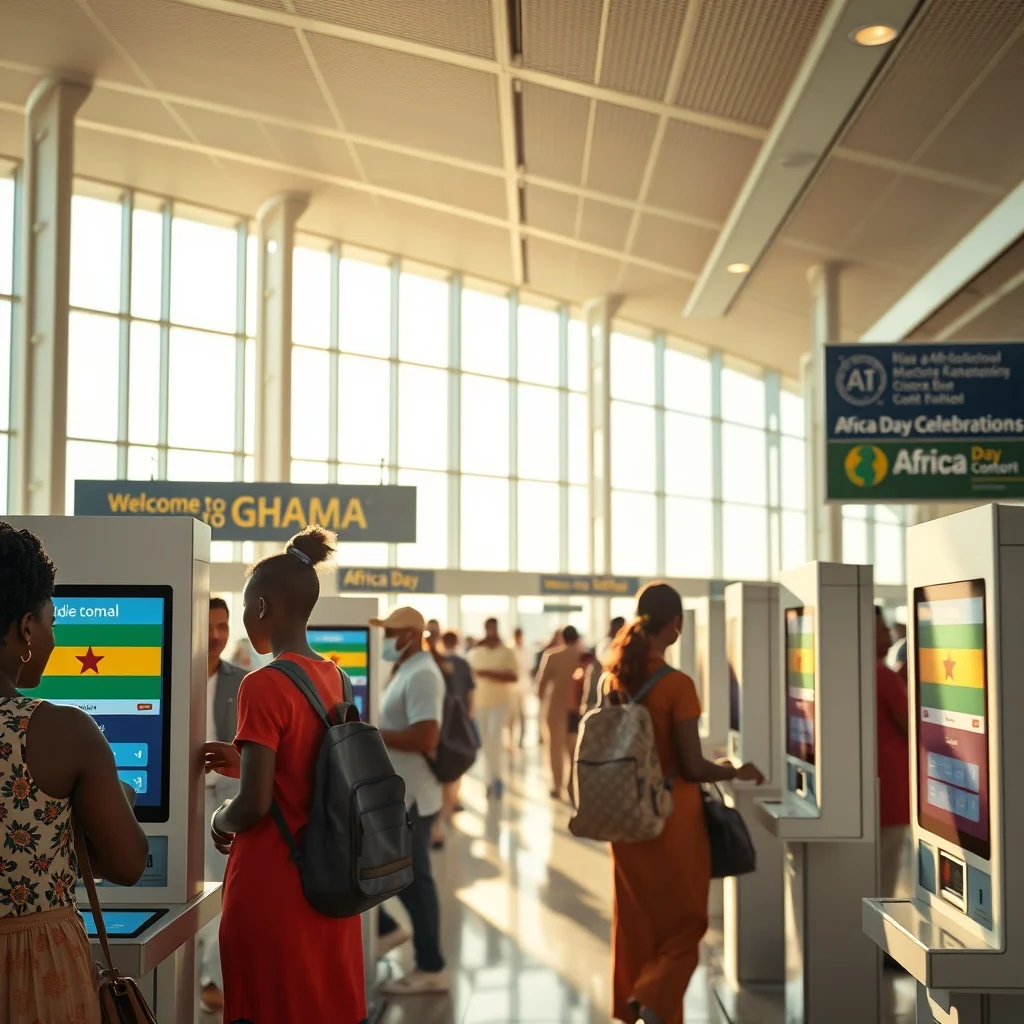
Accra, Ghana – On May 25, 2026, Africa Day, Ghana officially launched its E-Visa system, a significant step aimed at modernizing visa administration, enhancing border management, and simplifying travel into the country. This technology-driven initiative, which also waives visa fees for African passport holders traveling to Ghana, seeks to position the nation as more open and attractive for business, tourism, and investment in an increasingly interconnected global landscape.
Context: A Long-Standing Aspiration for Continental Unity
The timing of the E-Visa launch on Africa Day is symbolic, underscoring a long-standing aspiration for continental integration championed by African leaders since the era of Kwame Nkrumah. This vision aims to foster a continent where economic opportunities and cooperation are not hindered by inherited national borders.
Historically, obtaining visas for Ghana has often been a cumbersome process, involving lengthy procedures, courier arrangements, and administrative hurdles, particularly for travelers from countries lacking Ghanaian diplomatic missions. Such friction discouraged travel and investment, a stark contrast to the efficiency expected in today’s digital world.
In the contemporary global economy, a nation’s competitiveness extends beyond traditional metrics like tax policies and infrastructure. It increasingly hinges on efficiency and accessibility, with the traveler’s or investor’s experience beginning long before arrival, starting with their initial interaction with a country’s systems.
The E-Visa Journey: A Sustained Policy Effort
The development of Ghana’s E-Visa system was not an overnight achievement but rather the culmination of years of technical work, institutional planning, and inter-agency collaboration. The foundational work began in February 2020 when the Akufo-Addo administration entered into a Technical Support Agreement with Orell Füssli Security Printing Limited and TGN Digital Security Limited to deploy machine-readable visa technology and the necessary infrastructure for an electronic system.
In February 2023, Cabinet mandated the Ministries of Foreign Affairs and Interior to jointly develop the policy framework and implementation guidelines for Ghana’s Electronic Visa Administration. This was followed by extensive technical testing, stakeholder consultations, and policy development involving key institutions such as the Ghana Immigration Service, National Security, the Ghana Tourism Authority, Ghana Airports Company Limited, and the Ministry of Finance.
Executive approval for the Electronic Visa Administration and Policy framework was granted in late 2024, marking the final stage before the public launch. This sustained effort across administrations highlights the E-Visa reform as a national achievement, reflecting a consistent policy objective.
Distinguishing E-Visa from Visa-Free Travel
It is crucial to distinguish between an E-Visa and visa-free travel, as they represent different levels of facilitation. An E-Visa is an administrative innovation that digitizes the visa application process, making it more efficient and convenient through online platforms. While it simplifies obtaining prior approval, it still requires travelers to secure permission before entry.
Visa-free travel, conversely, means eligible travelers do not require prior authorization and are granted entry based solely on their nationality, subject to standard immigration checks. The current Ghanaian arrangement, which waives visa fees for African passport holders using the E-Visa platform, is an E-Visa system, not visa-free travel, as prior approval is still necessary.
The Akufo-Addo administration, through an Executive Approval dated December 18, 2024, had previously granted visa-free travel for all African passport holders, a more comprehensive step towards African integration than the current E-Visa system.
Ghana’s Role in Africa’s Integration Vision
Ghana’s commitment to African integration is deeply rooted in its history, with leaders consistently advocating for a more connected continent. The African Union’s 2018 Protocol on Free Movement of Persons, Right of Residence and Right of Establishment aims to progressively remove mobility barriers, with visa abolition identified as a key early phase.
This vision aligns with Agenda 2063 and the objectives of the African Continental Free Trade Area (AfCFTA), for which Ghana hosts the Secretariat. The earlier policy of extending visa-free access to African passport holders was part of a broader strategy to enhance intra-African trade and cooperation.
Lessons from Europe’s Free Movement Architecture
The European Union’s journey towards free movement offers valuable lessons for Africa. The Schengen Agreement and subsequent conventions gradually abolished internal border controls, fostering economic integration and the free movement of people, services, and capital.
Europe achieved this by strengthening external border controls, coordinating immigration policies, and establishing common databases and intelligence-sharing mechanisms. These measures helped address security concerns while enabling seamless travel within the Union.
Looking Ahead: Accelerating Continental Integration
As Ghana prepares to celebrate its Platinum Jubilee and with President Mahama expected to assume the Chairmanship of the African Union, there is a significant opportunity to reinforce its Pan-African leadership. Accelerating the ratification and implementation of key AU treaties and protocols, including the Protocol on Free Movement of Persons and various AfCFTA protocols, is crucial.
Furthermore, enhancing financial connectivity across the continent, particularly through improved interoperability of mobile money and payment systems, can significantly boost intra-African commerce, especially for SMEs, women, and young entrepreneurs.
The E-Visa platform is a positive institutional reform, but it should be viewed as one step in a larger journey. The ultimate success of African integration will depend on practical policy choices regarding openness, mobility, and cooperation made by individual nations. Ghana has historically led this conversation, and continuing to do so will be vital for the continent’s future development.









Leave a Reply