
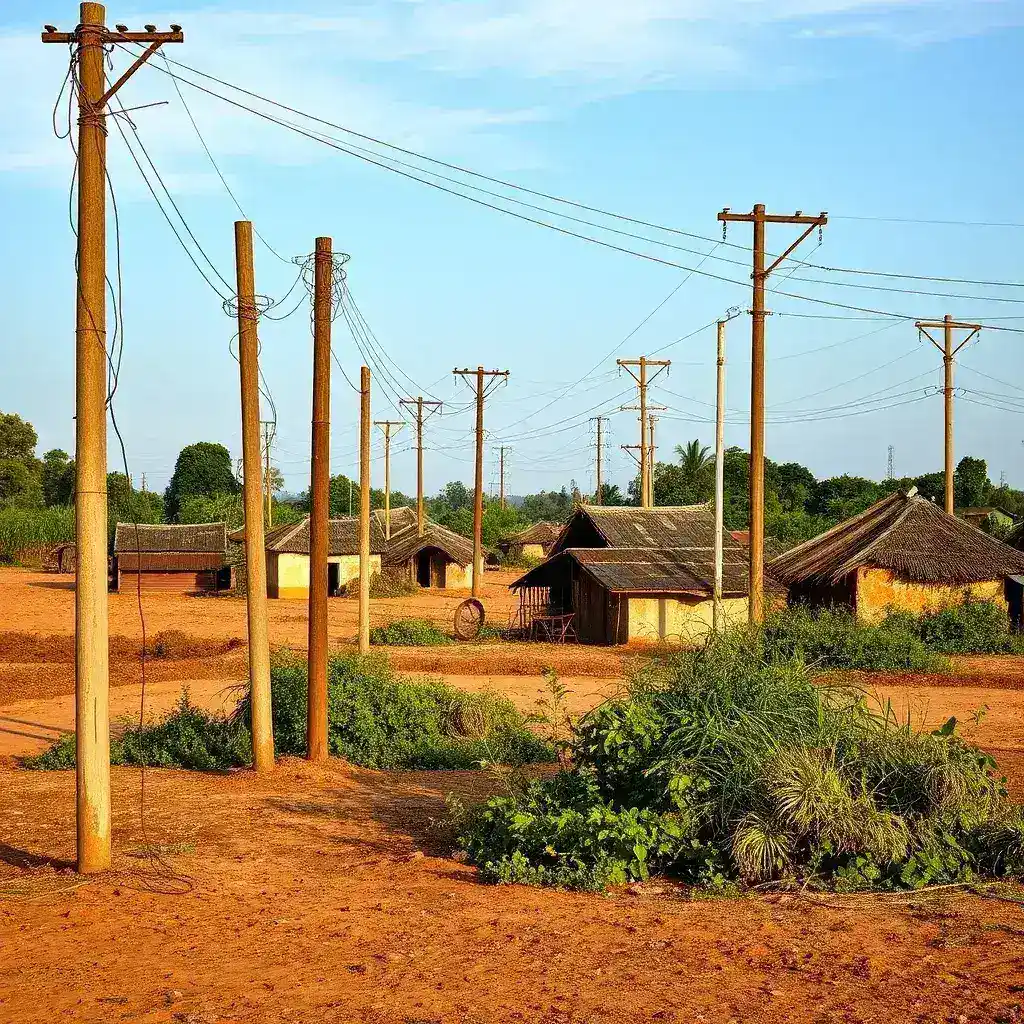
Ten communities in Ghana’s Atwima Mponua District of the Ashanti Region are once again grappling with uncertainty regarding electricity access, as the contractor for a long-delayed rural electrification project has reportedly abandoned the site for a second time. The project, initiated in 2013, was meant to connect communities like Bedabour and Mansaso to the national grid but has faced continuous setbacks, leading to widespread frustration and the departure of residents seeking better opportunities.
Project Background and Decades of Delays
The electrification project, awarded to Possible Power Limited in 2015, aimed to bring power to ten communities in the Atwima Mponua District. However, over a decade later, the project remains incomplete. Poles and transformers procured for the initiative have been left exposed to the elements, deteriorating over time.
This prolonged lack of electricity has had a devastating impact on the affected areas. Residents, particularly the youth, have been forced to leave their homes in search of employment and basic amenities in neighbouring towns. Communities like Mansaso are visibly deteriorating, with thatched houses becoming overgrown and metal roofs rusting away, as families migrate elsewhere.
Renewed Hopes Dashed
Following a JoyNews report on March 26, 2026, highlighting the dire situation, the District Chief Executive for Atwima Mponua, Ibrahim Issahak, assured residents that the contractor had resumed work and promised completion by the end of April 2026. This announcement briefly rekindled hope among the residents.
However, a follow-up visit by journalists on May 30, 2026, revealed that the contractor had once again ceased operations before the Easter holidays, leaving the project unfinished. The initial excitement has now been replaced by deep-seated skepticism among the inhabitants.
Community Frustration and Exodus
Nana Akwesi Yaboah, the Chief of Bedabour, expressed profound frustration with the repeated delays. He acknowledged the current government’s efforts but stated that broken promises from past administrations have made residents wary.
“We acknowledge that this government has helped connect our communities to the national grid, but it needs to expedite work to finish the project,” Nana Yaboah stated. “The contractor was installing poles and transformers, but left before Easter and hasn’t returned since.”
In Bedabour, where only five out of 500 residents have electricity through private means like solar panels or generators, the lack of power hinders daily life. Assembly member Isaac Asamoah lamented, “I haven’t drunk cold water before because I have no fridge in my house to cool my water. My daughter also cannot study at night because we have no proper flashlight to aid her learning.”
The situation in Mansaso is equally dire, with many youth migrating to towns with electricity. Otabil, a youth from Mansaso, recounted how residents actively assisted the initial work, only for the project to stall. “When they got here, we all, including the old and young joined to help them erect the poles. We cleared the trees that obstructed their work. We felt we would finally see light after that. But no show up to now,” he said.
Contractor’s Explanation for Delays
Kwaku Duah, CEO of Possible Power Limited, attributed the latest halt to the non-delivery of specialized equipment required for the project’s final phase. He stated that the Ministry of Energy had completed procurement and his company was awaiting the materials.
“The awaited materials have arrived. The ministry is now processing them. Even on Friday, the Director of Power called me and told me they’re working on it, and the package will be released soon,” Mr. Duah explained. He anticipates work will resume in June upon receiving the materials.
Mr. Duah also cited the theft of essential project materials as a significant factor in past delays, not a lack of funding. He mentioned that some individuals, including a community coordinator, were arrested and prosecuted for theft.
“Money for the project has never been an issue for me. The project was officially started in 2015, and when the NPP government took over power, all the materials for the electrification project were stolen,” he claimed. “So, if the government purchases the materials and they keep going missing, will the government be able to keep providing the materials?”
Implications for Development and Future Outlook
The continued delay in electrification severely impacts education and local economies. Students struggle to study after dark, and small businesses reliant on power for refrigeration and other operations face reduced sales.
Assemblyman Isaac Asamoah is appealing to the government to either reassign the contractor or compel their return to site to complete the project. “We have done everything required of us, yet the project remains stalled. I want to appeal to the government to either reassign the contractor or compel a return to the site, because we can no longer hold our patience,” he urged.
Residents argue that electricity is fundamental for development and achieving national goals, including SDG Goal 7. The prolonged lack of this basic necessity risks deepening poverty and limiting opportunities for the youth in these ten communities, which include Bedabour, Mansaso, Kwame Dwaa, Kyenkyentaa, Beposo, Abompe, Kojo Fordjourkrom, and Yaw Bua.
With the contractor expecting materials in June, the coming weeks will be critical in determining if the project will finally progress towards completion, or if residents will face further disappointment and continued dependence on alternative, often insufficient, power sources.




Leave a Reply