
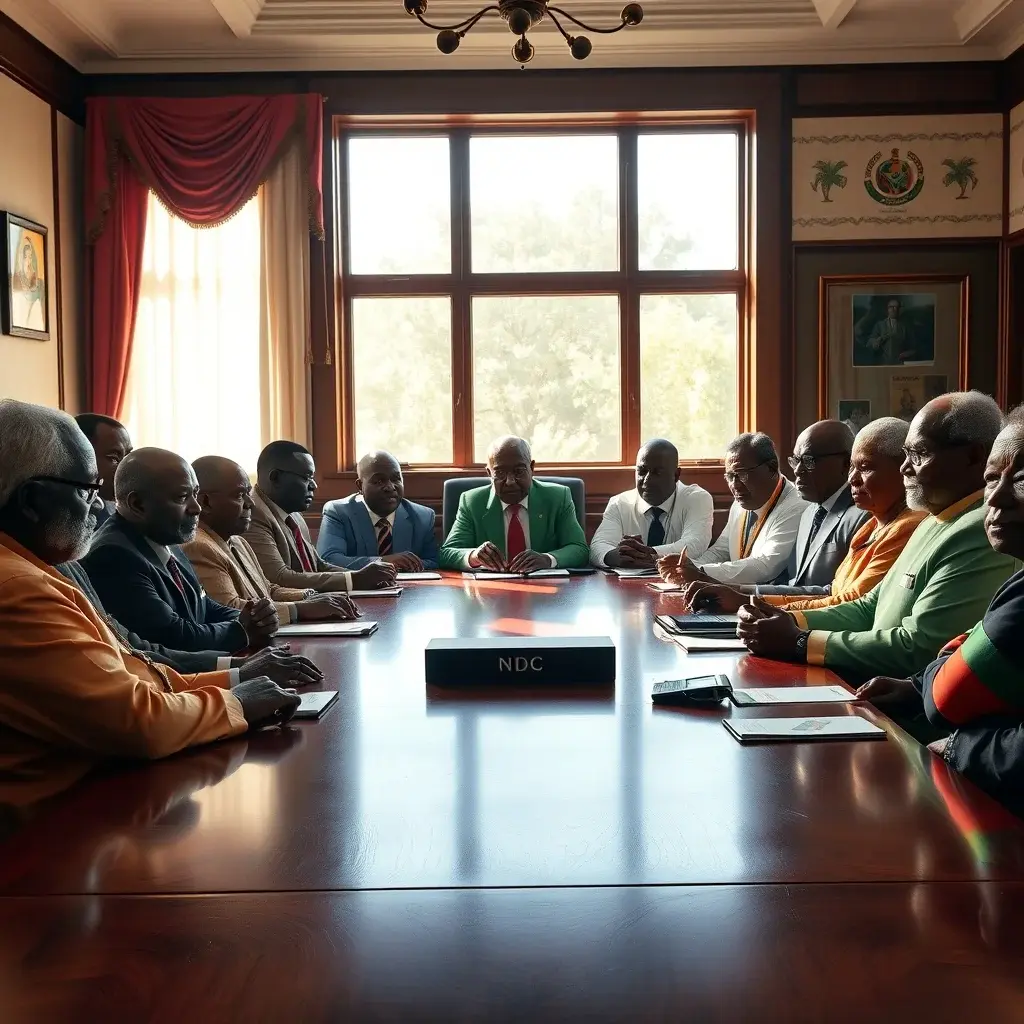
Former Tamale Central Member of Parliament, Inusah Fuseini, has publicly supported the National Democratic Congress (NDC) Council of Elders’ recent intervention aimed at preventing internal factionalism and premature presidential campaigning. This action by the party’s highest advisory body seeks to ensure the NDC remains unified and focused on its governance mandate, particularly as the administration navigates its term.
Council of Elders Steps In Amidst Internal Tensions
The NDC Council of Elders issued a firm warning against party members engaging in early presidential campaign activities. This intervention underscores a growing concern within the party about internal divisions potentially distracting from the government’s core responsibilities.
Speaking on Joy FM’s Top Story, Fuseini emphasized the critical role of the Council of Elders as a stabilizing force within the NDC’s organizational structure. He highlighted their function in guiding party members to align with the party’s mandate and the expectations of the electorate.
“The party has institutions, and the institution of the Council of Elders is very important in the organisation of the party,” Fuseini stated. He explained that the Council acts as a watchful body, capable of bringing members into line to ensure the realization of the people’s mandate.
Protecting Governance Focus and National Priorities
Fuseini connected the Council’s concerns directly to the need to safeguard the government’s focus on national development. He warned that internal positioning and leadership ambitions, if unchecked, could derail national priorities and distract from delivering on the party’s manifesto promises.
“This is a very important decision made by the Council of Elders,” he noted, attributing the intervention to a desire to maintain discipline within the party ranks. The timing of this intervention, approximately one and a half years into the current administration’s term, suggests an effort to preempt potential internal rifts that could emerge as future leadership aspirations begin to surface.
The former MP suggested that President Mahama himself might share these concerns, given the importance of delivering on his four-year mandate. “He’s been given a four-year mandate to rule this country and to deliver on the manifesto promise we took to the people,” Fuseini remarked. He added that early positioning by potential successors could lead to “distraction and indiscipline in the pursuit of the manifesto objectives of the party.”
Maintaining Party Discipline for National Agenda
Fuseini underscored the potential consequences of uncontrolled internal political maneuvering. He warned that without firm internal discipline, the party’s broader national agenda could be significantly undermined.
“The Council of Elders is beginning to see that if they don’t whip people into line, our march towards resetting Ghana will be derailed,” he concluded. This statement signals a proactive approach by the party leadership to ensure internal cohesion remains a priority, thereby safeguarding the government’s ability to implement its agenda effectively.
Looking Ahead: The Impact of Internal Cohesion
The NDC Council of Elders’ intervention highlights a recurring challenge for political parties: balancing internal democratic processes with the need for unified governance. As the administration progresses, observers will be watching closely to see how effectively the party maintains discipline and whether this proactive measure successfully prevents factionalism from impacting its governance agenda. The ability of the NDC to present a united front will be crucial in shaping public perception and achieving its developmental goals in the coming years.










Leave a Reply