
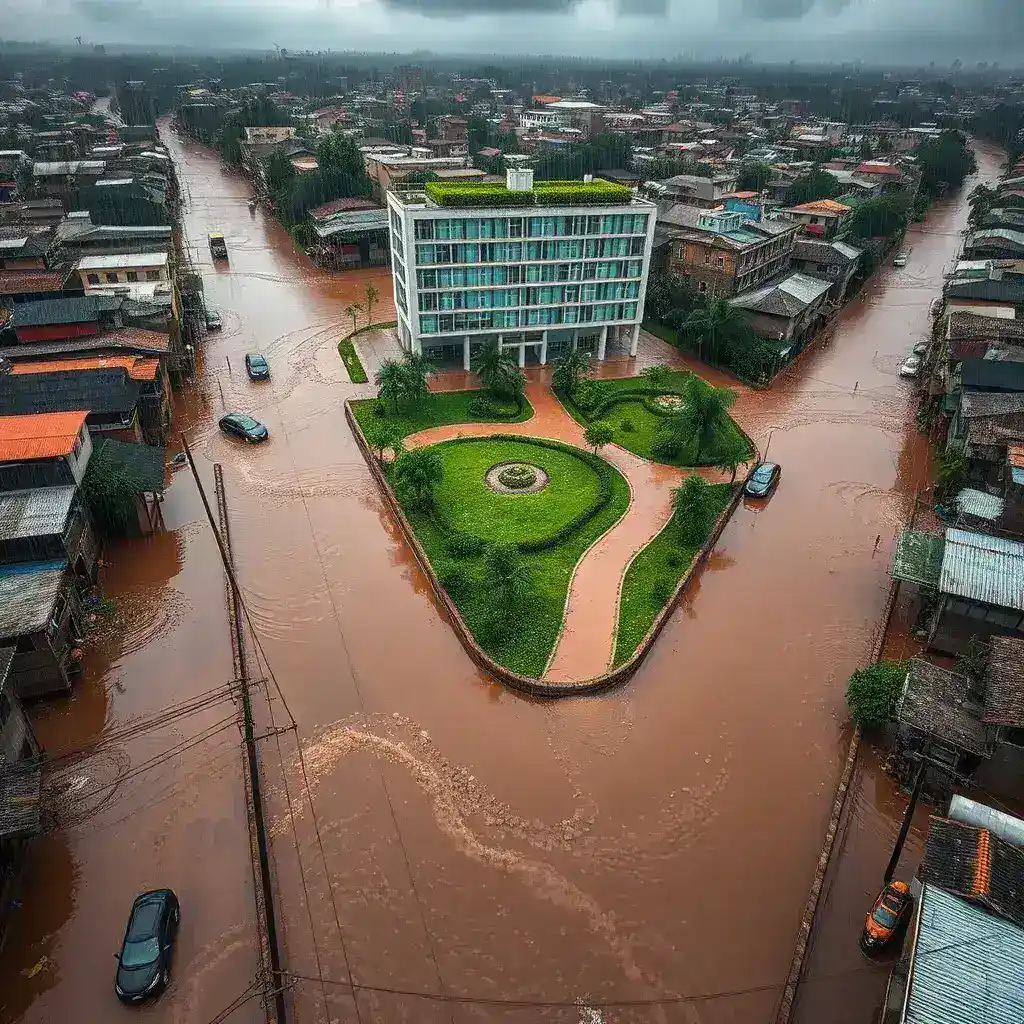
Accra, Ghana – The Ghana Institution of Engineers (GhIE) has issued a stark warning, calling for a radical transformation of the nation’s stormwater management strategies as urban flooding escalates. The call comes in response to mounting evidence that existing drainage systems are critically failing to cope with the combined pressures of rapid urbanization, climate variability, and increasingly severe flood risks, particularly in major metropolitan areas like Accra.
Context: A System Under Strain
For years, Ghana’s approach to managing stormwater relied on conventional, centralized drainage systems. The primary objective was simple: to channel rainwater away from urban areas as swiftly as possible, typically downstream. However, this model is proving increasingly inadequate for the complex realities of modern Ghanaian cities.
The rapid pace of urban expansion has led to extensive land surface sealing, with concrete and asphalt replacing natural, permeable ground. This significantly reduces the land’s ability to absorb rainwater, leading to increased surface runoff. Compounding this issue are persistent problems with waste management, where solid waste frequently clogs drainage channels, diminishing their capacity and effectiveness.
The Deepening Crisis
GhIE’s policy brief highlights that flooding in Accra is no longer confined to predictable seasonal patterns. It is evolving into a persistent structural challenge. The institution points to a decade of increasingly frequent and severe flood events, some occurring even with moderate rainfall, indicating systemic weaknesses beyond mere climate change impacts.
Many of the nation’s drains have become ineffective conduits for solid waste, severely compromising their hydraulic capacity. The brief specifically identifies hydraulic constraints within the critical Odaw-Korle drainage system as a significant contributor to recurring floods in the capital. This highlights a critical failure in maintaining and upgrading essential infrastructure.
Institutional Fragmentation Hinders Progress
Beyond physical infrastructure challenges, GhIE pinpoints institutional fragmentation as a major impediment to effective flood management. Responsibilities for drainage and stormwater are dispersed across numerous government agencies. Furthermore, administrative boundaries often do not align with natural drainage basins, making coordinated, catchment-wide planning and implementation extremely difficult.
A Call for Nature-Based Solutions
In response to these multifaceted challenges, GhIE is strongly advocating for a paradigm shift. The institution proposes a move away from traditional centralized systems towards decentralized, nature-based stormwater management solutions. These approaches aim to mimic natural hydrological processes, allowing water to infiltrate, evaporate, or be stored closer to its source.
Recommended interventions include the widespread adoption of permeable pavements, which allow water to pass through, bioswales and rain gardens that capture and filter runoff, green roofs that absorb rainfall, and detention systems and infiltration facilities designed to manage water volume and flow rates.
Policy Reforms and Future Development
GhIE is urging the implementation of a National Post-Development Runoff Control Policy. This policy would ensure that new construction projects do not increase the volume or peak flow of stormwater runoff compared to pre-development conditions. Such a measure is crucial to prevent future developments from exacerbating existing flood problems.
Further recommendations include a National Rainwater Harvesting Policy to encourage water conservation and reduce runoff, stricter enforcement of land-use regulations to protect natural drainage areas, the establishment of catchment-based planning units for integrated management, and the protection of vital waterway buffer zones. The institution also calls for increased private-sector involvement in developing green infrastructure.
Expert Endorsement and Global Alignment
The proposed shift aligns with global best practices in sustainable urban drainage systems. These measures are not only expected to reduce flood frequency and severity but also to improve water quality, lower long-term infrastructure maintenance costs, stimulate green job creation, and significantly enhance Ghana’s resilience to the impacts of climate change.
GhIE emphasizes that adopting these nature-based and decentralized strategies represents a necessary evolution from a downstream, conveyance-focused engineering approach to an upstream, decentralized model that works in harmony with natural systems. The institution stresses the urgency of policy reform, stating, “The evidence is clear. Ghana must shift from downstream, conveyance-based engineering to upstream, decentralized, nature-mimicking stormwater management. The time for policy reform is now.”
Looking Ahead
The recommendations from GhIE align with international sustainability goals, particularly UN Sustainable Development Goals 6 (Clean Water and Sanitation) and 11 (Sustainable Cities and Communities). The coming months will be critical to observe whether these calls translate into concrete policy changes and investments in Ghana’s urban infrastructure and planning. The focus will likely be on how effectively these new strategies can be integrated into existing urban development frameworks and whether the necessary institutional reforms can be implemented to support a more resilient future for Ghana’s cities.










Leave a Reply