
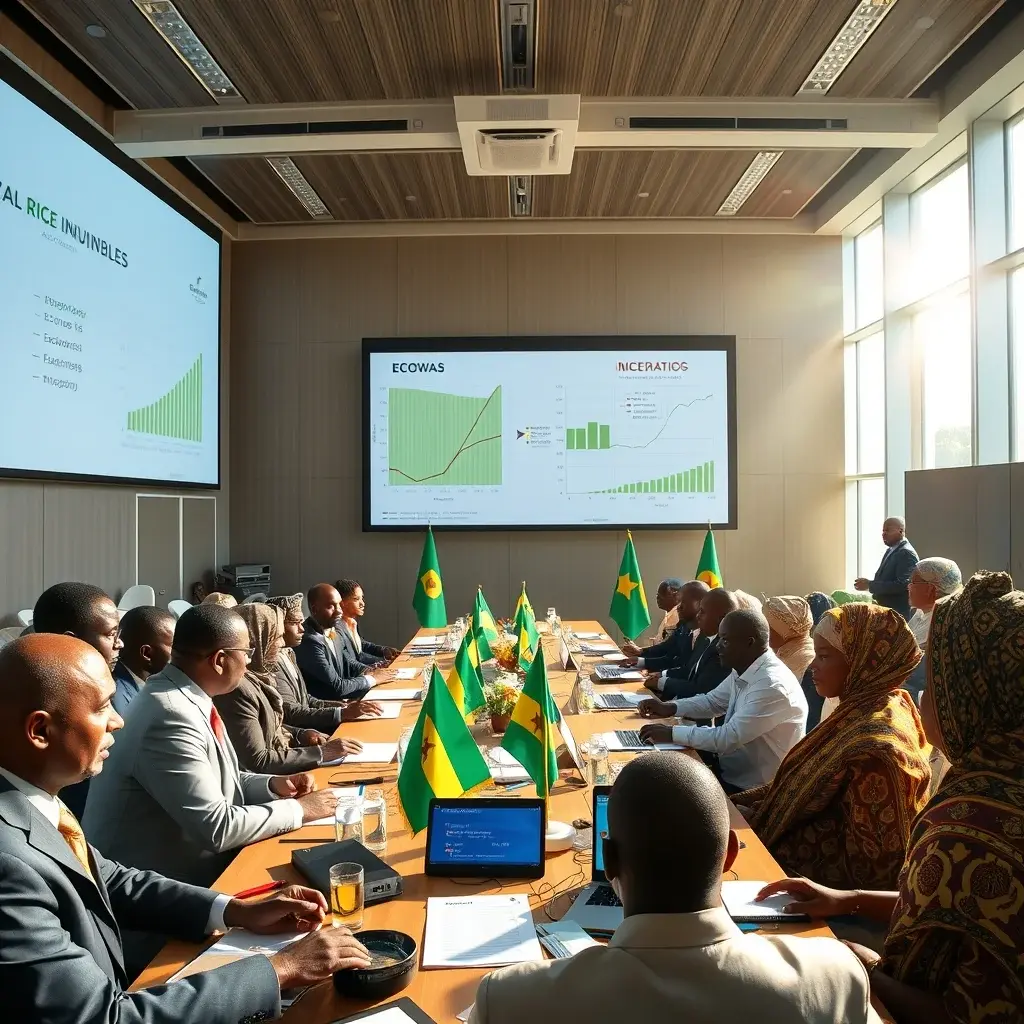
The Economic Community of West African States (ECOWAS) has set an ambitious goal to achieve regional rice self-sufficiency by 2035, actively seeking increased financing from governments, investors, and development partners to bridge the current supply gap. This initiative aims to bolster food security and drive agricultural transformation across West Africa. The call to action was made at the West Africa Rice Investment Roundtable in Accra on Tuesday, June 2, 2026.
Context: The Growing Rice Deficit
Despite significant agricultural potential, West Africa currently imports a substantial portion of its rice. The region produces only 61 percent of the rice it consumes, according to ECOWAS data. While rice output saw a 44 percent increase between 2008 and 2024, this growth has been outpaced by rapid population expansion, increasing urbanization, and shifting dietary habits. This widening gap between production and consumption presents both a challenge and a significant opportunity for economic development.
ECOWAS Rice Agenda: A Decade in the Making
Achieving rice self-sufficiency has been a long-standing priority for ECOWAS, forming a cornerstone of its food security and economic development strategies. Rice has been a key focus under the ECOWAS Agricultural Policy (ECOWAP) for over a decade. The ECOWAS Commission launched the ECOWAS Rice Offensive in 2014 to complement national efforts. Most recently, the Heads of State adopted the Regional Rice Roadmap (2025-2035) in December 2024, establishing a unified framework for guiding investments and policy interventions among member states.
To enhance coordination and monitor progress, the ECOWAS Rice Observatory was established. This body brings together a diverse group of stakeholders, including governments, farmer organizations, research institutions, development partners, and private sector actors. Member states have since developed National Rice Investment Action Plans and country-specific investment pipelines to pinpoint priority projects and attract necessary funding.
Addressing Structural Constraints
Despite these strategic initiatives, several persistent structural challenges hinder the sector’s growth. These include low productivity among farmers, high production costs, inefficient milling systems, significant post-harvest losses, limited access to crucial financing, and insufficient private sector investment. ECOWAS leadership emphasizes the need to move beyond discussions to concrete actions that address these fundamental issues.
The current review of the ECOWAS agricultural policy aims to align with the Kampala Declaration on agricultural transformation. This review process is notable for its inclusive and participatory approach, incorporating consultations with nine distinct stakeholder groups. These include farmers, researchers, women, youth, financial institutions, private sector representatives, and other non-state actors, ensuring a comprehensive perspective.
Investment Roundtable: A Catalyst for Action
The West Africa Rice Investment Roundtable in Accra served as a critical platform to mobilize investment for the regional rice agenda. Organized by the ECOWAS Commission in partnership with the World Bank, the African Development Bank, and other technical and financial partners, the event convened ministers, investors, financial institutions, and private sector leaders. The primary objective was to strengthen investor confidence, foster partnerships, and accelerate financing for viable investment opportunities.
H.E. Dr. Omar Alieu Touray, President of the ECOWAS Commission, stressed that the roundtable must act as a catalyst, driving tangible progress towards a more competitive, resilient, and self-sufficient regional rice economy. Ghana’s Vice President, Prof. Jane Naana Opoku-Agyemang, represented the host nation, highlighting Ghana’s commitment to agricultural development and regional integration.
Implications and Future Outlook
The success of ECOWAS’s 2035 rice self-sufficiency target hinges on the effective mobilization of substantial investment and the implementation of targeted reforms to overcome structural barriers. For consumers, this could mean greater price stability and improved access to locally produced rice. For farmers and the agricultural sector, it signifies potential for increased incomes, job creation, and enhanced competitiveness.
The coming years will be crucial in monitoring the commitment to concrete actions identified at the roundtable, the flow of investment into the sector, and the impact of policy reforms on productivity and efficiency. The focus will be on whether the region can translate ambitious targets into measurable progress for its farmers, businesses, and communities, ultimately strengthening food sovereignty and shared prosperity.






Leave a Reply