
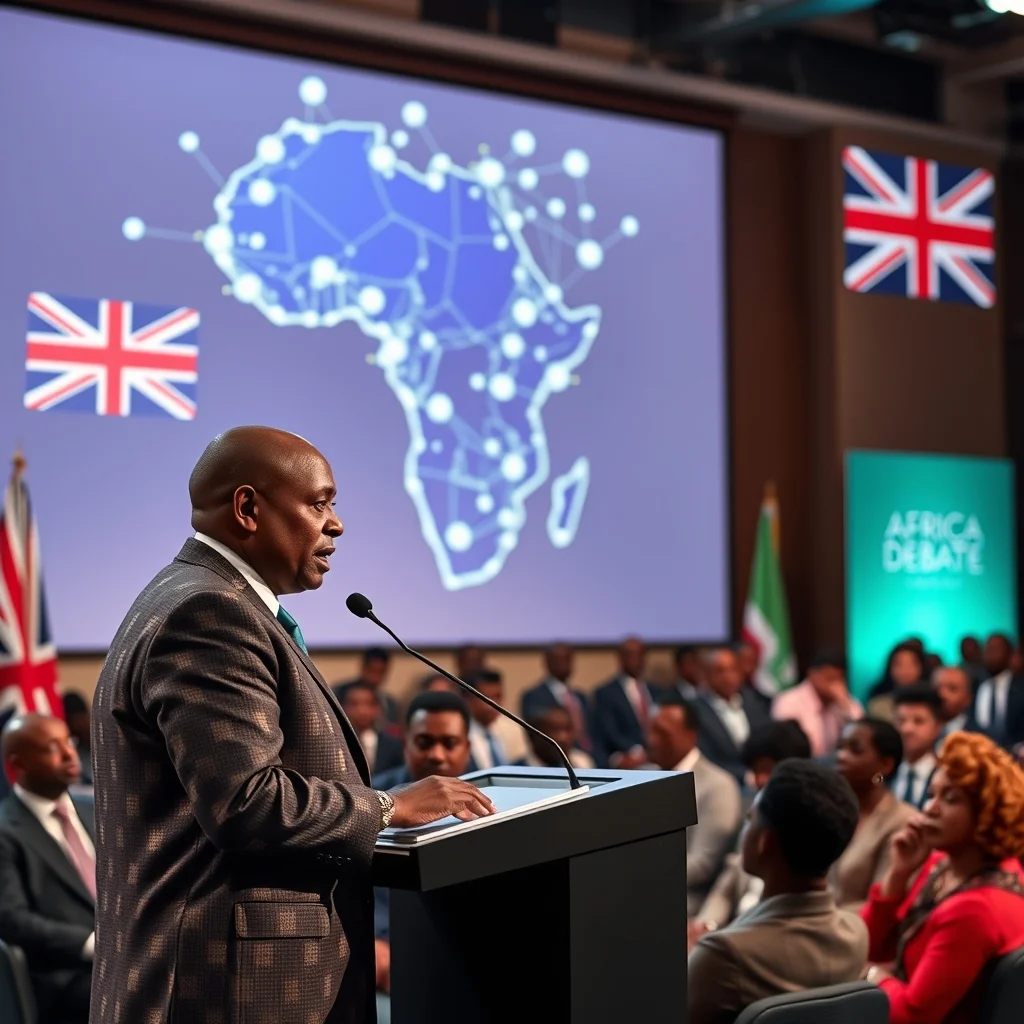
London, UK – At the 12th annual Africa Debate held at Guildhall, President John Dramani Mahama declared that Africa is emerging not as a passive observer but as a decisive architect of the future global economy. The statement, made during his five-day high-level visit to the United Kingdom, underscored a significant shift in the continent’s global positioning.
Bridging Continents and Capital
The Africa Debate 2026, convened by Invest Africa in partnership with the UK Government, serves as a crucial platform for fostering connections between Africa and international markets. President Mahama lauded Invest Africa’s efforts in building bridges between African nations, global capital, governments, and enterprises.
His participation followed the successful Ghana Investment Forum in London, an event designed to showcase Ghana’s economic transformation and its readiness for deeper partnerships with the UK and the broader global investment community. This forum highlighted Ghana’s proactive approach to attracting foreign investment and promoting its development agenda.
A World in Transition, An Africa Rising
President Mahama addressed the current global landscape, characterized by shifting trade systems, evolving geopolitical alliances, reconfigured supply chains, and shrinking development finance. In this era of uncertainty, nations are actively seeking resilience, growth, energy, security, and reliable partners. “And in the midst of this transition, Africa is rising not as a passive observer but as a decisive force in shaping the future global economy,” he stated.
The theme of the Africa Debate, “Redefining Partnerships, Navigating a World in Transition,” highlighted the need for a new engagement framework. President Mahama challenged the outdated narrative of Africa solely defined by aid and crisis, emphasizing that this view no longer reflects the continent’s current reality.
The New African Narrative
“The Africa of today is youthful, dynamic, entrepreneurial, digitally connected, resource rich and increasingly reform oriented,” President Mahama asserted. He pointed to the continent’s vast reserves of critical minerals essential for the global energy transition, including cobalt, lithium, manganese, copper, bauxite, and rare earth elements.
Furthermore, the African Continental Free Trade Area (AfCFTA), the world’s largest free trade area by country participation, presents unparalleled opportunities for industrialization, manufacturing, and intra-African trade. This initiative is a testament to Africa’s growing self-reliance and economic integration.
Seeking Fair and Strategic Partnerships
As the guest of honor, President Mahama articulated a clear vision for Africa’s future. He highlighted that while many advanced economies grapple with stagnation, Africa continues to be one of the world’s fastest-growing regions. He stressed that Africa is not seeking sympathy but rather fair, strategic, and mutually beneficial partnerships.
“Africa does not seek sympathy, Africa seeks partnerships, fair partnerships, strategic partnerships, mutually beneficial partnerships,” he reiterated. The era of Africa serving merely as a source of raw materials for other nations’ industrialization is drawing to a close.
Future Engagements: Value Addition and Shared Prosperity
The future of Africa’s global relationships must be founded on value addition, industrialization, technology transfer, infrastructure investment, skills development, and shared prosperity. This forward-looking approach signals a commitment to moving up the global value chain and ensuring that the benefits of economic growth are broadly distributed across the continent and its partners.
The discussions at the Africa Debate and related forums underscore a pivotal moment for the continent. As global dynamics shift, Africa’s increasing assertiveness and its potential for growth position it as a key player in shaping international economic and political landscapes. The focus now shifts to how these redefined partnerships will materialize and contribute to sustainable development and shared prosperity.



Leave a Reply