
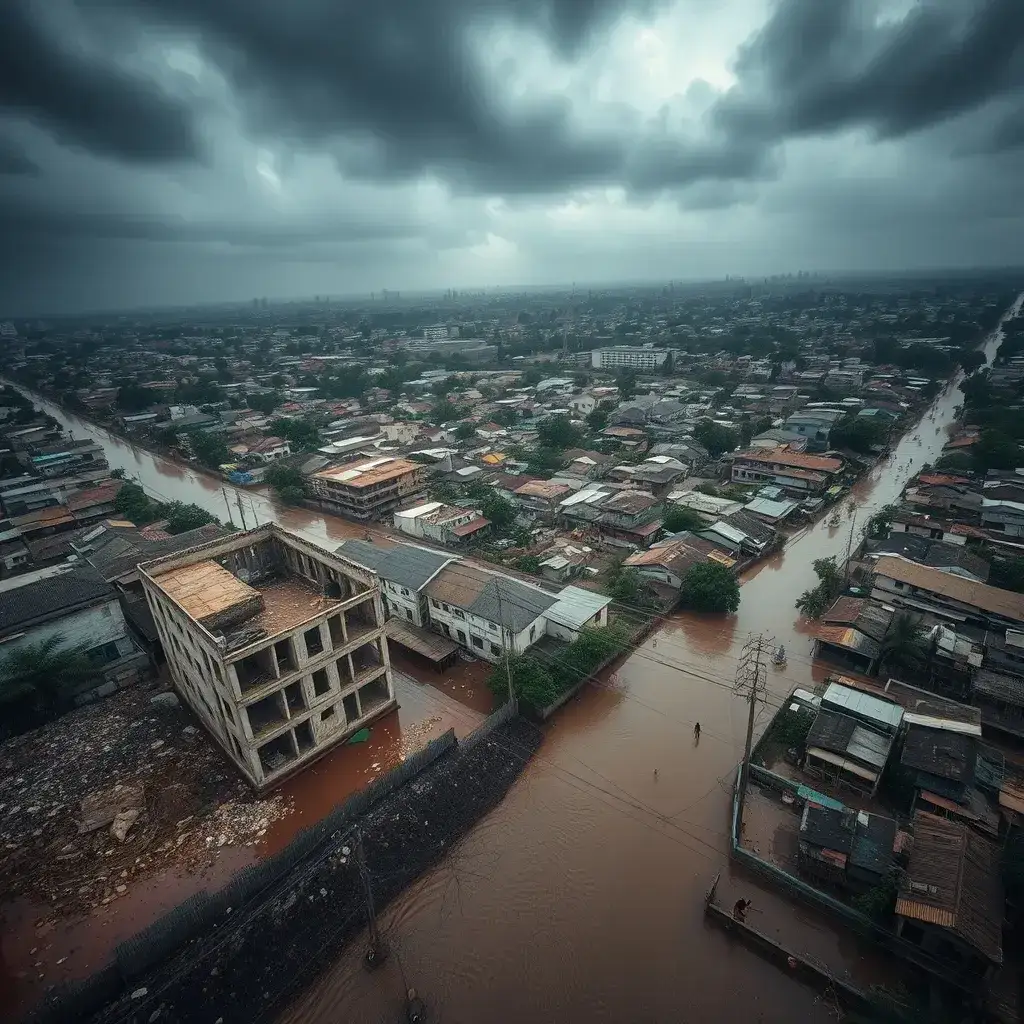
Accra, Ghana – The persistent and worsening flooding that plagues Ghana’s capital, Accra, is largely a man-made crisis, according to the President of the Ghana Institution of Engineers (GhIE), Ing. Ludwig Annang Hesse. Speaking on Joy FM’s Super Morning Show on Thursday, June 4, Ing. Hesse asserted that decades of poor urban planning, environmental neglect, and irresponsible human activities have directly led to the city’s vulnerability, making annual floods a predictable and devastating reality.
A Predictable Annual Calamity
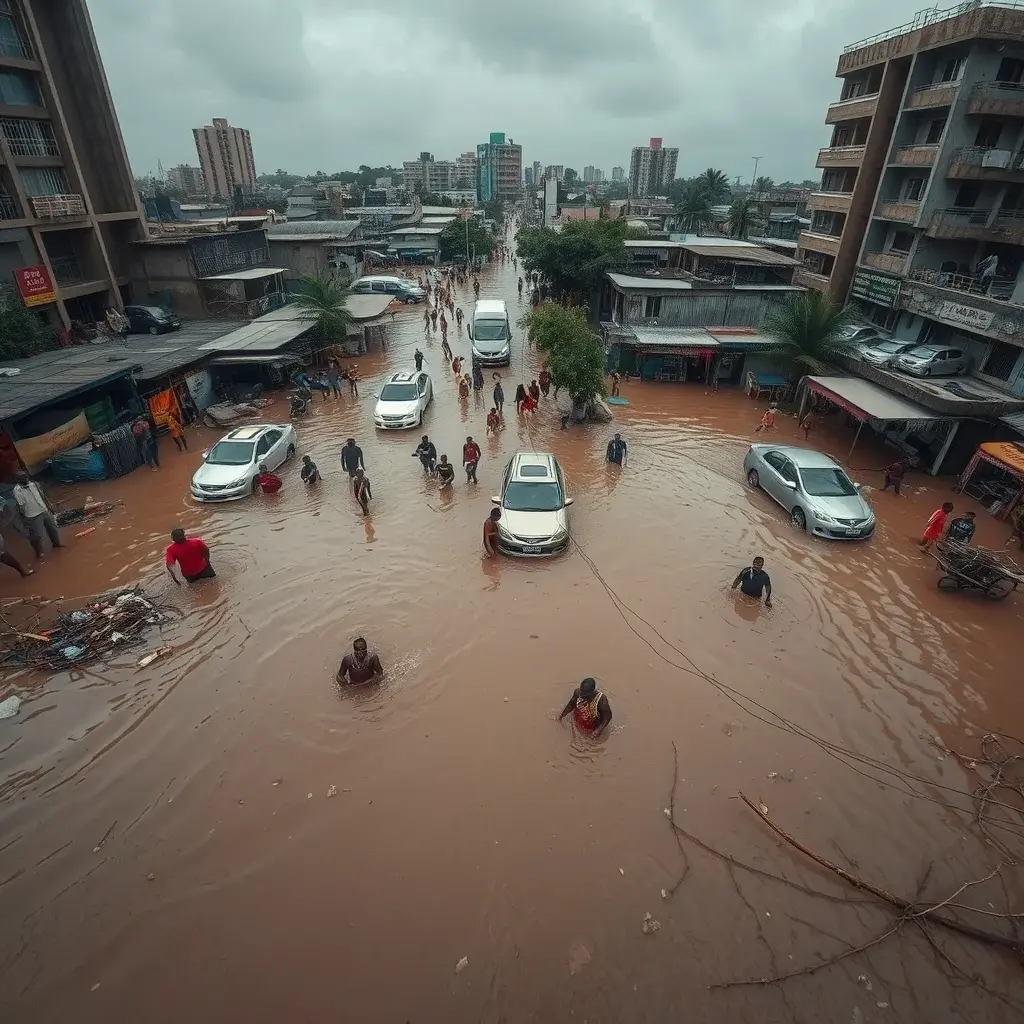
Ing. Hesse highlighted the alarming shift in flood frequency, noting that what was once an occasional event occurring every few years has now become an annual occurrence. “These days, we do not need a prophet to tell us that when it rains, Accra will flood,” he stated, emphasizing the predictability of the disaster.
He recalled a time when significant flooding might happen once a decade, or even less frequently. “We used to experience floods once in a while — perhaps once in 10 years, five years or even 20 years. Today, we know with certainty that Accra will flood every year, whether it is during the rainy season or not,” Ing. Hesse explained.
Destroying Natural Defenses
The root cause, according to the GhIE President, lies in the systemic destruction of Accra’s natural flood-control mechanisms over the past 30 to 40 years. Unregulated development has led to the filling of vital water-retention areas and low-lying lands, with construction occurring in zones inherently unsuitable for development.
This unchecked development has drastically altered the natural flow of rainwater. Water that once took approximately 12 hours to travel from the Aburi hills to Accra now reaches the city in about an hour. “The natural systems that slowed down the movement of water have been destroyed,” Ing. Hesse noted.
He expressed concern that nearly all natural areas capable of absorbing and retaining floodwaters have been compromised. “All the water-retention areas in Accra have been compromised. We have brought this situation upon ourselves,” he reiterated.
Waste and Encroachment Compound the Problem
Compounding the issue of lost natural defenses is the pervasive problem of waste disposal. Ing. Hesse criticized the indiscriminate dumping of refuse into drains and waterways, which significantly exacerbates drainage challenges. “The drainage channels downstream, which are already operating beyond capacity, are filled with silt, rubbish and plastic waste,” he said.
Furthermore, encroachment on waterways and the development of critical floodwater collection areas continue unabated. Areas like Sakumono, Teshie, and Korle are being reclaimed and developed, a trend Ing. Hesse warned could lead to a major disaster.
Rethinking Flood Management: An Upstream Approach
Ing. Hesse argued that successive governments have wrongly focused on downstream solutions, primarily by expanding drainage infrastructure. While significant investment has been made in drains, this approach fails to address the fundamental problem.
“Most of the solutions we have pursued over the years have been downstream solutions. We continue to expand drainage systems and invest heavily in them, but because the natural water-retention areas have been compromised, the water still overwhelms the system,” he explained.
He advocated for a paradigm shift towards an






Leave a Reply