
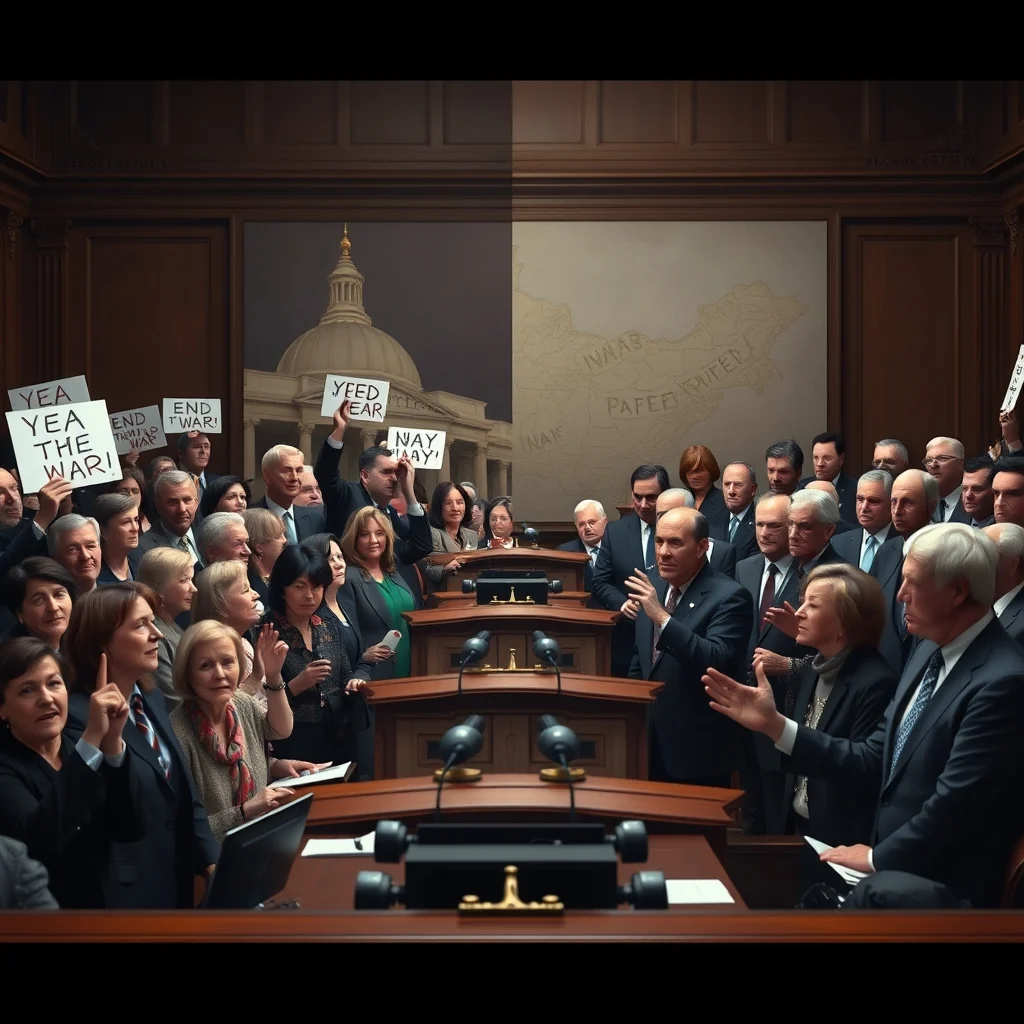
The U.S. House of Representatives has passed a measure aimed at preventing President Donald Trump from further military engagement in Iran. The largely symbolic vote, which occurred on Wednesday, saw 215 representatives side with Democrats, while 208 voted against, including four Republicans who publicly dissented from the administration’s war policy that began in February.
Context of the War Powers Resolution
This vote was on a war powers resolution that mandates President Trump to withdraw U.S. forces or obtain explicit congressional approval for the ongoing conflict. The legal authority of this House measure remains uncertain, with the White House characterizing it as an unconstitutional overreach that infringes upon presidential powers.
However, the resolution’s passage is significant as it intensifies pressure on the White House to de-escalate the Iran War. This comes amidst rising domestic petrol prices and growing public opposition to the conflict.
This marks the fourth attempt by the House to curtail President Trump’s war-making authority. A similar resolution advanced in the Senate in May but has yet to undergo a full floor vote.
Procedural Significance and Bipartisan Dissent
The measure passed on Wednesday was a concurrent resolution. If it successfully passes the Republican-controlled Senate, it would not require presidential signature, though it could face legal challenges.
The vote underscored divisions within the Republican Party, occurring shortly after a conservative revolt within Congress prompted the administration to withdraw plans for a $1.8 billion “anti-weaponization” fund intended for political allies.
Four Republicans—Thomas Massie, Brian Fitzpatrick, Tom Barrett, and Warren Davidson—joined a unified Democratic front to pass the resolution. Additionally, Democrat Jared Golden of Maine, who had previously opposed similar measures, offered his support this time.
Representative Tom Barrett of Michigan stated, “Congress alone declares war, that’s something certainly we need to be protective of.” When asked about potential retribution from President Trump, Barrett affirmed, “I vote my conscience for what I think is right and willing to accept that.”
Democratic Perspective and War Aims
Representative Gregory Meeks, a leading Democrat on the House Foreign Affairs Committee, hailed the vote as “a significant bipartisan rebuke of President Trump’s illegal and costly war in Iran and the first step toward ending it once and for all.”
Meeks argued that President Trump has failed to achieve the war’s stated objectives. He also pointed to the negative impacts on domestic fuel prices and the increased difficulty in achieving a diplomatic resolution to Iran’s nuclear program.
“The passage of this [measure] today signals a significant turning point: more and more Republicans are listening to their constituents who do not want another open-ended war in the Middle East,” Meeks, a co-sponsor of the resolution, added.
Background of the Conflict
The conflict began on February 28th with joint strikes by the U.S. and Israel against Iran. Iran retaliated with attacks on Israel and U.S.-allied states in the Gulf, leading to the effective closure of the Strait of Hormuz, a critical global shipping route.
In April, the U.S. implemented a blockade on vessels traveling to or from Iran’s coast. An initial ceasefire agreement between the U.S. and Iran was reached on April 8th.
Despite this agreement, recent days have seen further U.S. strikes on Iran, with Tehran responding with attacks on Kuwait, a U.S. ally. Prior to the vote, President Trump expressed optimism about ongoing negotiations to end the war, suggesting they could conclude as early as the upcoming weekend.
Presidential Statements and Future Outlook
Speaking to reporters at the White House on Wednesday, President Trump commented on recent strikes, stating, “We hit them pretty hard the night before, and actually last night.” He acknowledged that some might view the Iranian response as retaliatory, saying, “Some people would say they were slightly provoked because we took a strong action for a different reason, so they were reciprocating.”
The President also indicated that most of his administration anticipates a swift resolution through a deal, aiming to avoid further casualties. “In theory they’re pretty close to signing a paper, we’ve actually gotten along with them very well,” Trump remarked.
Future Implications and Watchpoints
The House’s vote, while symbolic, underscores growing congressional unease with prolonged military engagement and highlights the potential for bipartisan opposition to presidential war powers. The upcoming Senate vote and the administration’s ongoing diplomatic efforts will be critical indicators of whether this congressional action translates into a tangible shift in U.S. policy toward Iran. Observers will also be watching closely for the impact of the ongoing conflict and associated sanctions on global energy markets and the broader geopolitical landscape in the Middle East.










Leave a Reply