
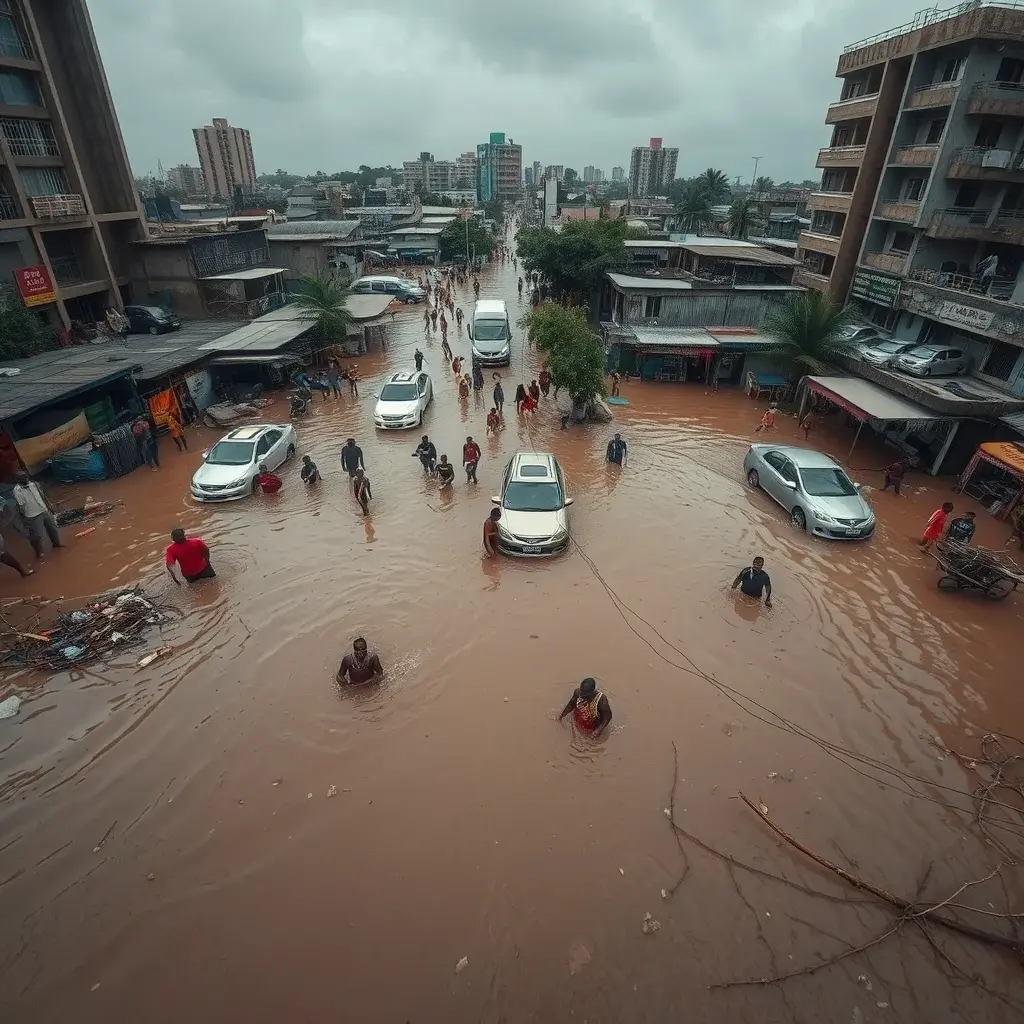
Accra, Ghana – In the wake of recent devastating floods that have once again submerged parts of the capital city, the President of the Ghana Institution of Engineers (GhIE), Ing. Ludwig Annang Hesse, has declared that the city’s infrastructure development over the past 30 to 40 years has been fundamentally misdirected, exacerbating the impact of heavy rainfall.
Ing. Hesse, speaking on Joy FM’s Super Morning Show, pointed to a critical failure in urban planning, where natural water retention areas and drainage pathways have been systematically encroached upon and built over. This unchecked development, he explained, has drastically altered the natural flow of water, turning what were once gradual flows into rapid torrents.
A History of Misplaced Priorities
The GhIE President elaborated on how decades of development choices have compromised Accra’s natural ability to manage rainwater. “For the past 30 or 40 years, we have done things the wrong way,” Ing. Hesse stated. “We have filled all the water-retention areas and low-lying lands, and we have built in places where development should never have occurred.”
This approach has led to a significant acceleration of water runoff. “Water that once took about 12 hours to travel from Aburi to Accra now takes roughly an hour. The natural systems that slowed down the movement of water have been destroyed,” he added.
The consequences are stark and recurrent. Every significant rainfall event now triggers widespread flooding, causing loss of life, extensive property damage, and significant economic disruption. Experts note that even moderate rainfall, occurring before the peak of the rainy season, has already led to numerous flooding incidents across the Greater Accra region this year.
Compromised Waterways and Unchecked Encroachment
Ing. Hesse emphasized that the core issue lies in the degradation of the city’s natural water management systems. “All the water-retention areas in Accra have been compromised. We have brought this situation upon ourselves. We do not need a prophet anymore,” he asserted.
This perspective is shared by urban planning experts and environmental advocates who have long warned about the dangers of building on floodplains and obstructing natural drainage channels. The rapid urbanization of Accra, while indicative of economic growth, has often occurred without adequate consideration for its environmental impact and resilience to natural hazards.
The GhIE President’s remarks highlight a critical need for a paradigm shift in how Accra approaches urban development and infrastructure management. Without stringent enforcement of planning regulations and a concerted effort to restore and protect natural water systems, the city is destined to face increasingly severe flooding challenges.
Expert Warnings and Data
The warnings from Ing. Hesse are not isolated. Numerous reports and studies over the years have documented the increasing vulnerability of Accra to flooding. Data from meteorological agencies often shows that while rainfall patterns can be erratic, the intensity of flooding is directly correlated with the extent of urban development and the degradation of natural drainage infrastructure.
For instance, studies by institutions like the World Bank and various local research bodies have frequently cited poor urban planning, inadequate drainage systems, and the proliferation of informal settlements in low-lying areas as key drivers of flooding in Accra. These factors collectively reduce the city’s capacity to absorb and channel rainwater effectively.
The economic cost of these floods is substantial, encompassing damage to homes and businesses, disruption of transportation networks, and loss of productivity. These recurring events drain public resources and hinder sustainable development efforts.
Implications for Residents and the Future
The persistent flooding crisis has direct and severe implications for the residents of Accra. Homes are inundated, livelihoods are destroyed, and the risk to life remains a constant threat during the rainy season. The economic burden also extends to the wider population through increased taxes and reduced public investment in other essential services.
For the construction and real estate industries, the current trajectory poses significant risks. Developing properties in flood-prone areas not only endangers future occupants but also leads to costly infrastructure failures and potential legal liabilities. A shift towards resilient and sustainable building practices is becoming increasingly imperative.
Looking ahead, the critical question is whether Accra’s authorities will heed these long-standing warnings. The future resilience of the city hinges on the immediate implementation of stricter planning enforcement, the protection and restoration of natural waterways, and a comprehensive review of all ongoing and future development projects to ensure they align with climate adaptation strategies. The effectiveness of these measures will determine whether Accra can mitigate its escalating flood risk or continue to be a city repeatedly brought to its knees by the rains.










Leave a Reply