
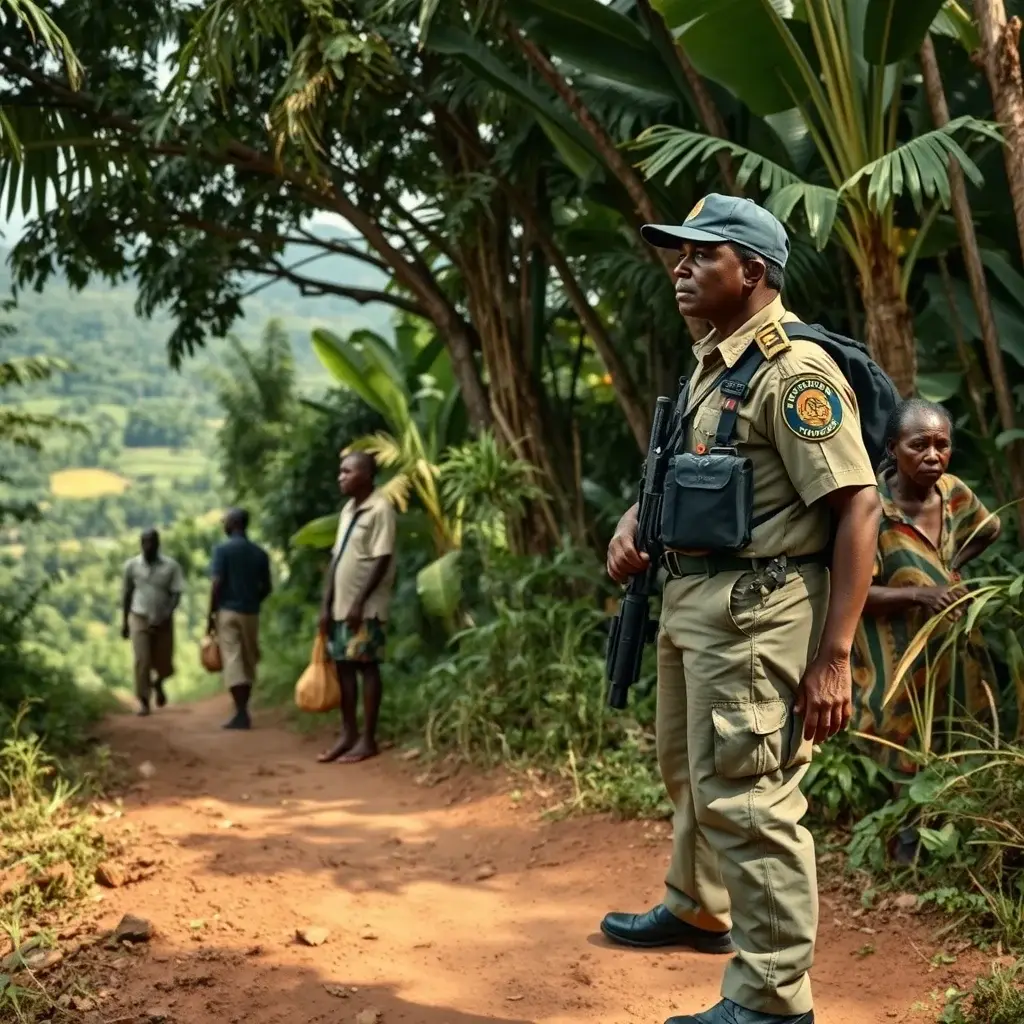
Ghana’s Minister for the Interior recently highlighted the existence of over one hundred unauthorized entry points along the Volta-Togo border, a statement that underscores a critical national security challenge. This revelation shifts the focus from historical and cultural connections to the urgent need for Ghana to address emerging threats in a complex regional landscape, impacting both national and human security.
Context: Shared Histories, Divided Borders
The Volta Region, home to communities like Aflao, Denu, and Agbozume, shares deep historical ties with present-day Togo. Centuries of shared ancestry, language, traditions, and trade routes predate modern nation-state boundaries. Colonial demarcation divided these territories but could not sever centuries-old cultural and familial connections.
While these historical realities explain the numerous informal pathways, the modern state bears the responsibility of securing its borders and protecting its citizens. The Minister’s warning thus calls for serious national attention to a contemporary security imperative.
The Evolving Regional Security Landscape
Ghana has long been recognized for its peace and stability in West Africa. However, the regional security environment is rapidly deteriorating.
The spread of violent extremist groups from the Sahel, instability in Burkina Faso, Mali, and Niger, the proliferation of small arms, transnational organized crime, human trafficking, drug smuggling, cyber-enabled criminal networks, and irregular migration have fundamentally reshaped West Africa’s security architecture.
These threats no longer announce themselves formally. Instead, they exploit weak governance, porous borders, intelligence gaps, and areas with limited state presence.
The identification of over one hundred unauthorized routes on a major international frontier is not a minor administrative issue; it represents a significant vulnerability demanding immediate policy action.
Understanding the Security Concern: Beyond Local Interactions
The discussion surrounding the Minister’s remarks has regrettably created the impression that security agencies are concerned about ordinary cross-border interactions among local communities. This is a mischaracterization.
Security agencies are not concerned about farmers tending land near the border, traders conducting lawful business, or families maintaining traditional relationships across the frontier. These activities are legitimate and part of the region’s fabric.
The genuine concern lies with individuals entering Ghana through routes that bypass official immigration controls, security screening, and identity verification systems. When people use approved border posts, authorities can verify identities, conduct security checks, establish travel records, monitor movements, and detect suspicious activities.
Entry through unauthorized routes circumvents these critical safeguards, creating an intelligence blind spot. The state loses visibility over who enters, their purpose, origin, and potential activities within the country. No responsible government can afford to ignore such a situation.
Implications for Human Security
Border security is often viewed primarily through a national security lens. However, from a Human Security perspective, effective border management is crucial for protecting communities and livelihoods.
Human Security extends beyond territorial defense to encompass the safety, dignity, and well-being of individuals and communities. Weak border controls can expose border communities to human trafficking, drug smuggling, arms trafficking, organized criminal networks, exploitation of vulnerable populations, and economic insecurity.
The residents of border communities are frequently the first victims of these illicit activities. Therefore, strengthening border governance is as much about protecting people as it is about protecting the state.
Lessons from Other Regions
Countries across Africa that have underestimated the security implications of porous borders have often suffered severe consequences. Some initially dismissed unauthorized crossings as harmless local practices rooted in historical realities.
Over time, criminal and extremist groups exploited these same routes to establish operational footholds. The lesson is clear: historical legitimacy does not negate contemporary risk.
A pathway once used for traditional trade and social interaction can equally be exploited by actors whose objectives threaten public safety and national stability. Security assessments must therefore focus not only on the existence of routes but also on who uses them, for what purpose, and under what conditions.
A New Approach to Border Governance
The solution is not to criminalize border communities or dismiss legitimate security concerns. Instead, it requires a balanced and integrated border governance framework.
The government should strengthen border surveillance and monitoring systems, enhance intelligence gathering and information sharing, and deploy modern technologies like drones, GIS, and remote sensing.
Increased collaboration among Immigration, National Security, Police, Customs, and other relevant agencies is essential. Deepening partnerships with traditional authorities and local communities, improving socio-economic opportunities within border communities, and promoting community-based intelligence and early warning systems are also vital components.
Traditional leaders possess invaluable local knowledge that can significantly support national security efforts. Border communities should be viewed as strategic partners rather than passive subjects of security interventions.
The Way Forward: Balancing History and Imperatives
The debate sparked by the Minister’s remarks presents an opportunity for Ghana to re-evaluate its approach to border governance in the 21st century. The core issue is not the existence of historical pathways, but Ghana’s capacity to manage them effectively to safeguard both national and human security.
History, culture, and cross-border livelihoods are important. However, in an era defined by emerging and evolving threats, effective border governance is paramount. The Volta-Togo border remains a critical gateway for trade, social interaction, and regional integration; it must also be secure.
The Minister’s warning should not be perceived as a criticism of border communities but as a call for vigilance, cooperation, and proactive action. Ghana’s future security depends on its ability to balance historical realities with contemporary security imperatives. This critical conversation must happen now.









Leave a Reply