
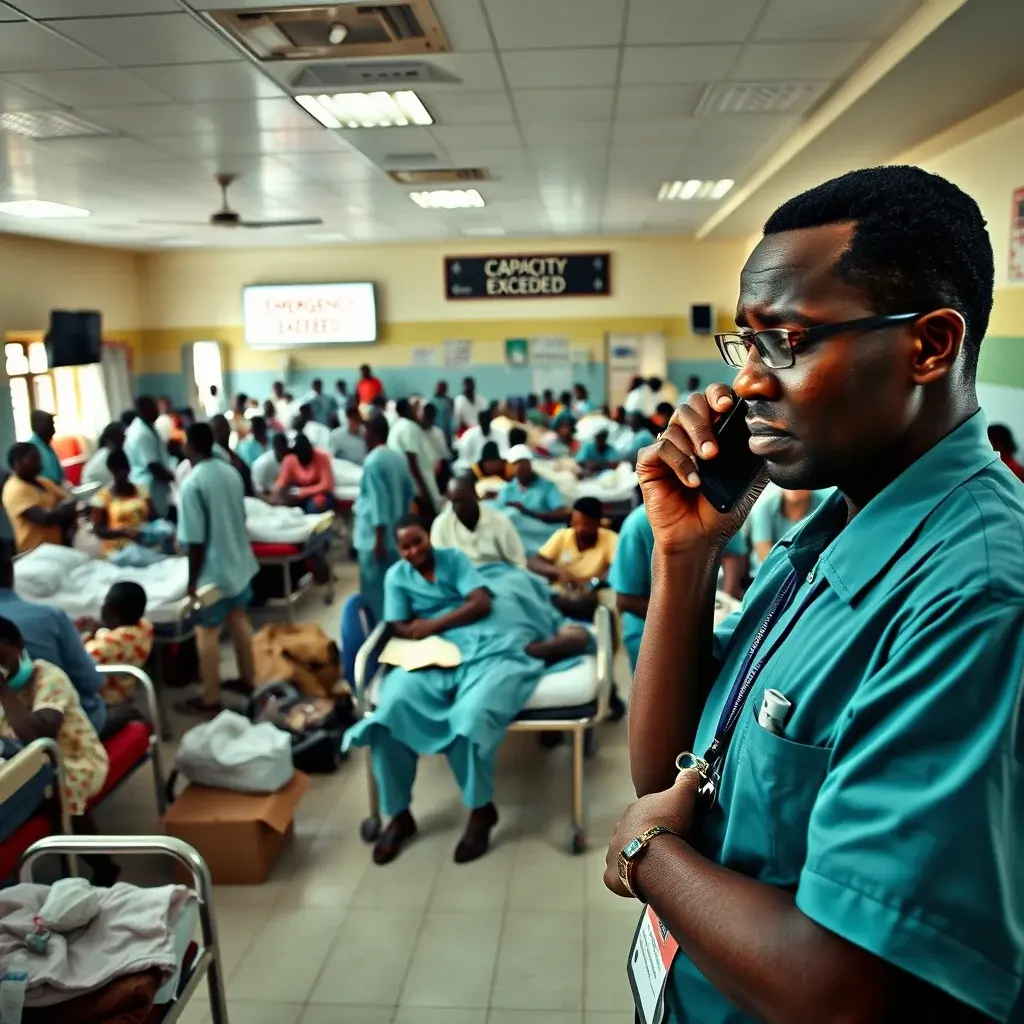
Doctors at the Komfo Anokye Teaching Hospital (KATH) in Kumasi are criticizing the Ministry of Health’s swift query to the hospital’s CEO, viewing it as a reactive measure rather than a solution to systemic healthcare challenges. The query, issued on Tuesday, June 2, followed a brief suspension of emergency admissions at KATH after its 37-bed facility was overwhelmed with nearly 100 patients. The Ministry cited a presidential directive against turning away patients, but the doctors argue their actions were for patient safety.
Context of the Overload
The incident occurred when KATH’s Accident and Emergency Centre reached critical capacity, forcing management to temporarily halt new admissions. This situation arose due to a significant influx of patients exceeding the facility’s operational limits. The decision to pause admissions was a measure taken to ensure that patients already in the system could receive adequate care without further compromising safety and quality.
Doctors Association’s Stance
The Komfo Anokye Doctors Association (KADA) released a statement characterizing the Ministry’s query to CEO Dr. Paa Kwesi Baidoo as a “knee-jerk response.” KADA Chairman Dr. Michael Leat emphasized that healthcare professionals making difficult decisions for patient safety should be supported, not publicly disciplined without a thorough review of the circumstances.
KADA clarified that the temporary suspension was not a refusal of care but an act of “responsible clinical governance.” The management’s coordination with peripheral health facilities aimed to ensure patients received timely and appropriate treatment within a functional healthcare network.
Systemic Issues and Proposed Solutions
The doctors highlighted that the overcrowding at KATH is a symptom of deeper, systemic issues. They called upon the government to strengthen referral capacities within the Ashanti region and beyond. KADA specifically urged the full operationalization of facilities like the Afari Military Hospital and Sewua Hospital.
According to the association, these underutilized or incomplete facilities could significantly alleviate the burden on KATH. Their effective functioning would improve patient distribution, reduce waiting times, and enhance emergency preparedness across the region.
Commitment to Patient Care
Despite the administrative friction, KADA reiterated its commitment to professionalism, patient safety, and equitable healthcare delivery. The association expressed readiness to collaborate with all stakeholders to find sustainable solutions to the increasing demands placed on KATH.
Resolution and Future Outlook
KATH has since resumed accepting new cases at its emergency centre after attending to the patients who were already admitted. The temporary measure, though controversial, brought immediate relief to the overwhelmed facility.
The incident serves as a critical indicator of the strain on KATH and potentially other major health facilities in Ghana. The focus now shifts to whether the Ministry of Health and the government will address the underlying infrastructure and referral system challenges highlighted by KADA, or if this will remain an isolated administrative response. The successful integration and operationalization of new and existing facilities will be key to preventing future crises and ensuring consistent, high-quality emergency care across the region.










Leave a Reply