
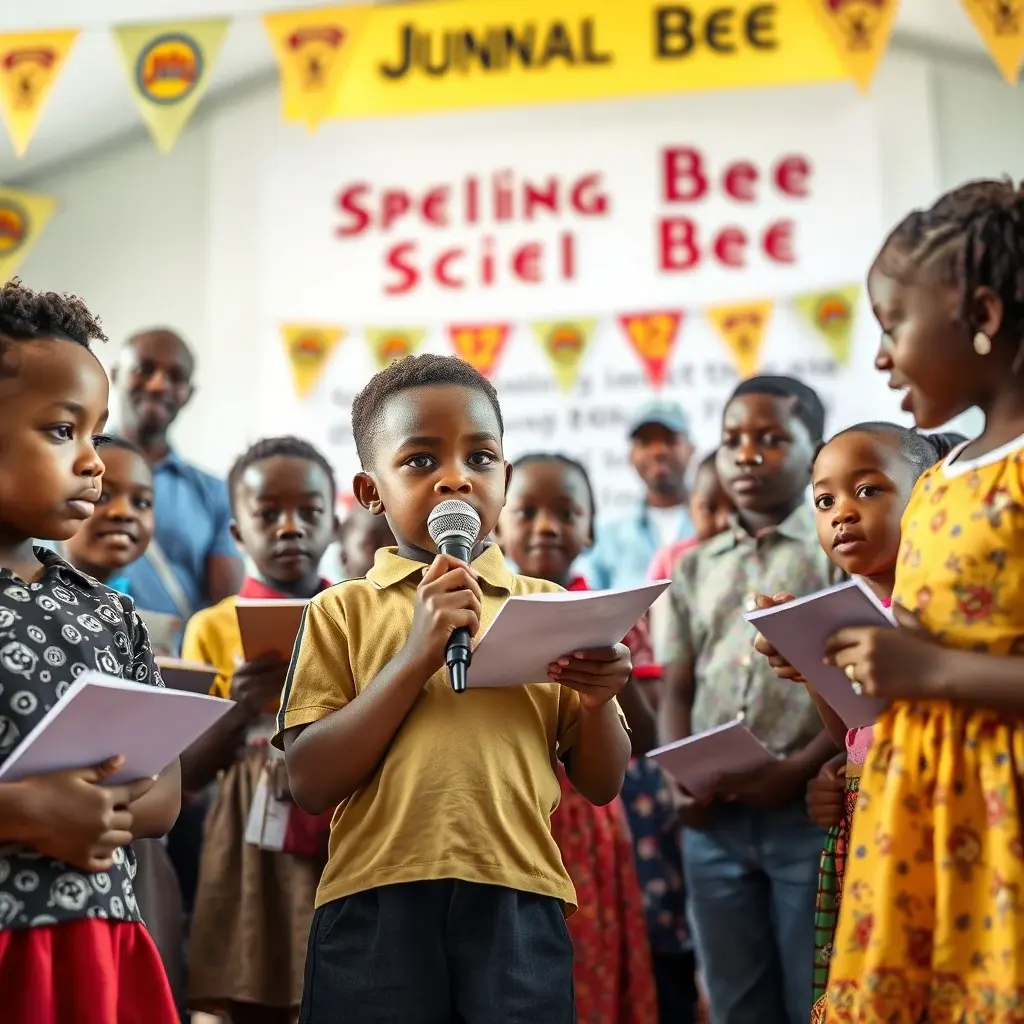
M.A. Bediako Adventist Preparatory School in Amakom hosted its inaugural Junior Journal Spelling Bee Competition recently, showcasing the exceptional spelling, reading, and critical thinking talents of its pupils while highlighting a call to strengthen foundational education to combat examination malpractice.
Literacy Promotion and Academic Excellence
The competition, organized in partnership with Junior Journal magazine, was designed to foster a greater appreciation for literacy and academic achievement among basic school learners. It formed an integral part of the school’s academic calendar, bringing together enthusiastic contestants from various school sections.
Addressing Examination Malpractice
During the event, Mavis Ansah, the Headmistress of M.A. Bediako Adventist Preparatory School, urged the government and the Ministry of Education to intensify their focus on foundational education. She posited that deficiencies in basic skills are a primary driver of examination malpractice.
“When it comes to examination malpractice, it has become a menace and solving it is not easy,” Ansah stated. “What I’d like to say is, they should rather supervise the foundational work of the kids, it’s because they’re lacking a lot of skills that’s why they’re involving themselves in malpractice.”
She emphasized that a robust foundation in early learning is crucial for building future academic success and can serve as a long-term solution to the pervasive issue of cheating in examinations.
The Role of Technology and AI in Education
Ansah also addressed the evolving landscape of education with the integration of technology. She stressed the importance of guiding children in the responsible use of Artificial Intelligence (AI), acknowledging its potential benefits while warning against its misuse.
“With this technological world, we need to introduce the kids to AI by under supervision,” she explained. “We can use AI to do a lot of things so we should just limit ourselves to educational purposes and things that will help the kids rather than giving them the general knowledge.”
The school is actively incorporating AI-powered learning tools and robotics into its curriculum to prepare students for a future increasingly shaped by technology.
Junior Journal’s Mission and Expansion Plans
Wisdom Dominic, CEO of Junior Journal, shared the organization’s mission to enhance literacy, cultivate a reading culture, and support academic development for basic school pupils. Established in 2025, Junior Journal aims to be a key partner in this endeavor.
Dominic appealed for broader support from government, stakeholders, and sponsors to enable the expansion of the competition to a national level. “We call on stakeholders, sponsors and the government to come on board because if you look at the excitement of the kids even the parents and teachers, it is something worth doing,” he said.
He envisions the competition growing into inter-school contests, further motivating students to refine their reading and writing abilities and boost their confidence.
Champions Emerge Amidst Challenges
The maiden competition concluded with Team Tuffour clinching the championship title. Team members Nhyira Serwaa Afia Wiredu, Kwabena Boateng, and Hazel shared their journey, recounting the difficulties in preparing for the contest, especially with challenging vocabulary.
“Some of the words, I wasn’t able to mention but with the help of my teacher Madam Charity, I was able to,” they remarked. “We are happy for our win.” Their victory defied initial doubts from classmates who had historically placed their section last in previous competitions.
Future Outlook for Literacy Initiatives
The success of the Junior Journal Spelling Bee Competition underscores the growing recognition of the importance of foundational literacy skills. As the initiative seeks national expansion, its impact could significantly influence educational policies and practices across Ghana.
The emphasis on supervised AI integration and the call for stronger basic education supervision suggest a forward-thinking approach to education. Future developments will likely focus on how these programs can be scaled effectively and how technology can be harnessed responsibly to foster a generation of highly literate and critically thinking individuals.









Leave a Reply