
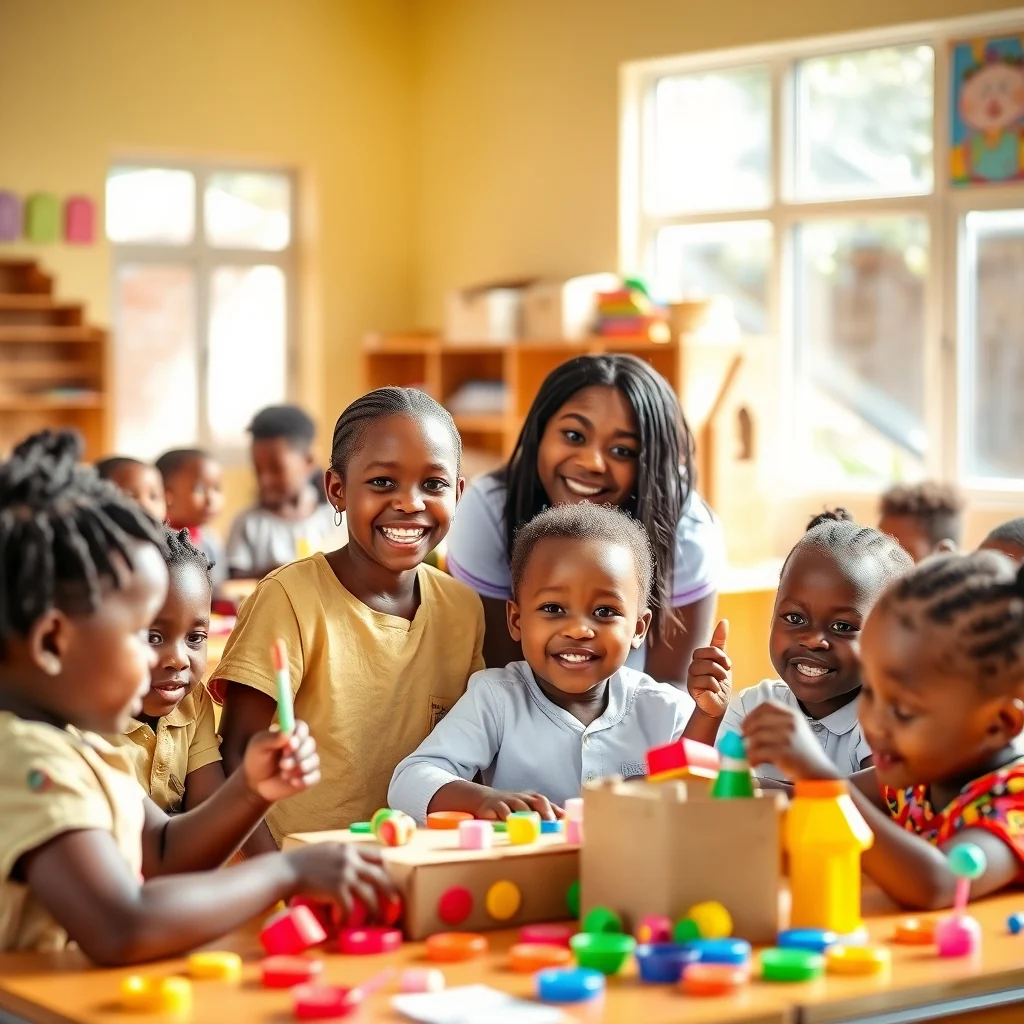
Ghana is significantly expanding its Play-Based Learning (PBL) program across all public kindergartens nationwide, aiming to enhance early childhood education outcomes. The initiative, reaffirmed on the International Day of Play on June 11, involves the Ministry of Education and development partners Sabre Education, Lively Minds, and Right to Play, who emphasize that play is fundamental to developing foundational skills in young children.
Context: The Importance of Early Childhood Education
Early childhood development is a critical period for brain development, with research consistently showing that quality early education lays the groundwork for long-term academic success. Traditional rote memorization methods are being challenged by approaches that recognize the innate learning drive of young children.
Play-Based Learning moves away from rote memorization, encouraging children to learn through exploration, storytelling, games, movement, creativity, and social interaction. This method is designed to foster essential competencies such as early literacy, numeracy, communication, creativity, and problem-solving skills.
National Rollout and Teacher Training
The Ministry of Education is implementing a comprehensive national rollout of PBL. This includes training approximately 30,000 kindergarten teachers across the country. The goal is to equip educators with the skills to deliver play-based lessons that align with the national curriculum.
This extensive training program aims to ensure that all children, irrespective of their geographical location, benefit from engaging and inclusive learning environments. The initiative underscores Ghana’s commitment to providing a strong educational foundation for every child.
Parental and Community Engagement
Recognizing that learning extends beyond the classroom, Ghana is also expanding a parental engagement model. This model focuses on strengthening learning at home through simple, everyday activities. Parents and caregivers are encouraged to engage in activities like storytelling, singing, counting, drawing, and conversation with their children.
These home-based activities are crucial for improving children’s language development, building confidence, and enhancing school readiness. They also serve to reinforce classroom learning in a practical and accessible manner, creating a holistic learning ecosystem.
Community Support for Learning Materials
The Ministry has called upon parents and communities to actively support schools. This includes engaging with teachers, attending Parent-Teacher Association (PTA) meetings, and reinforcing play-based learning principles at home. Furthermore, communities are encouraged to contribute low-cost or no-cost learning materials.
Items such as bottle tops, cardboard, fabric scraps, sticks, clay, and simple containers can be repurposed to create rich, interactive learning environments within classrooms. This collaborative approach leverages community resources to enhance educational experiences.
Expert Perspectives and Data
Research consistently demonstrates the positive impact of play-based approaches on children’s development. Studies cited by the Ministry indicate that PBL not only improves academic performance but also fosters critical life skills such as confidence, curiosity, resilience, and teamwork. These skills are vital for a child’s overall well-being and future success.
Development partners like Sabre Education, Lively Minds, and Right to Play bring valuable expertise and support to this national effort. Their involvement highlights the global recognition of play as a powerful pedagogical tool in early childhood education.
Implications for the Future
The nationwide expansion of Play-Based Learning signifies a major shift in Ghana’s approach to early childhood education. By investing in teacher training and fostering home and community involvement, the country is positioning itself to significantly improve learning outcomes for its youngest citizens.
This initiative could serve as a model for other nations seeking to strengthen their early years education systems. The focus on holistic development, combining classroom learning with home and community engagement, promises to equip children with the essential skills needed to thrive in the 21st century. What remains to be seen is the long-term impact on national literacy and numeracy rates, and how effectively the training programs are sustained and adapted across diverse regions.










Leave a Reply