
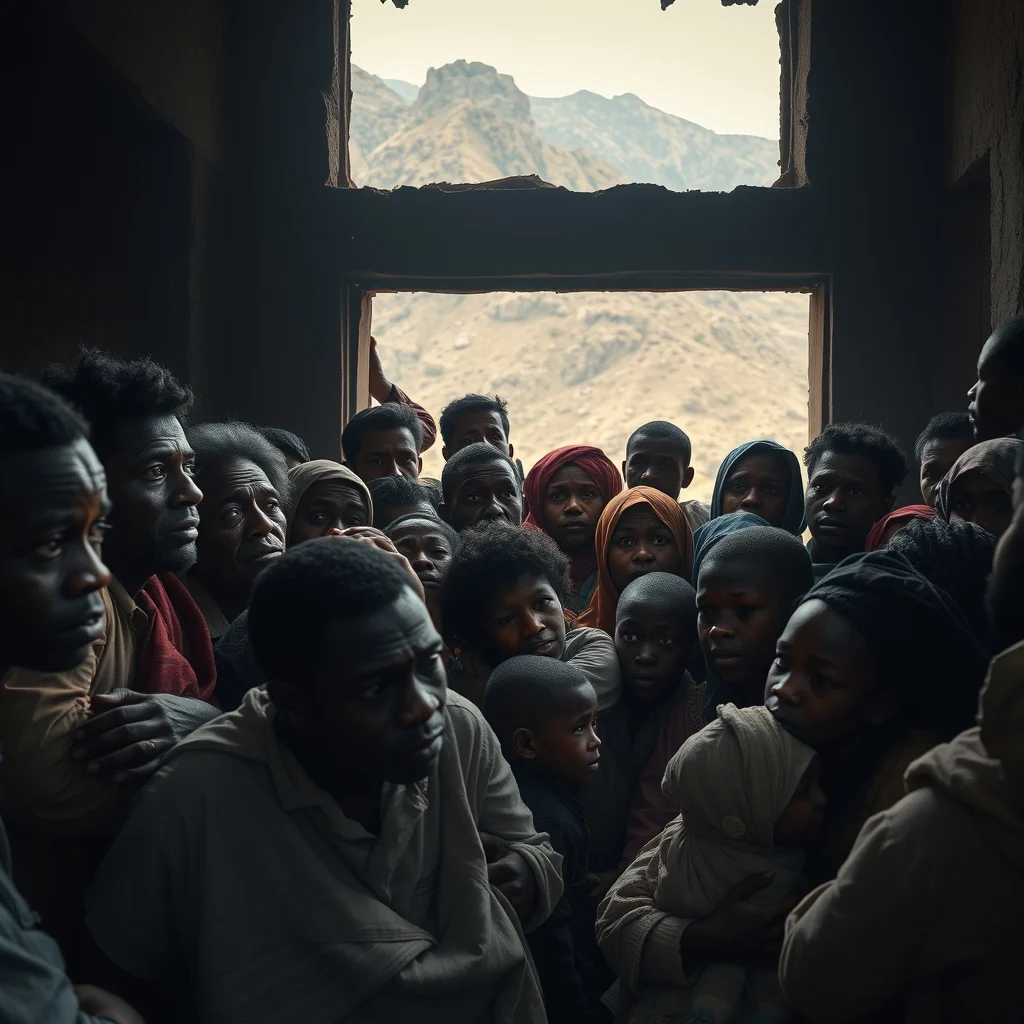
African migrants, including individuals from Mozambique and Malawi, have been forced to flee their homes and seek refuge in the mountains and town halls across South Africa’s Western Cape province in recent weeks due to a surge in xenophobic violence. This displacement follows targeted anti-immigrant protests that have turned violent, with reports of looting and threats against foreign nationals in several coastal towns.
Context of Recurring Xenophobia
South Africa has a history of xenophobic attacks, a recurring issue where immigrants are often scapegoated for the nation’s persistent economic challenges, including high unemployment and crime rates. Despite a lack of concrete evidence, these accusations are frequently amplified by politicians seeking to gain populist support, particularly in the lead-up to elections.
The recent wave of violence intensified over the weekend, with Mozambique reporting five of its citizens killed in xenophobic attacks in the town of Mossel Bay. The incidents have prompted governments of affected nations to consider voluntary repatriation programs for their citizens.
Escalating Fear and Displacement
In the town of Kleinmond, approximately 300 km from Mossel Bay, immigrant Lado Amido, a 49-year-old Mozambican who arrived in South Africa in February seeking work, recounted how an angry crowd approached his home on January 31st. They demanded that foreigners leave, leading him to flee and spend two nights in the surrounding mountains before seeking shelter at the local town hall.
Amido is now among about 100 other immigrants, primarily from Malawi and Mozambique, gathered at the Kleinmond town hall. Some are exploring options to return to their home countries through government-assisted repatriation efforts, while others are simply seeking safety from intimidation and violence.
Michael Markson, a 31-year-old Malawian, shared a similar harrowing experience. He fled his informal settlement in Kleinmond after his landlord warned him to evacuate for his own safety. Markson hid in the woods for a night, witnessing a large crowd of protesters armed with knives and sticks in the town. He is now awaiting assistance to return home, acknowledging that while his home country’s economy is poor, it is preferable to living under constant threat.
Official Responses and Local Concerns
South African President Cyril Ramaphosa addressed the issue in parliament on Tuesday, condemning the recent xenophobic violence while also stating the need to “address the challenge of migration” as part of building a safer and more prosperous society. However, the sentiment on the ground suggests a more complex reality.
Grant Cohen, a ward councillor for Kleinmond, confirmed that immigration authorities had recently conducted checks on businesses in the area for undocumented workers. Yet, he noted that many of the immigrants currently sheltering at the town hall are in South Africa legally. Cohen expressed concern over children being forced out of school and their country due to fear and intimidation, emphasizing that residents should not resort to taking matters into their own hands.
Broader Implications and Future Outlook
The recurring xenophobic violence highlights deep-seated socio-economic issues in South Africa, where foreign nationals often bear the brunt of public frustration. The upcoming local elections at the end of the year may further politicize the migration debate, potentially exacerbating tensions.
The reliance on immigrants as scapegoats for economic problems, despite the lack of evidence, poses a significant challenge to social cohesion. The safety and security of foreign nationals remain a critical concern, with many forced to make difficult decisions about their future in South Africa.
Moving forward, the situation underscores the urgent need for effective government intervention to protect vulnerable migrant populations, address the root causes of economic hardship, and counter the spread of xenophobic rhetoric. The response from both national and local authorities, as well as the actions of community leaders, will be crucial in determining whether South Africa can move beyond this cycle of violence and foster a more inclusive society. Observers will be watching to see if recent events prompt a more robust and sustained effort to combat xenophobia and protect human rights.



Leave a Reply