
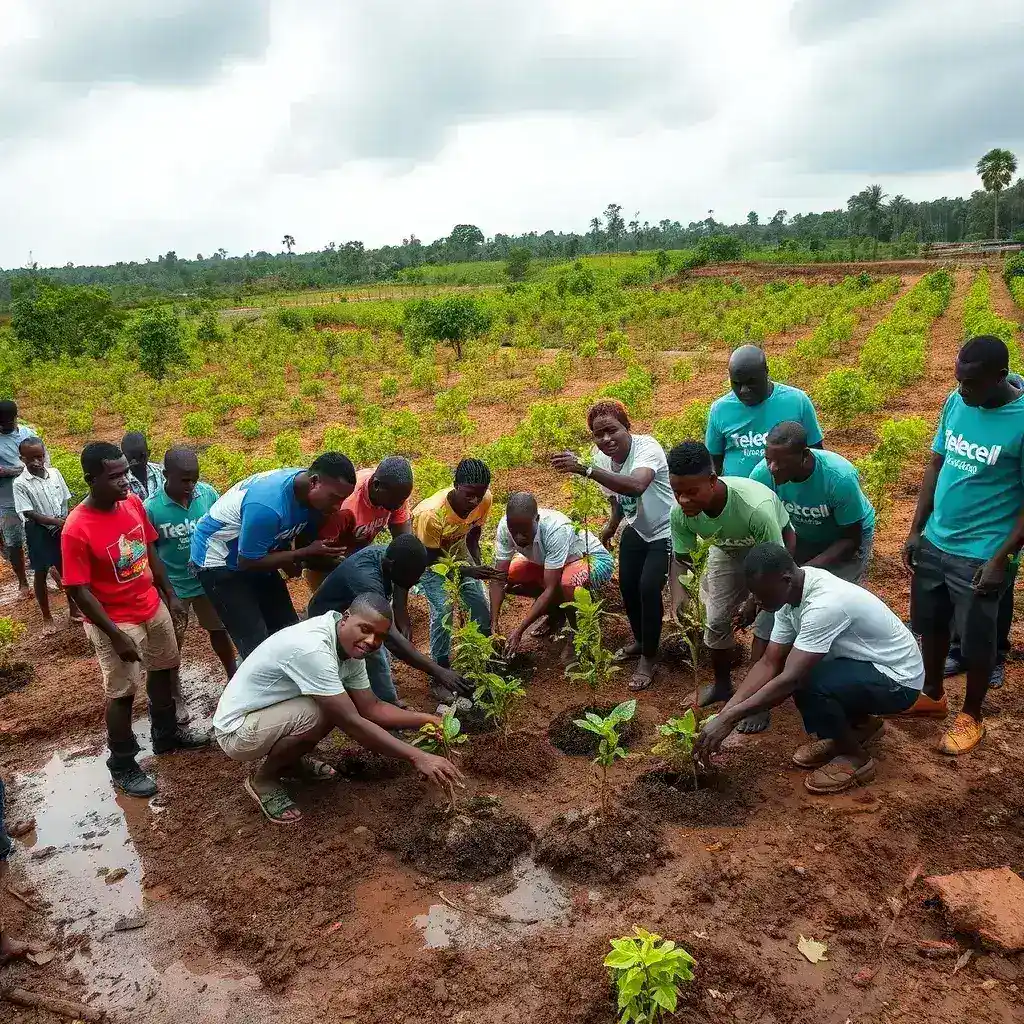
Over 250 Telecel Ghana employees and students from Kordiabe R/C Basic School volunteered on World Environment Day to plant 10,000 seedlings in the Chipa Tributary Forest Reserve, located in the Shai-Osudoku District of the Greater Accra Region. This initiative, conducted in partnership with the Ghana Forestry Commission, elevates Telecel Ghana’s total tree planting to 43,000 over the past five years, establishing it as a significant corporate contributor to reforestation in Ghana.
Context: Ghana’s Reforestation Challenge
Ghana has experienced substantial forest cover loss over the last three decades due to factors including human encroachment, illegal logging, and sand winning. This environmental degradation exacerbates the impacts of climate change, making large-scale reforestation efforts crucial for ecological restoration and national sustainability goals.
The Government of Ghana has launched the ‘Tree for Life Campaign,’ urging businesses and citizens to actively participate in accelerating the nation’s reforestation agenda. The Forestry Commission has set a national target of planting 30 million trees annually to combat deforestation and restore vital ecosystems.
Telecel Ghana’s Commitment to a Greener Future
The recent tree-planting exercise at the Chipa Forest Reserve saw the participation of Telecel Ghana’s senior management, employees, local students, Forestry Commission officials, and community leaders. The event underscored Telecel Ghana’s long-term commitment to environmental stewardship.
Ing. Patricia Obo-Nai, Chief Executive of Telecel Ghana, led staff in planting the seedlings, emphasizing the company’s dedication to ecosystem restoration. “We believe that a connected Ghana must also be a green Ghana,” Obo-Nai stated. “As a business that prioritises purpose beyond profit, environmental responsibility is integral to how we operate.”
She added that each seedling planted represents an investment in a sustainable future for upcoming generations. This annual initiative aligns directly with the government’s ‘Tree for Life Campaign,’ demonstrating a collaborative approach to national environmental challenges.
Forestry Commission’s Perspective
The Ghana Forestry Commission identified the Chipa Forest Reserve as a critical site for reforestation due to its susceptibility to degradation. Linda Ansah, District Manager for the Tema-Ada Forest District, expressed gratitude for Telecel Ghana’s consistent support.
“Telecel has been helping the Forestry Commission over the years to help restore forest cover in degraded forest reserves like this one, and that supports our fight against climate change,” Ansah remarked. “We are grateful that you come in every year to plant 10,000 trees to help green Ghana.”
The selected plant species, Acacia and Cassia, were chosen for their ecological benefits and ability to provide long-term canopy cover, crucial for rehabilitating the targeted degraded areas of the reserve.
Community and Employee Engagement
The reforestation activity served as an educational opportunity for students from Kordiabe R/C Basic School. Edmund Odei, a Form Two student, highlighted the importance of environmental conservation as a collective responsibility vital for human survival.
“My message to the world as we mark World Environment Day is to avoid deforestation and participate more in afforestation because if the last tree dies, the last man dies,” Odei asserted, underscoring the urgency of the issue.
Despite challenging wet conditions, Telecel Ghana employees actively participated, viewing the activity as a rewarding contribution to climate action. Elsie Mensah, a Brand and Communications Manager, described the experience as fulfilling, stating, “Although the wet conditions of the ground made the activity challenging, it was a rewarding experience knowing that every tree planted today will sustain the future of our environment.”
Broader Sustainability Initiatives
Telecel Ghana’s environmental program is a core component of its broader Sustainability agenda, aimed at reducing its ecological footprint. Beyond tree planting, the company is actively reducing the carbon emissions from its network infrastructure.
This includes expanding the use of solar power for its network exchanges and investing in digital technologies that minimize the necessity for physical travel, further contributing to a reduction in its overall carbon footprint.
Implications and Future Outlook
Telecel Ghana’s achievement of planting 43,000 trees positions it as a leader in corporate environmental responsibility within Ghana. The company’s sustained annual commitment and increasing targets signal a proactive approach to environmental challenges.
As Ghana continues its ambitious reforestation goals, the collaboration between corporate entities like Telecel Ghana and government agencies like the Forestry Commission will be critical. The success of these initiatives will influence the nation’s ability to combat climate change, restore biodiversity, and ensure a sustainable environment for future generations. Observers will be watching to see if Telecel Ghana meets its rising targets and if other corporations will follow its lead in making significant, long-term environmental commitments.










Leave a Reply