
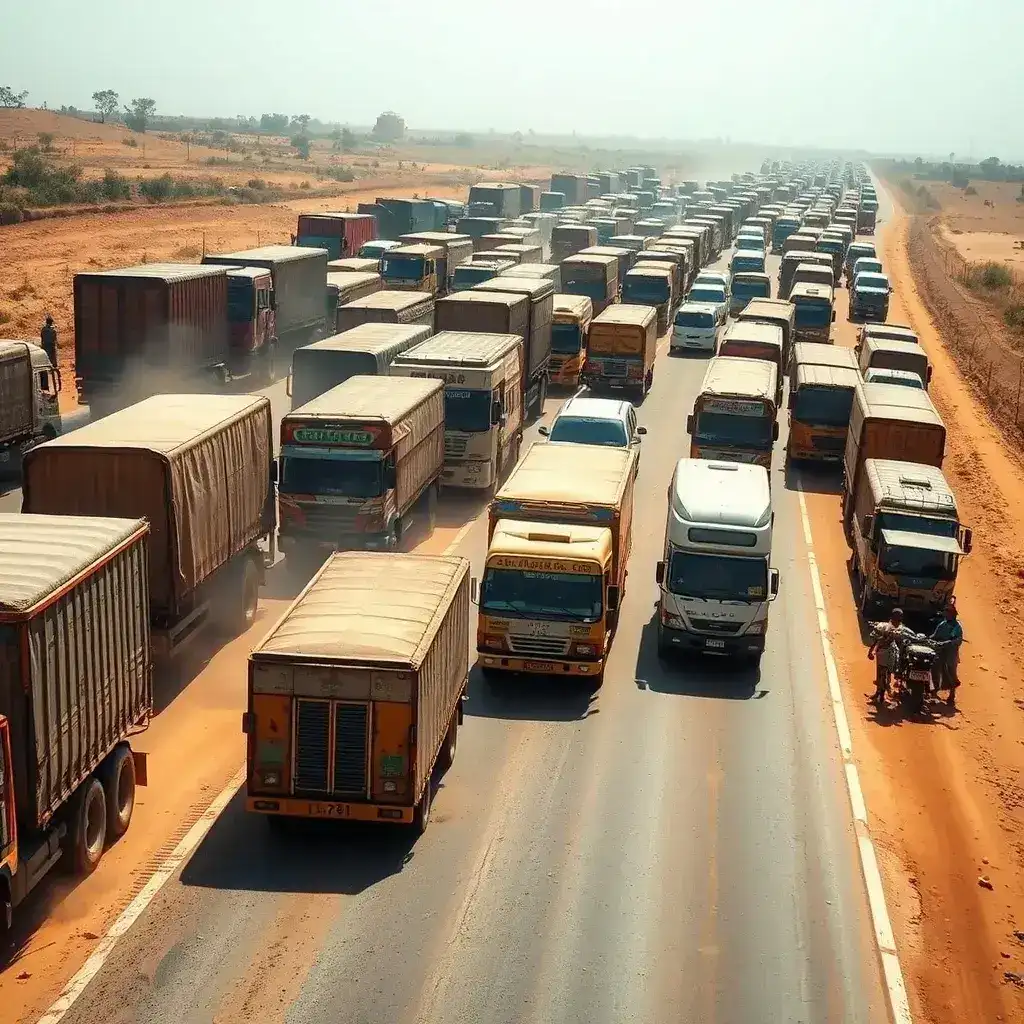
On May 1, 2026, commuters on Ghana’s vital Accra-Kumasi highway faced significant disruptions, with the Nkawkaw-Jejeti stretch becoming impassable due to severe congestion. This recurring gridlock has forced drivers to seek lengthy detours, highlighting a critical infrastructure failure that impacts the nation’s economy and daily life.
The Recurring Gridlock
The Accra-Kumasi highway, a crucial artery for Ghana’s inland cargo and passenger transport, experienced a near-complete standstill on May 1st. This is not an isolated incident; the Nkawkaw-Jejeti section has repeatedly become a “parking lot,” as described by affected travelers. The congestion has become so predictable that many drivers now actively seek alternative routes to avoid hours of delay.
Detours as the New Normal?
One common detour involves traveling through Kade, Banka, and Anyanso. While this route offers a less congested, albeit still challenging, journey, it adds significant time and strain. A trip that should take a few hours can easily extend, and even these alternative roads are not without their own issues, with some portions requiring improvement and causing dust pollution.
The necessity of such detours raises concerns about the state of primary infrastructure. “Leisurely 4+ hours” via Kade should not be celebrated as a success, but rather indicative of a system failure. The normalization of escape routes suggests a deeper problem with the main highway’s capacity and maintenance.
Economic and Personal Impacts
The economic implications of these delays are substantial. The Accra-Kumasi road handles approximately 80% of Ghana’s inland cargo, including food, fuel, and goods essential for businesses and consumers. When this artery fails, the entire nation feels the impact, leading to lost productivity and increased costs.
For ordinary Ghanaians, the options are increasingly limited and expensive. Air travel, while faster, is prohibitively costly, with one-way tickets to Kumasi fluctuating between GH¢900 and GH¢2,400, making it a luxury rather than a viable public transport option. Group travel by road is the most economical choice, but the choice of route is often dictated by the severity of the traffic jams.
Expert Perspectives and Solutions
The situation underscores a pressing need for infrastructure investment and better management of the existing road network. Experts suggest several key actions to alleviate the crisis. These include the timely completion of planned bypasses around bottleneck areas like Nkawkaw.
Furthermore, stricter enforcement against overweight and oversized trucks is crucial. These vehicles significantly contribute to the premature degradation of the asphalt, exacerbating road failures and increasing maintenance costs. Investing in and improving the existing detour routes would also provide more reliable alternatives when the main highway is compromised.
Looking Ahead
The recurring gridlock on the Accra-Kumasi highway is more than just a traffic inconvenience; it is a drag on Ghana’s economic progress and a source of daily frustration for its citizens. The “road war,” as described by those affected, requires urgent attention from authorities. Failure to address these infrastructure shortcomings risks further economic losses and diminishes the quality of life for millions. What remains to be seen is whether the necessary political will and investment will materialize to ensure Ghana’s main economic artery flows freely once more.







Leave a Reply