
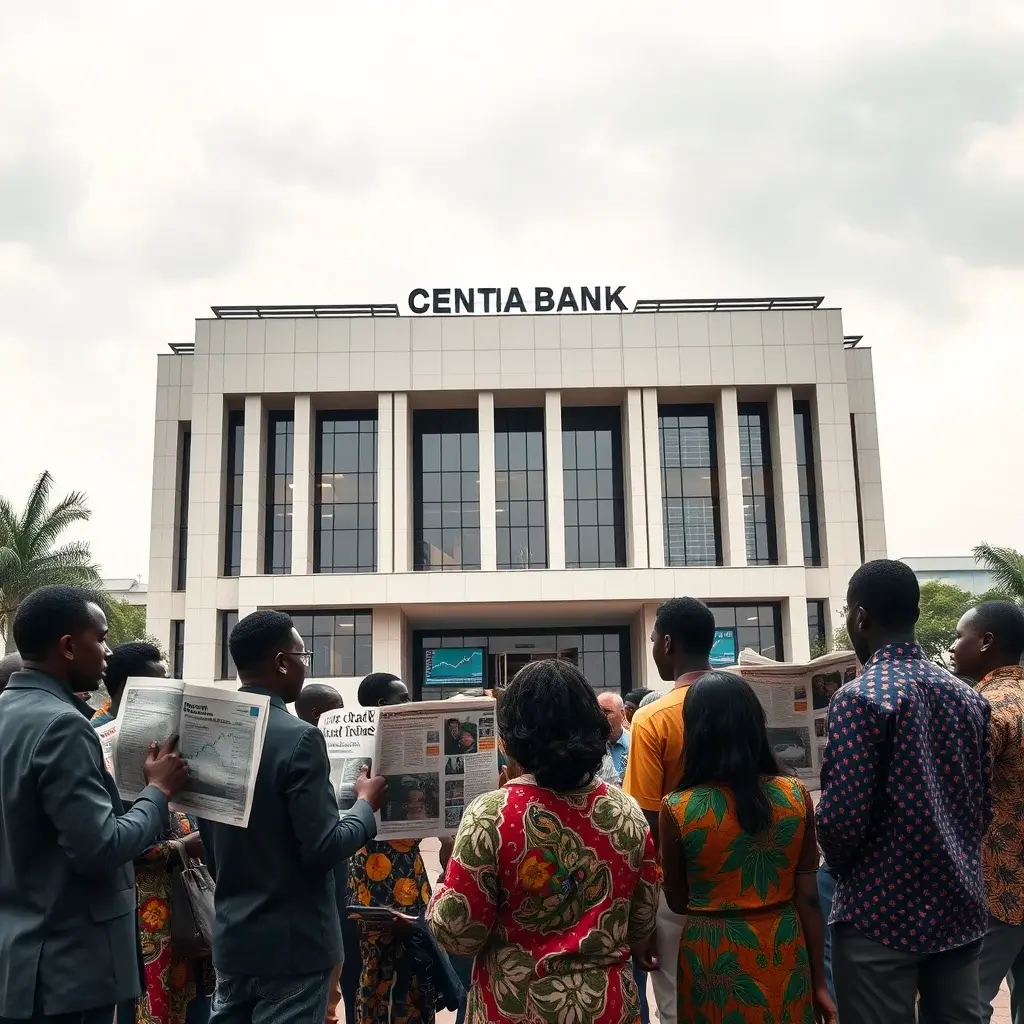
Accra, Ghana – May 1, 2026 – The Bank of Ghana (BoG) has reported an operational loss of GH¢15.6 billion for the 2025 fiscal year, a figure that has ignited a fierce political debate. While opposition figures decry the substantial deficit as a sign of economic mismanagement, government officials and the central bank are pushing back, asserting that the losses are a consequence of deliberate economic stabilization policies and do not represent a genuine threat to the nation’s financial stability.
Context of the Financial Disclosure
The Bank of Ghana’s latest financial statement, released on May 1, 2026, revealed an operational loss that stands as the second highest since the redenomination of the Ghanaian cedi in 2008. This disclosure immediately drew sharp criticism from the opposition New Patriotic Party (NPP).
Gideon Boako, NPP MP for Tano North and a member of Parliament’s Finance Committee, labeled the development a “new low.” He attributed the losses to policy missteps, arguing they were avoidable given that 2025 was not characterized by a major economic crisis.
Defending the Figures: Policy Over Mismanagement
However, Sammy Gyamfi, Chief Executive Officer of the Ghana Gold Board, has strongly refuted these claims. Speaking on the program ‘Newsfile’, Gyamfi dismissed the concerns, stating, “The Bank of Ghana has not made any losses that should even be a topic for discussion.”
He aligned with the governing National Democratic Congress (NDC) Majority’s position that the reported losses are the result of intentional policy choices designed to bolster the economy. Atta Issah, a Majority MP, echoed this sentiment at a press briefing on April 30.
“The costs you see in the financial statements are the costs of producing the outcomes that you are living through currently,” Issah explained. “The institution carried them on its books; the country received the benefits.”
Key Drivers of the Reported Loss
According to the Bank of Ghana, the significant operational loss was primarily influenced by three key factors:
Firstly, extensive monetary policy operations undertaken by the central bank. Secondly, a comprehensive gold accumulation programme. Thirdly, accounting adjustments related to exchange rate fluctuations.
The gold programme, in particular, resulted in an accounting cost of approximately GH¢9 billion. However, BoG officials emphasize that this figure does not signify a realized loss. They point to the fact that the bank still holds about 111 tonnes of gold as reserve assets, indicating that the underlying asset value remains.
The exchange rate component also significantly impacted the financial statement. The Bank reported a charge of GH¢19.32 billion in other comprehensive income. This reflects valuation changes due to the appreciation of the Ghanaian cedi against major international currencies during 2025. The local currency saw a notable appreciation of 41% during the year, which consequently reduced the cedi equivalent of the bank’s foreign-denominated reserves.
Distinguishing Central Bank and Gold Board Performance
Sammy Gyamfi also drew a clear distinction between the financial performance of the Bank of Ghana and the Ghana Gold Board. He highlighted that the Gold Board generated over GH¢960 million in revenue in 2025, with expenditures below GH¢120 million, positioning it for a substantial surplus.
Gyamfi further defended the actions of BoG Governor Johnson Asiama, characterizing the costs associated with the gold-for-reserves program as deliberate policy outcomes rather than indicators of mismanagement.
Historical Context and Operational Soundness
The NDC Majority contends that the Bank’s negative equity is not a new phenomenon originating in 2025. They trace its roots back to 2022, largely attributing it to the effects of the Domestic Debt Exchange Programme.
Despite the current financial figures and the political scrutiny, the ruling party maintains that the Bank of Ghana remains operationally sound and fully capable of fulfilling its core mandate of managing monetary policy and ensuring financial stability.
Looking Ahead: Economic Stability Amidst Accounting Realities
The divergence in interpretations of the Bank of Ghana’s 2025 financial statement underscores the complex interplay between accounting practices, monetary policy decisions, and political discourse in Ghana. As the nation navigates its economic landscape, attention will be on how these policy choices translate into tangible economic growth and stability in the coming years. Observers will be watching to see if the Gye Nyame Gold Reserves program yields its intended benefits and how the Bank of Ghana manages its foreign exchange reserves and monetary policy operations in response to global economic shifts and domestic pressures. The ongoing debate highlights the critical need for clear communication from the central bank regarding the nature of its financial performance and the strategic rationale behind its operations.










Leave a Reply