
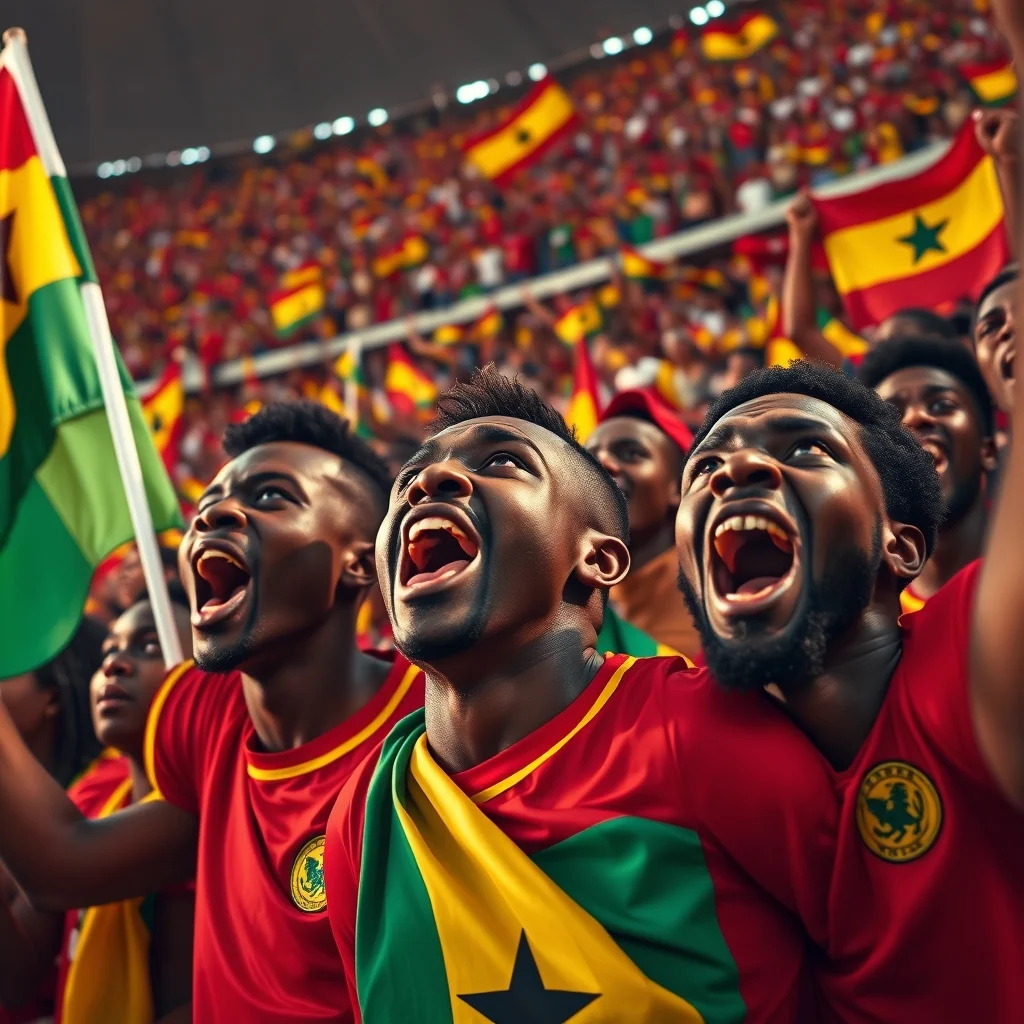
As Ghana gears up for the 2026 World Cup, a crucial discussion is emerging not about the team’s on-field performance, but about the crucial role of supporter mentality in navigating inevitable challenges. This shift in perspective, highlighted by reflections on past tournaments like Germany 2006 and Qatar 2022, emphasizes that a team’s success hinges as much on the unwavering support of its fans as on the players’ abilities, particularly when facing adversity.
Context: A History of Passion and Pressure
Ghanaian football boasts a rich history, with the national team, the Black Stars, having participated in multiple FIFA World Cups. Their journey has been marked by moments of incredible triumph and heartbreaking disappointment, fostering a passionate and deeply invested fanbase. However, the path to the 2026 tournament has been fraught with turbulence, including a late coaching change and recent inconsistent results, leading to a general sense of lowered expectations among many supporters.
This backdrop sets the stage for a critical re-evaluation of the supporter’s role. Traditionally, fans are seen as an audience to be entertained. However, the argument is being made that supporters should view themselves as the ‘twelfth player,’ actively contributing to the team’s spirit and resilience through thick and thin.
The Crucial Difference: Response, Not Setback
A pivotal moment for this discussion occurred during the Qatar 2022 World Cup. In a decisive match against Uruguay, Ghana’s captain, André Ayew, missed a penalty. This event, while significant, is being contrasted with a similar incident involving Argentinian superstar Lionel Messi, who also missed a penalty against Poland in the same tournament. Argentina, despite the setback, went on to win their match and ultimately the tournament.
The key difference, according to proponents of this new perspective, was not the missed penalty itself, but the collective response. When Messi missed, the Argentinian team and their supporters rallied, increasing belief and pushing forward. Conversely, when Ayew missed, frustration spread among the Ghanaian fans, leading to a perceived evaporation of belief and a loss of momentum for the team.
This stark contrast illustrates a core principle: the outcome of a setback is often determined by the reaction to it. While the missed penalty was a shared moment of potential defeat, the subsequent collective mentality dictated whether it became a turning point for failure or a catalyst for recovery.
Challenging the Consumer Mentality
The article challenges the notion of supporters acting as mere consumers of entertainment. This consumer mindset often leads to conditional support: cheering when the team performs well and withdrawing support when they struggle. Such an approach, it is argued, fails to recognize the fundamental role of a supporter, which is to offer unwavering backing, especially during difficult times.
True resilience, the argument goes, is not a spontaneous reaction to crisis. It is cultivated over time through consistent discipline, steadfast belief, active encouragement, and an enduring determination to persevere even when circumstances are unfavorable. This principle extends beyond the football pitch, holding true in business and in all aspects of life.
Implications for Ghana and Beyond
As Ghana approaches the 2026 World Cup with a degree of uncertainty, the question is not whether challenges will arise, but how the nation will respond. Will the collective spirit falter under pressure, as seen in past instances, or will it unite and propel the team forward?
This mindset shift has profound implications for Ghanaian football. It suggests that the responsibility for success is shared, with fans playing an active role in fostering a resilient team culture. By embracing the role of the ‘twelfth player,’ supporters can transform potential moments of despair into opportunities for collective growth and eventual triumph.
Looking Ahead: Building a Resilient Future
The focus for Ghana’s World Cup campaign in 2026, therefore, shifts from solely anticipating performance to actively cultivating a supportive and resilient environment. The success of the Black Stars may well depend on the collective choice to rise, rather than collapse, when adversity inevitably strikes. What remains to be seen is whether this mental framework can be successfully embedded within the fanbase, creating a powerful synergy between the team and its supporters that can overcome any challenge.









Leave a Reply