
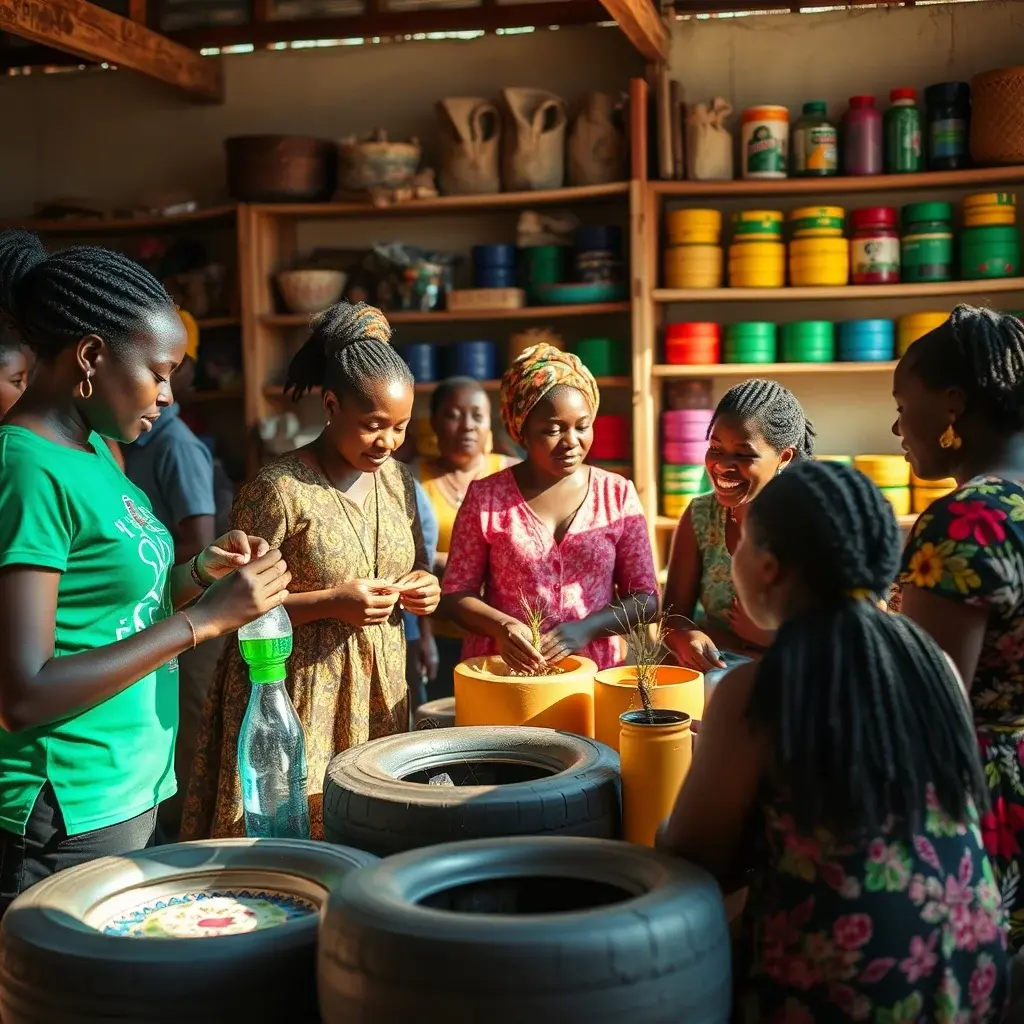
In a significant initiative addressing youth unemployment and climate change, EcoGreen Oases Legacy successfully trained 109 individuals in Techiman, Bono East region, equipping them with practical green skills to convert waste into economic opportunities. The three-day training program, held from June 1 to 3, 2026, at the Akina City Hotel, focused on recycling, upcycling, green entrepreneurship, digital business development, financial literacy, and enterprise management for youth, women, returnees, and persons with disabilities.
Context and Partnership
This program is part of a larger intervention supported by the Ghanaian European Centre for Jobs, Migration and Development (GEC), the European Union (EU), and GIZ. Its primary aim is to empower vulnerable groups with market-relevant skills, fostering economic reintegration, entrepreneurship, and long-term resilience. EcoGreen Oases Legacy, in collaboration with development partners like the German Sparkassenstiftung Western Africa (DSIK), seeks to build sustainable livelihoods while promoting environmental sustainability and local economic growth.
Hands-On Skill Development
Participants learned innovative techniques for transforming discarded materials into marketable products. This practical approach underscores the potential of waste as a valuable economic resource. The training emphasized not just skill acquisition but also the development of viable business models to generate income and create employment.
Community and Leadership Support
The initiative received strong endorsement from local leaders. Nana Kwame Brafi, the New Onyinasehene, representing the Omanhene of the Techiman Traditional Area, Oseadeeyo Akumfi Ameyaw IV, commended EcoGreen for tackling environmental degradation and unemployment concurrently. He highlighted the importance of skills development for youth self-reliance and local economic contribution.
Nana Ati Adjei, Chief of Mateso and Head of Endoscopy at Holy Family Hospital, also praised the program. He urged participants to leverage the acquired knowledge and opportunities, stressing the need for innovation and environmental protection for future generations. The event saw a diverse attendance, including traditional leaders, medical professionals, financial institution representatives, and community stakeholders.
Financial Backing and Vision
A key highlight was the commitment from Zenith Bank to support viable businesses emerging from the training with financial services and entrepreneurial guidance. This assurance bolstered participant confidence in their potential to establish sustainable ventures.
Queen Nihad Titiaka Oases Ibrahim, Founder and Executive Director of EcoGreen Oases Legacy, articulated a powerful vision during the closing ceremony. She declared that climate action should transcend mere conversation, becoming a driver of economic empowerment. “Every discarded plastic bottle, tyre, fabric, or waste material represents an opportunity waiting to be transformed into income, jobs, and sustainable livelihoods,” she stated.
Ibrahim emphasized that the future belongs to communities that can convert environmental challenges into economic opportunities. She thanked the supporting partners, including DSIK, GEC, GIZ, EU, and local collaborators, reiterating EcoGreen’s commitment to fostering a nationwide movement of climate-conscious entrepreneurs contributing to Ghana’s sustainability goals.
Expert Facilitation and Outcomes
The training was led by experienced facilitators who blended technical expertise with practical mentorship. Sessions covered entrepreneurship, financial literacy, climate action strategy, upcycling, product development, digital and business skills, and marketing. The program’s practical focus enabled participants to create upcycled products and develop business plans.
Awards and start-up support were presented to outstanding participants and teams, aiding their transition into enterprise creation. Prince A. A. Sadat, Project Coordinator, described the training as the start of a larger transformation, encouraging continuous learning and networking among beneficiaries.
Broader Impact and Future Expansion
This Techiman training follows a successful similar program in Tamale, where 113 beneficiaries received green skills and entrepreneurship training. EcoGreen Oases Legacy has trained approximately 500 individuals to date and plans to expand its reach to other regions in Ghana. The organization aims to cultivate a new generation of entrepreneurs capable of driving local development through sustainable practices.
As Ghana navigates challenges of unemployment, waste management, and climate change, initiatives like EcoGreen’s Green Skills Training Programme demonstrate a viable pathway forward. By integrating environmental responsibility with entrepreneurship and community empowerment, these programs offer tangible solutions for sustainable development.










Leave a Reply