
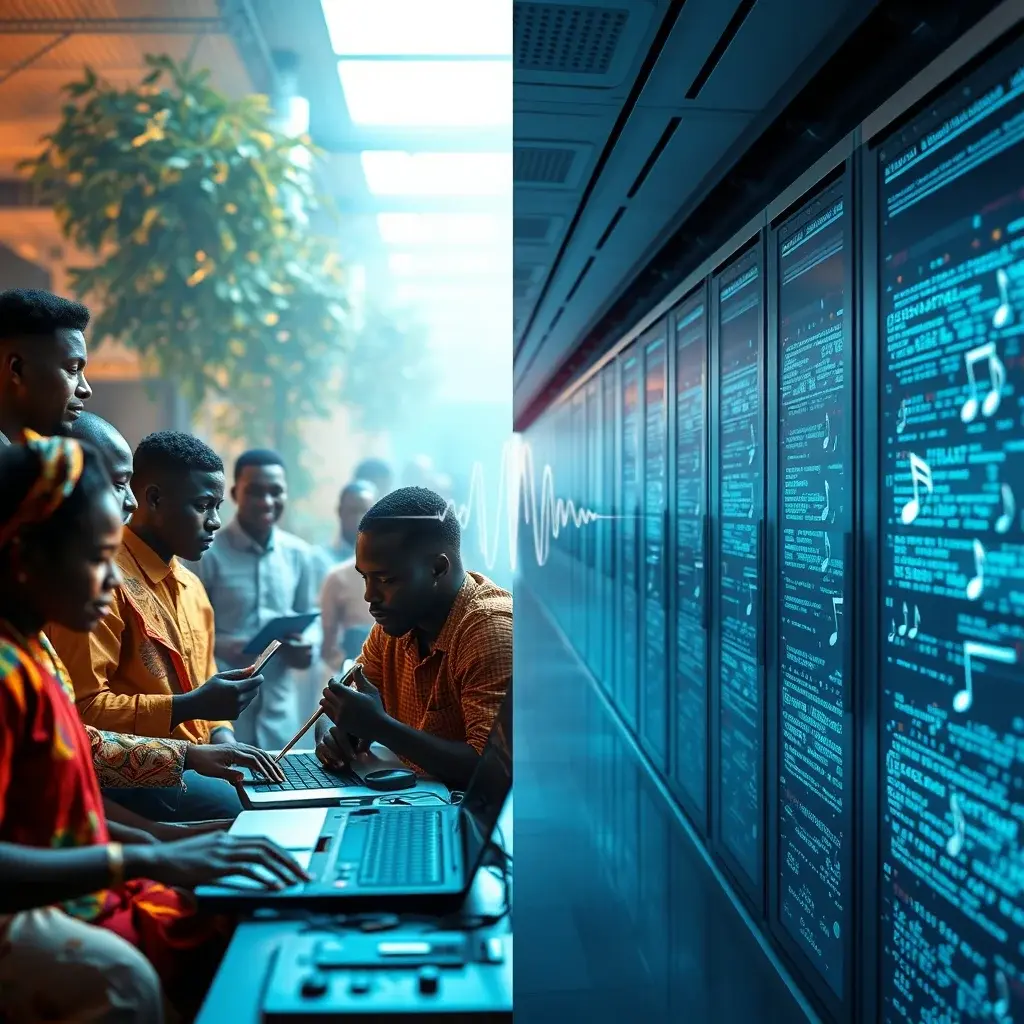
The rapid ascent of AI music platform Suno to a $5.4 billion valuation, announced in early 2026, highlights a pivotal moment where artificial intelligence is fundamentally reshaping the global creative economy, leaving Africa at a critical juncture to either shape this future or merely provide its raw materials.
The Shifting Landscape of Creative Infrastructure
Recent investment trends indicate a significant shift in how artificial intelligence is perceived by venture capitalists. AI is no longer viewed as a mere auxiliary tool for human artists but is increasingly being treated as foundational infrastructure for creative output. Suno’s impressive valuation, achieved by a company enabling users to generate songs from text prompts, underscores this transformation.
This $5.4 billion valuation represents a substantial bet on a future where AI-driven platforms democratize content creation, making it more accessible and participatory. Capital is flowing towards technologies that significantly lower the barriers to entry for aspiring creators, signaling a profound change in the industry’s economic drivers.
Legal Battles and the Future of Copyright
Suno’s meteoric rise is shadowed by significant legal challenges. The company faces lawsuits from major record labels alleging that copyrighted music was used for AI model training without proper authorization. This legal battle is poised to become a landmark case, potentially setting precedents for the entire AI and creative industries.
The core of the dispute lies in whether AI companies can train their models on copyrighted material without explicit permission. A favorable ruling for Suno could bolster fair use arguments and accelerate AI development. Conversely, if the record labels prevail, AI firms will be compelled to negotiate licensing agreements and compensate rights holders, fundamentally altering the economics of AI training data.
The implications of this legal fight extend beyond music, impacting publishing, film, photography, and journalism. The outcome will play a crucial role in defining the legal and ethical frameworks governing the AI era.
Africa’s Position: A Warning and an Opportunity
Africa’s participation in this critical legal discourse has been minimal, presenting a dual challenge and opportunity for the continent. The warning is stark: without robust systems for documenting, licensing, and protecting its vast creative assets, Africa risks its unique music, languages, and cultural expressions becoming untraceated training data for foreign AI models.
This could lead to the uncompensated exploitation of African cultural heritage, where rhythms, proverbs, and sonic innovations are absorbed into algorithms without any economic benefit returning to the creators or the continent. The continent could inadvertently contribute to the wealth of international tech companies while its own creators remain unrewarded.
Conversely, AI presents significant opportunities for African creators. It can empower musicians, filmmakers, and artists to reach global audiences more efficiently, reduce production costs, and unlock novel revenue streams. For instance, an African musician could potentially compose, arrange, and distribute a song worldwide in a fraction of the time previously required.
Building the Future: Ownership and Infrastructure
Realizing these opportunities, however, necessitates substantial improvements in copyright enforcement, metadata standards, and digital rights management. Crucially, it requires investment in African-owned creative technologies and platforms.
For years, observers have noted a disconnect between celebrating Africa’s cultural exports and investing in the infrastructure needed to monetize them. Government support often praises cultural soft power without adequately funding the hard systems required to protect intellectual property.
The Suno case underscores that intellectual property is emerging as a paramount economic asset in the digital age. Africa, with its rich cultural tapestry, possesses immense potential economic value that is frequently underestimated. The future economic landscape will favor not only those who create culture but also those who own the platforms, datasets, and technologies that govern its distribution and monetization.
Moving Forward: Investment in African AI
This moment demands a strategic shift for African governments, investors, and creative industries. The focus must expand beyond content creation to encompass ownership, infrastructure development, and technological innovation. The prevailing perception of African music and culture as an inexhaustible, unprotected resource needs to be challenged.
The imperative is to build or invest in African AI platforms capable of understanding and respecting the continent’s diverse languages, rhythms, and intellectual property rights. Failure to do so risks a future where the world’s music is increasingly AI-generated, but the profits are not shared by the cultures that inspired it, constituting a significant form of digital exploitation.










Leave a Reply