
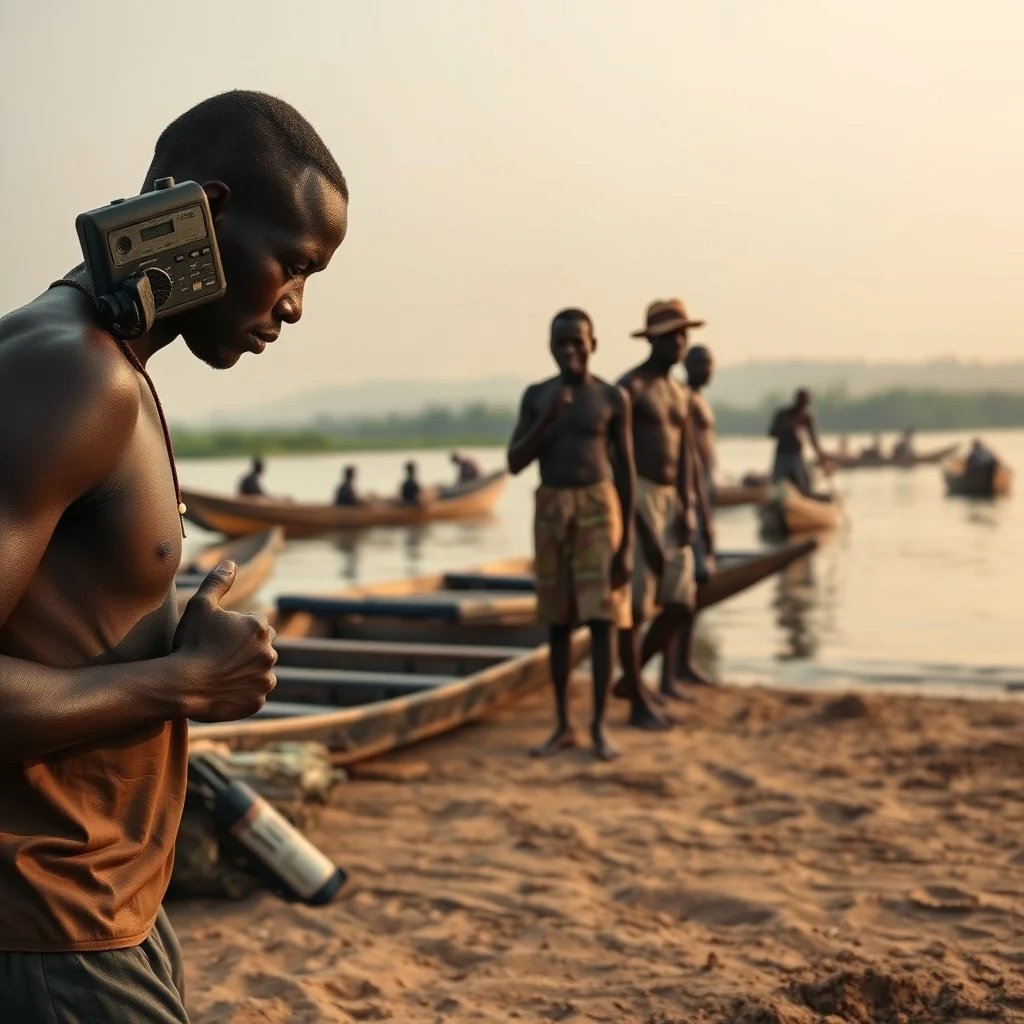
Fishermen and residents along Ghana’s Oti River are increasingly relying on daily weather forecasts from the Ghana Meteorological Agency (GMet) to navigate the waterway’s unpredictable conditions, transforming their ability to prepare for sudden storms and preventing potential tragedies. The forecasts, delivered via radio, have become a critical tool for survival for thousands of individuals who depend on the river for their livelihoods.
The Changing Face of the Oti River
For generations, communities along the Oti River have depended on the water for sustenance, transport, and trade. However, recent years have seen a marked increase in the unpredictability of weather patterns. Storms now form with little warning, and wind directions can shift abruptly, rendering traditional methods of weather prediction based on experience and observation insufficient.
Adjetey Mawuwue, a 53-year-old resident, recalls a time when experience was the primary guide. “In the past, we predicted the weather accurately, but storms surprised us in recent years. We had to run for our lives,” he stated, lamenting the loss of friends caught unawares by sudden tempests.
Kofi Yamba, 36, echoed this sentiment, noting that while fathers relied solely on experience, the weather’s rapid changes outpaced such knowledge. “Now we can plan. We move when it’s safe. We stay when it’s dangerous,” he explained, highlighting the shift brought about by accessible forecasts.
A Voice of Safety on the Water
The daily weather reports have permeated daily life along the Oti River, influencing decisions beyond fishing expeditions. Avevor Charity, a 28-year-old fishmonger and mother of two, starts her day by listening to the radio. “Storms used to come fast. Every night I feared for my family,” she shared, but now the forecast provides her with peace of mind, allowing her to plan travel for relatives and daily activities.
Young fisherman Kwesi experienced the direct benefit of heeding a warning. When the radio announced a rough river day, he delayed his departure. Shortly after, a violent storm swept across the water, catching some fishermen who had ignored the alert. Kwesi remained safe on shore.
The author of this report also experienced the critical timing of a forecast. While crossing the Oti River, the boat’s engine failed midway. Although the initial journey was calm, the weather rapidly deteriorated, mirroring the predicted rain. The early warning had prompted an earlier departure, potentially averting a more dangerous situation had they delayed.
The Cost of Missed Warnings
Despite improvements in forecasting, accidents on Ghana’s waterways persist, often with tragic outcomes. In May 2023, nine schoolchildren drowned when their canoe capsized on the River Densu. Later that year, two fishing canoes overturned near a coastal estuary. In October 2025, a canoe carrying mourners on the Volta Lake capsized due to strong winds, resulting in fifteen deaths, including eleven children.
A 2024 Auditor-General’s report documented at least fourteen deaths in ten boat-related accidents between 2019 and early 2023, with many inland incidents going unreported. Kofi recounted a harrowing incident where a mother lost her life in a capsized canoe, leaving his question lingering: “What if they had heard the weather warning?”
Strengthening the Early Warning Network
Marine meteorologist Thomas Biney of GMet emphasizes the critical role of timely information. “Our mission is to give people the right information at the right time so they can stay safe,” he stated. GMet’s forecasts now encompass storm alerts, rainfall predictions, thunderstorm warnings, wind and wave advisories, and flood-risk bulletins. These advisories, especially concerning wave heights, are vital for inland communities like those on the Oti River.
Ghana has invested significantly in its forecasting and early warning systems. This includes over 200 automatic weather stations, a 24-hour National Forecasting Centre, expanded inland water and marine forecasting, nationwide weather updates, and community-level alerts disseminated through radio, SMS, local leaders, teachers, and volunteers. Training programs for various sectors are also part of the initiative.
Senior meteorologist Joshua Asamoah noted, “The more observations we have, the stronger the forecasts. Strong data saves lives.” The global estimate by the UN and World Meteorological Organization suggests that every dollar invested in early warning systems can yield up to fifteen dollars in avoided disaster losses. Ghana’s objective is clear: “No Ghanaian should die because they did not know a storm was coming,” said Joshua.
A Glimmer of Hope on the Horizon
For canoe builder Williams Modzakah, who has witnessed the economic devastation storms can wreak, information is a powerful tool. “Anytime I hear a warning, I call my friends on the river. Information saves lives,” he asserted. While the Oti River remains inherently unpredictable, and warnings may not always reach every individual, a tangible shift is occurring.
People are actively listening, planning, and making informed decisions. This change is visible in the cautious pauses of fishermen before they embark, the watchful eyes of mothers scanning the sky, and the morning ritual of tuning into the radio. For the first time in many years, communities along the Oti River are facing the elements with a degree of preparedness, offering a crucial lifeline and increasing the likelihood of a safe return home.



Leave a Reply