
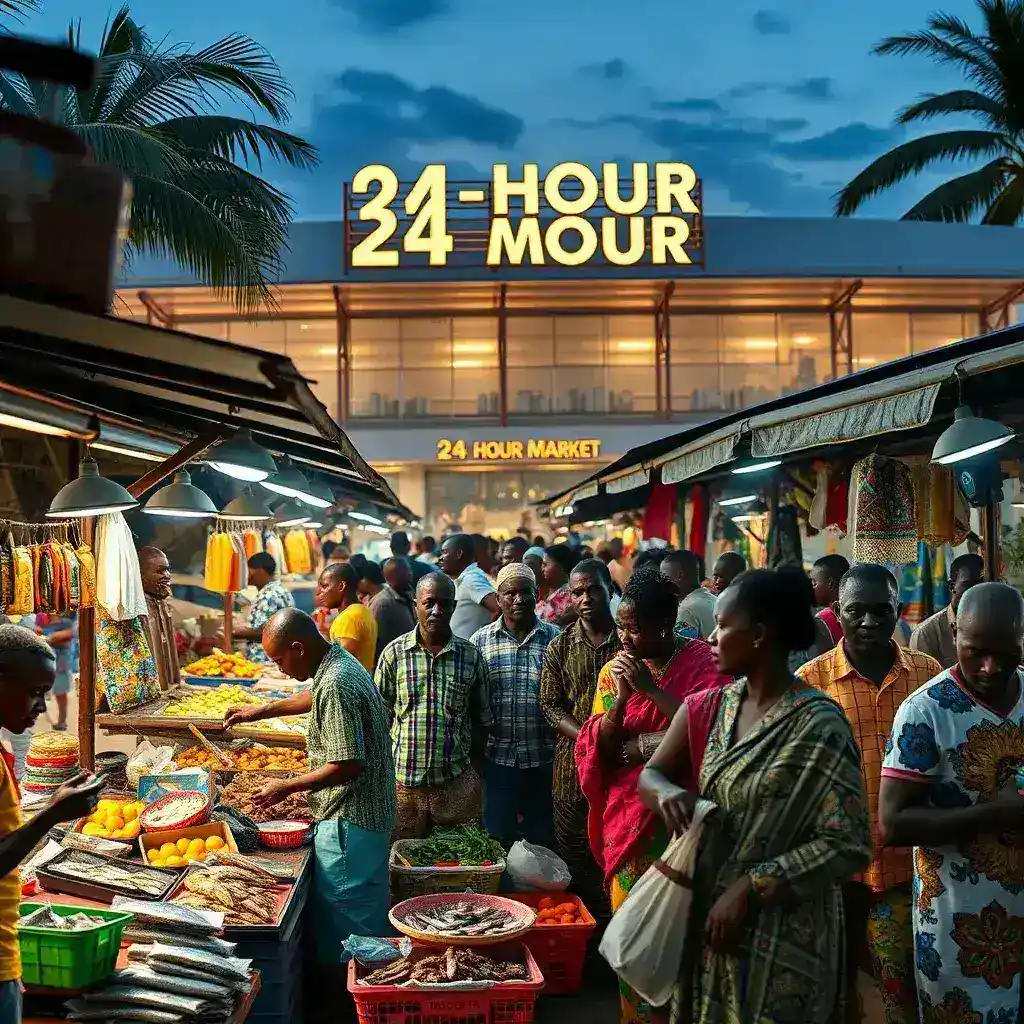
Minister of Local Government, Chieftaincy and Religious Affairs Ahmed Ibrahim announced this week that his ministry is strategically working to establish the new 24-hour market initiative as the nation’s most successful government socio-economic intervention. The initiative involves the coordinated construction of markets across all 261 Metropolitan, Municipal, and District Assemblies (MMDAs) nationwide, operating under a unified and standardized framework.
Nationwide Rollout Under Centralized Oversight
The Minister, who also serves as the Member of Parliament for Banda, made these remarks during a sod-cutting ceremony for a new 24-hour market in Bongase, a key commercial center within the Banda District. He revealed that ten specialized consultants have been appointed to oversee the design, procurement, and construction phases of these markets across Ghana’s sixteen regions.
“The consultants are ensuring that the design, procurement and construction processes are carried out professionally and in accordance with specifications,” stated Mr. Ibrahim. This centralized approach is deemed crucial for maintaining consistency and uniformity in the architectural design and construction quality of markets throughout the country.
Mr. Ibrahim emphasized the potential pitfalls of decentralized implementation, noting, “If the MMDAs are left to undertake the projects independently, each of them will adopt a different approach, but we want standardised structures.” This standardization aims to ensure quality and efficiency in the rollout.
Tailored Market Models for Diverse Needs
The 24-hour market projects are designed based on four distinct models, with the selection dependent on factors such as available land size and the projected population density of the area. The largest model requires four acres of land, followed by models needing three acres, 2.5 acres, and two acres, respectively. The size and capacity of the market are directly correlated with the population it is intended to serve.
Construction on several of these market projects has already begun, with foundation work reportedly progressing steadily in various locations.
Addressing Infrastructure Gaps in Bongase
The Minister specifically highlighted the Banda District’s urgent need for improved market infrastructure, despite the significant economic importance of the Bongase fishing market. This market currently attracts traders and buyers from major regions like Greater Accra and the Northern Region, underscoring its regional significance.
However, the existing facilities are insufficient to meet the demands of the bustling trade. “Personally, I facilitated the construction of about six pavilions for the traders, but there is a need for expanded infrastructure to unlock the full potential of the market,” Mr. Ibrahim explained, illustrating the current limitations.
The new 24-hour market at Bongase is expected to significantly enhance commercial activities, improve trading conditions for vendors and consumers, and ultimately contribute to the overall economic development of the district. The project has a projected completion timeline of one year.
Broader Economic Implications
The 24-hour market initiative is envisioned as a cornerstone of the government’s strategy to stimulate economic growth and create employment opportunities. By providing modern, well-equipped facilities that can operate around the clock, the program aims to increase trade volumes, extend market hours, and support small and medium-sized enterprises (SMEs).
The standardized approach also facilitates easier replication and management of similar projects in other districts, potentially accelerating development across the country. Data from similar initiatives in other developing economies often show a direct correlation between improved market infrastructure and increased local revenue generation and poverty reduction.
What to Watch Next
As construction progresses, attention will turn to the operationalization of these markets and their impact on local economies. Key indicators to monitor will include increased trading volumes, job creation, and the adoption of the 24-hour operational model by vendors. The success of this initiative could set a precedent for future government infrastructure and socio-economic programs, particularly in enhancing trade and commerce at the local level.







Leave a Reply