
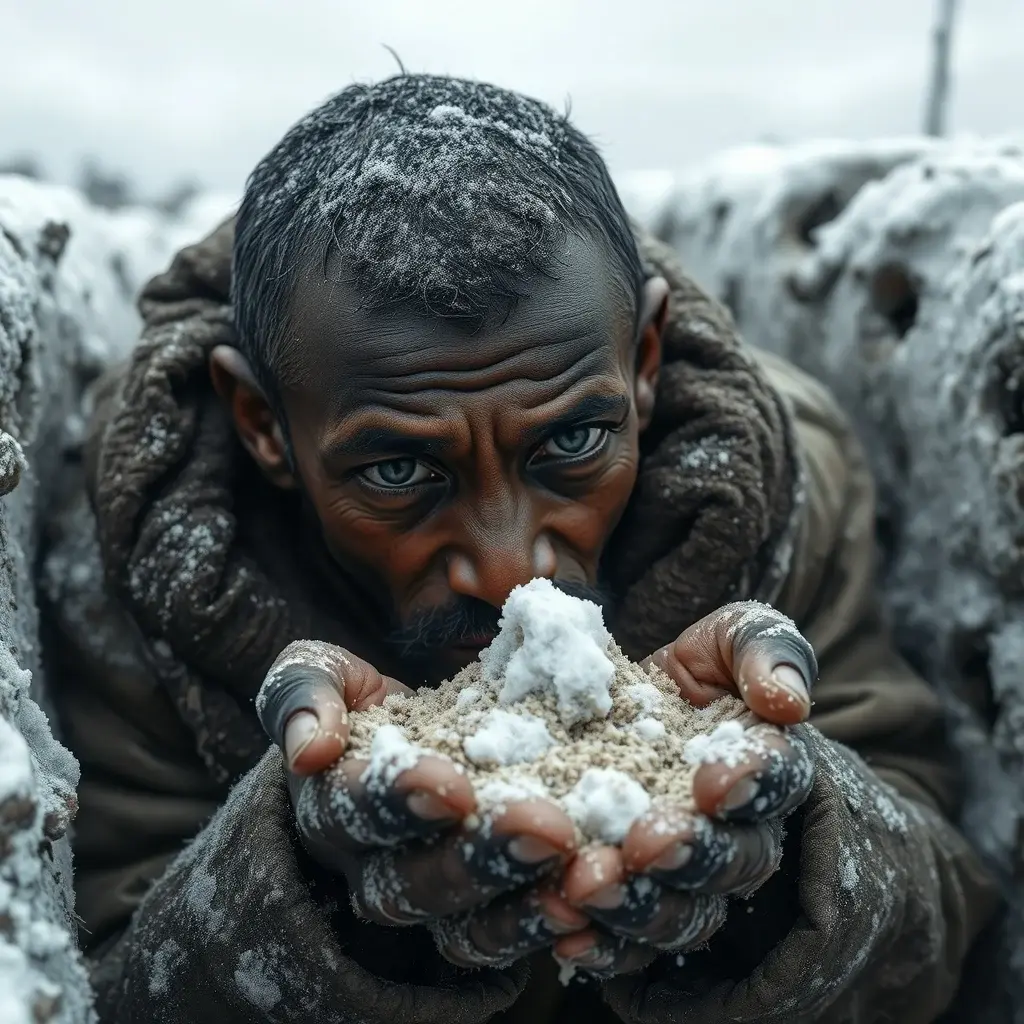
A young Ghanaian survivor has detailed the extreme conditions on the Russia-Ukraine war frontlines, revealing how severe food and water shortages forced them to consume snow mixed with sand to stay alive. The harrowing account, shared in a JoyNews documentary, highlights the desperate measures taken by individuals caught in the conflict, underscoring the immense human cost of prolonged warfare.
Desperate Measures for Survival
The survivor recounted receiving only minimal supplies, described as “canned foods and some little water,” which proved woefully insufficient for the arduous journey. The inadequacy of these provisions quickly led to critical shortages.
Facing starvation, the individual and others resorted to improvising with their environment. “At that time, we were lucky enough that it was snowing. The snow actually helped us,” the survivor stated. When food reserves were depleted, the desperate measure of mixing snow with sand and eating it became a grim necessity.
“It becomes okay for you because you have no choice; you have to survive,” the survivor explained, emphasizing the primal instinct to endure under extreme duress.
Constant Threats and Limited Logistics
The delivery of any supplies was fraught with danger. Food parcels were airdropped by drones, a process that required careful reconnaissance of the area due to the constant threat of enemy surveillance. “Before the drone can bring you food, they have to study the environment. Enemy drones can track you while supplies are being delivered,” the victim revealed.
These risks meant that only small quantities of food could be dropped at any given time, necessitating strict rationing and sharing among the group. This limited logistical capability further exacerbated the scarcity experienced on the ground.
Controlled Movement and Surveillance
Movement on the frontlines was under tight control to maintain operational security and minimize exposure. Groups were divided into smaller units and advanced in stages, typically moving about a kilometer apart. This method aimed to reduce the impact of potential enemy detection.
Constant surveillance was another pervasive threat. The survivor described being monitored by commanders using high-resolution Mavic drones. “The commander was watching us with a Mavic drone. It has a very sharp camera; you can be far away, but they can still zoom in and see you. When you make a mistake, they will know,” the victim shared.
The Stark Reality of the Frontlines
This firsthand account paints a stark picture of the extreme hardships and dangers faced by those on the frontlines of the Russia-Ukraine war. It underscores the physical and psychological toll of conflict, where basic survival becomes a daily struggle against starvation, environmental hazards, and constant enemy threat.
The testimony serves as a critical reminder of the human element often lost in geopolitical narratives, focusing on the individual experiences of resilience and desperation in the face of overwhelming adversity. The ability to adapt and improvise, even to the extent of consuming inedible materials, speaks volumes about the human will to survive.
Looking Ahead
As the conflict continues, such accounts highlight the urgent need for effective humanitarian aid and safe passage for civilians and individuals caught in combat zones. The reliance on desperate measures like consuming snow and sand points to systemic failures in providing basic necessities to those on the frontlines. Future developments will likely focus on the effectiveness of international efforts to ensure better supply chains and protection for vulnerable populations in active war zones, as well as the long-term psychological and physical recovery for survivors of such extreme conditions.




Leave a Reply