
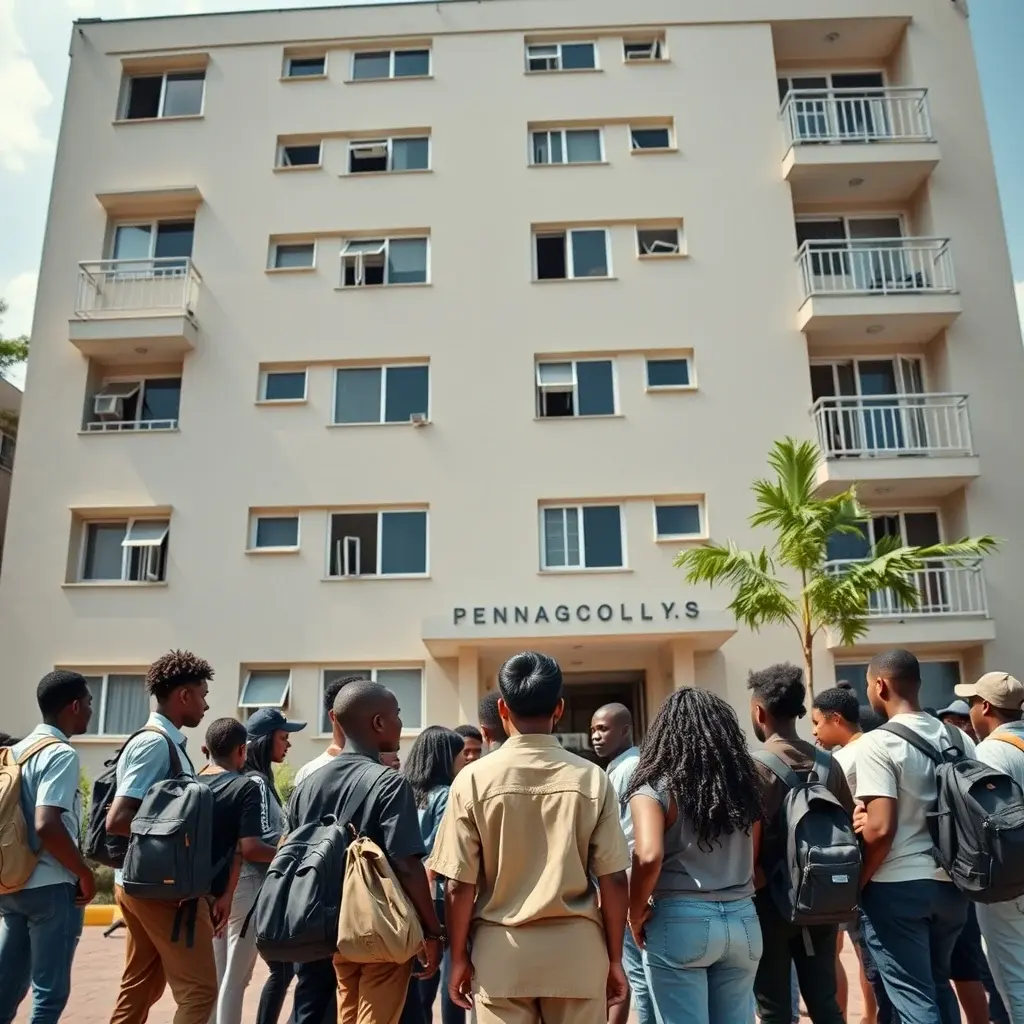
Accra, Ghana – The Acting Rent Commissioner, Fredrick Opoku, has publicly condemned the Social Security and National Insurance Trust (SNNIT) for what he terms ‘exploitative and unacceptable’ accommodation charges at its Ghana Hostels Limited, commonly known as Pentagon Hostel, located at the University of Ghana. Mr. Opoku voiced his strong criticism on Hit FM, highlighting the undue financial burden these escalating fees place on students and their families.
Mounting Concerns Over Student Accommodation Costs
Mr. Opoku expressed deep concern over the pricing structure at Pentagon Hostel, a facility linked to SNNIT, an institution responsible for managing workers’ pensions. He argued that it is fundamentally wrong for an organization entrusted with safeguarding citizens’ retirement funds to impose excessively high accommodation costs on students. This practice, he stated, significantly pressures families already grappling with the increasing cost of living and educational expenses in Ghana.
Disparities in Pricing Spark Outrage
A key point of contention raised by the Acting Rent Commissioner is the stark difference in pricing between the ‘new’ and ‘old’ blocks of the Pentagon Hostel. Reports indicate that rooms in the older block, accommodating four students, are priced between GH¢6,000 and GH¢6,400 per semester. In contrast, accommodation in the newer block is considerably more expensive.
Furthermore, Mr. Opoku highlighted alarming reports of single rooms equipped with air conditioning being charged at exorbitant rates, ranging from GH¢20,000 to GH¢30,000 per semester. He questioned the rationale behind such steep pricing, rhetorically asking if these costs would push students towards illicit activities to afford housing.
Broader Implications for Tertiary Education
The Commissioner described the situation as alarming and issued a stern warning about the potential consequences of rising accommodation costs around tertiary institutions. He suggested that these escalating prices could have severe repercussions for students’ academic pursuits and their families’ financial stability.
Mr. Opoku’s remarks echo a growing public outcry regarding the affordability of student housing across Ghana. The trend of sharply increasing hostel prices, particularly in areas surrounding major universities, is becoming a significant concern for many.
SNNIT’s Role and Public Scrutiny
As a public trust managing pension funds, SNNIT faces scrutiny over its involvement in a venture that appears to be pricing out the very demographic it should ideally support indirectly through responsible investment. Critics argue that the trust’s mandate includes ensuring its investments benefit Ghanaians, and such high charges contradict this principle.
The affordability crisis in student accommodation is not unique to Ghana, but the specific context of a pension fund being implicated in charging what are perceived as predatory rates adds a layer of controversy. This situation raises questions about corporate governance and ethical investment practices within public institutions.
Future Outlook and Student Welfare
The ongoing debate underscores the urgent need for greater transparency and regulation in the student accommodation sector. Stakeholders, including universities, hostel operators, and government bodies, are under pressure to address these affordability issues. The long-term impact on access to higher education and student welfare remains a critical concern as these trends continue.









Leave a Reply