
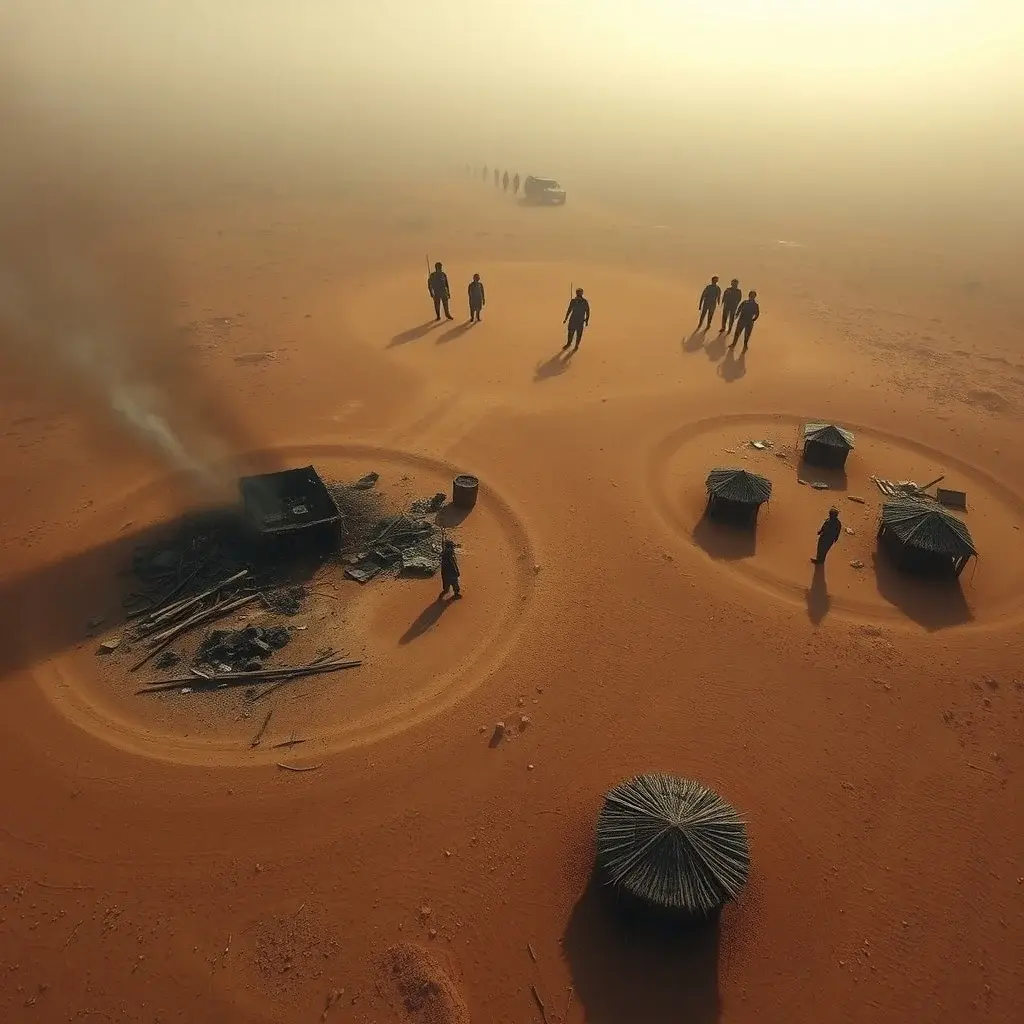
Dozens of people were killed in central Mali on Wednesday when al-Qaeda-affiliated fighters launched near-simultaneous attacks on two villages in the Mopti region, marking the deadliest assault since a coordinated offensive by armed groups began late last month. The violence underscores a deepening security crisis unfolding under the country’s military leadership.
Simultaneous Assaults on Korikori and Gomossogou
The attacks centered on the villages of Korikori and Gomossogou, where residents described scenes of devastation. Unidentified armed men reportedly entered the villages late Wednesday afternoon, opening fire, looting homes, and systematically torching properties.
While Mali’s military governor, Col. Maj. Olivier Diassana, condemned the strikes as “cowardly” and “barbaric,” he did not provide an official death toll. However, reports from the ground indicate a high number of fatalities. AFP news agency cited sources confirming at least 30 deaths, while Reuters, quoting diplomatic and aid sources, placed the toll at 50 or higher. Several villagers remain missing, and the provisional toll is expected to rise.
Motivations and Responsibility
The al-Qaeda-linked Jama’at Nusrat al-Islam wal-Muslimin (JNIM) claimed responsibility for the attacks. The group stated it was targeting local militias aligned with the government, suggesting the raids were retaliation for actions attributed to the Dan Na Ambassagou militia, a local self-defence group.
Despite JNIM’s claims of targeting combatants, witnesses reported that the victims included not only militiamen but also teenagers and children, indicating indiscriminate violence. The governor of the Bandiagara region denounced the perpetrators’ actions as “despicable and inhumane.”
A Junta Under Pressure
These killings follow a significant offensive launched in April by an alliance between JNIM and the Tuareg separatist group, the Azawad Liberation Front (FLA). This campaign resulted in the death of Defence Minister Sadio Camara in a suicide truck bombing near the capital, Bamako. Insurgents also targeted the home of junta leader Assimi Goïta, though security forces reportedly contained that threat.
The military government faces challenges in fulfilling its promise of restoring security. Following the Wednesday raids, the Malian army reported a “targeted operation against terrorist armed groups” that “neutralised” nearly 10 alleged terrorists. Army commander Djibrilla Maiga stated that hundreds of “terrorists” have been neutralized since late April.
UN Warns of Worsening Human Rights Crisis
The United Nations has voiced deep concern over the “worsening human rights situation across Mali,” particularly after the April offensive. OHCHR spokesperson Seif Magango warned that clashes between security forces and armed groups have “disastrous consequences for civilians.” High-ranking UN officials have urged all parties to adhere to international law.
Allegations of serious abuses, including extrajudicial killings and abductions, have emerged. The UN is calling for comprehensive investigations into such incidents, conducted in full compliance with international human rights law.
Mounting Humanitarian Concerns and Overwhelmed Hospitals
Humanitarian conditions are rapidly deteriorating, with growing fears of widespread hunger. In the Mopti region, communities are reportedly at risk of food shortages due to blockades imposed by JNIM militants, restricting the flow of essential supplies.
Children are disproportionately affected, with UNICEF reporting that they are paying the highest price. Attacks on schools and health centers have disrupted education and healthcare services. The International Committee of the Red Cross (ICRC) has increased its support to hospitals in several cities to maintain essential medical operations.
Shifting Alliances and Geopolitical Strain
Mali’s security landscape has transformed significantly since the 2020 coup, including a pivot towards Russia’s Africa Corps after the withdrawal of French forces and UN peacekeepers. However, this partnership faces strain, with FLA rebels recently seizing key northern cities and bases, prompting Russian withdrawals.
Insurgents are now increasing pressure on the capital, Bamako, with JNIM imposing checkpoints and disrupting travel to western Mali. The violence also follows a large jailbreak at Kenieroba Central Prison, where hundreds of prisoners, including high-value inmates, escaped.
Regional Fallout and the Threat to Coastal West Africa
The escalating crisis in Mali is causing alarm among regional blocs like ECOWAS and the Accra Initiative. Analysts warn that the erosion of state control in central Mali could fuel jihadist expansion into coastal West African nations. The junta’s reliance on the Africa Corps and the departure of traditional security partners raise concerns about a lasting security vacuum.
For neighboring countries like Ghana, the Mopti massacres serve as a stark indicator that the conflict in the Sahel is increasingly encroaching on their borders.
A Nation at a Crossroads
The resurgence of violence highlights the precariousness of Mali’s security transition. Facing demands for withdrawal from the Africa Corps by the FLA and calls for an end to the junta from JNIM, the military leadership confronts an existential challenge. As blockades tighten around Bamako and ethnic tensions persist, the prospects for a peaceful resolution appear distant, leaving civilians caught between advancing insurgencies and shifting frontlines.










Leave a Reply