
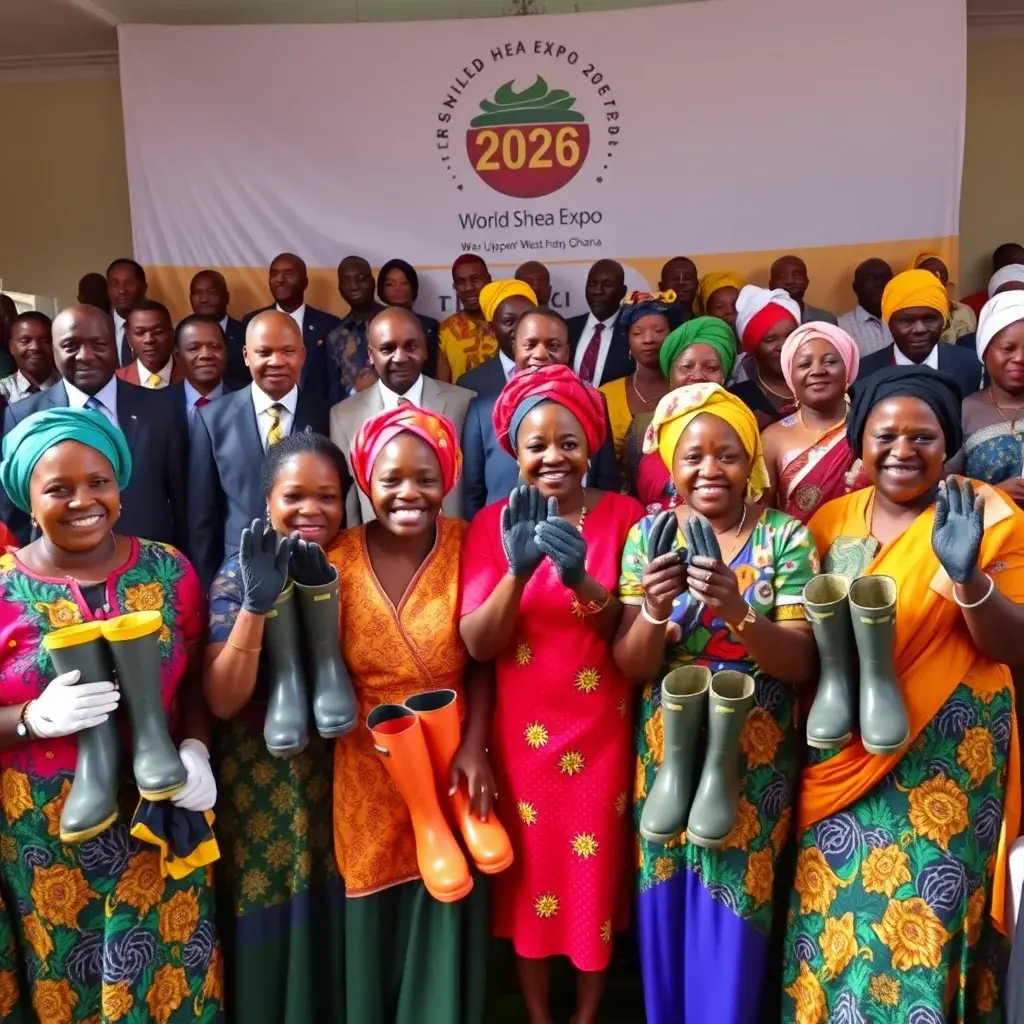
The Upper West Region has officially launched the World Shea Expo 2026, signaling a strong commitment to enhancing the shea value chain through increased local processing and potential restrictions on raw nut exports. The launch event, held at the Regional Coordinating Council in Wa, brought together government officials, traditional leaders, financial stakeholders, and women’s cooperatives, alongside policy announcements and the distribution of essential personal protective equipment (PPE).
Context: The Importance of the Shea Sector
The shea industry is a vital economic driver for many communities in northern Ghana, particularly for women who are central to its collection and primary processing. Shea nuts are harvested from the wild shea tree, predominantly found in the savannah regions of West Africa. These nuts are then processed into shea butter, a highly sought-after ingredient in the cosmetics, pharmaceutical, and food industries globally.
Despite Ghana’s significant earnings from shea exports, a substantial trade imbalance persists. The country earns approximately GH₵1.93 billion from raw shea exports but imports nearly equivalent amounts of shea oil (GH₵1.86 billion) and significant quantities of raw shea nuts (GH₵1.35 billion). This indicates that while Ghana is a major producer, it captures only a fraction of the value generated by the processing of shea products.
Push for Value Addition and Export Controls
The launch of the World Shea Expo 2026 in Wa underscores a strategic shift towards maximizing the economic benefits derived from shea. Regional Minister Charles Lwanga Puozuing highlighted the region’s dedication to supporting the entire shea value chain, recognizing its crucial role in the local economy and the livelihoods of its people.
Dr. Peter Boamah Otokunor, Director of Presidential Initiatives in Agriculture and Agribusiness, emphasized that hosting the expo in the Upper West Region aims to direct investment closer to the primary production zones. He stated that shea is more than just a commodity for women in northern Ghana; it represents survival, education, healthcare, and hope.
To address the trade imbalance, Dr. Otokunor announced government plans to implement phased restrictions on the export of raw shea nuts. This policy aims to encourage domestic processing, thereby retaining more value within Ghana. The 24-Hour Economy policy is also being leveraged to boost processing capacity and mitigate post-harvest losses, a common challenge in the sector.
Protecting the Source: Environmental and Social Safeguards
The sustainability of the shea industry hinges on the protection of the shea trees themselves. Dr. Godfred Seidu Jasaw, MP for Wa East and Board Chairman of the Ghana Export Promotion Authority (GEPA), stressed the importance of local bylaws to prevent environmental degradation of shea parklands. He described the shea tree as a climate-resilient economic lifeline for Northern Ghana.
Traditional leaders are also playing a crucial role. Busa Naa, Naa Ali Pelpuo Yelmaana, pledged the support of the traditional council in enforcing protective bylaws for both the shea trees and the women harvesters. This highlights a community-driven approach to safeguarding the resource and its primary stakeholders.
The donation of PPE to women’s shea-picking cooperatives, including locally manufactured Wellington boots and extended protective gloves, directly addresses the safety concerns of harvesters who often work in challenging conditions. This initiative, supported by the Bimbu Meyiri Foundation and other partners, is seen as an act of dignity and a vital step in protecting the workforce that underpins the industry.
Global Market and Industry Engagement
Ghana holds a significant share of the global shea industry, valued at approximately $6.4 billion. Ambrose Edwin Nsarkoh, Deputy CEO of GEPA, reiterated the authority’s commitment to helping local processors access international markets. The goal is to process at least 50% of raw materials locally, contributing to Ghana’s target of $10 billion in non-traditional export revenue by 2030.
The World Shea Expo Project Director, Eric Banye, shared positive outcomes from previous editions, noting strong international participation. The last expo attracted nearly 8,000 participants from 16 countries, with 136 exhibitors and over 716 shea products showcased. A significant majority of participants were women (82%) and youth (64%), underscoring the inclusive nature of the event.
Private sector entities like Savannah Golden Tree Limited have pledged continued support for the expo and the industry. Alhaji Imoru Alhassan, CEO of Savannah Golden Tree Limited, emphasized the company’s commitment to expanding opportunities for women and youth and appealed to traditional authorities for help in protecting shea resources.
Looking Ahead: Implications for the Shea Sector
The launch of the World Shea Expo 2026 and the accompanying policy announcements signal a determined effort by the Ghanaian government and its partners to transform the shea sector. The focus on value addition through increased local processing, coupled with protective measures for both the natural resource and the workforce, aims to create a more sustainable and profitable industry.
For consumers and businesses in the global cosmetics and food industries, this shift could mean a more stable and potentially diversified supply chain for shea-derived products. However, potential restrictions on raw nut exports might require adaptation from international buyers reliant on direct raw material sourcing. The success of these initiatives will depend on effective implementation, continued investment in processing infrastructure, and ongoing collaboration between government, private sector, traditional authorities, and the women who are the backbone of the shea industry.









Leave a Reply