
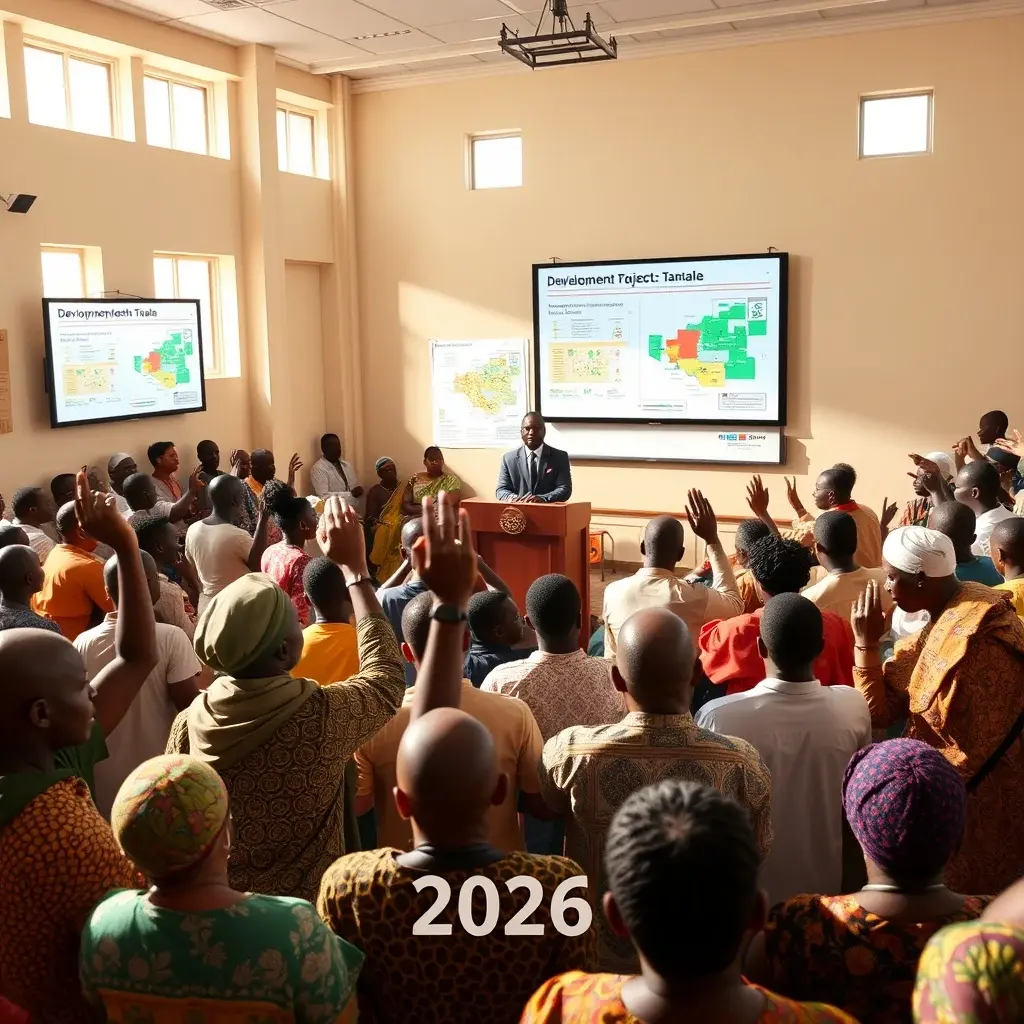
Tamale, Ghana – Mayor Adam Abubakari Takoro of the Tamale Metropolitan Assembly has unveiled a comprehensive development agenda for 2026, emphasizing infrastructure, agriculture, education, and youth employment, alongside a strong commitment to transparency and enhanced public participation in governance. This initiative was presented at the Assembly’s inaugural Town Hall Meeting on May 10, marking a significant step in President John Dramani Mahama’s resetting agenda and the government’s accountability series.
Context for Development Initiatives
The Town Hall Meeting serves as a platform to deepen citizen engagement and enable residents to actively track government projects and policies. The initiative explicitly aims to integrate traditional leaders, opinion shapers, religious figures, and community groups into the local decision-making processes. Tamale holds strategic importance as the sole metropolitan assembly in Ghana’s five northern regions, functioning as a vital commercial and administrative hub with direct links to Burkina Faso, Niger, Mali, and Togo.
With an estimated population exceeding 409,000, predominantly urban dwellers, the metropolis faces unique challenges and opportunities. Mayor Takoro acknowledged inherited issues such as drug abuse and petty crime, but highlighted successful collaborations with the Regional Security Council, traditional, and religious authorities in restoring peace. He also praised the efforts of police anti-drug task forces in curbing illicit activities.
Revenue Mobilization and Financial Allocations
The Assembly has set an ambitious internal revenue generation target of over GH¢5.7 million for 2026. By the first quarter, GH¢1.36 million had been collected, representing approximately 23 percent of the goal. Property rate collection remains a key area for improvement.
To address this, the Assembly plans to segment its 41 electoral areas into distinct collection zones. This strategy will be preceded by a month-long public education campaign before intensified enforcement commences in June 2026. These efforts aim to bolster the Assembly’s financial capacity for development projects.
Financially, the Assembly received over GH¢6.2 million from the District Assemblies Common Fund for the fourth quarter of 2025. Additional allocations were designated for programs supporting persons with disabilities, HIV/AIDS initiatives, and Member of Parliament-led projects. Furthermore, the Assembly is awaiting over GH¢8.2 million under the Responsiveness Factor Grant, contingent on its 2024 performance evaluation.
Key Projects Across Sectors
In education, ongoing projects include the construction of classroom blocks in Dalogyili, Gumbihini, and Lamashegu, alongside the provision of essential desks and chairs to schools. Members of Parliament have also contributed by supporting over 1,800 Basic Education Certificate Examination candidates with extra classes and resources.
The health sector has seen improvements, with support bolstering services at the Tamale Teaching Hospital, benefiting the entire northern region. New Community-based Health Planning and Services (CHPS) compounds have been completed in Kudula and Dohinayili, expanding access to healthcare.
Agriculture remains a focal point, with the Feed Ghana Programme and the Input and Mechanisation Support initiative distributing over 8,300 bags of fertilizer to farmers. An additional 1,000 bags were distributed through the Global Agricultural and Food Security Programme across 27 communities. The agriculture department has also trained 1,000 farmers in modern practices and distributed poultry stock, including 12,000 guinea fowl chicks and 755 cockerels, to enhance production. Support schemes have also extended to persons with disabilities.
Market Development and Employment Generation
The Assembly is actively developing market infrastructure through public-private partnerships, including the construction of 128 lockable market stores at Aboabo and Lamashegu. President Mahama has also initiated the development of a new 24-hour economy market at Kukuo, projected for completion within 24 months. This facility will house stalls, warehouses, cold storage, a clinic, a police post, and a fire station, aiming to boost economic activity.
Significant strides have been made in youth employment, with over 1,300 young individuals securing positions through various Youth Employment Agency modules. These roles span the police, fire, ambulance, and prisons services, as well as teaching and skills training programs. Additional support for entrepreneurship and vocational training has been provided by the Ghana Enterprise Agency, Mastercard Foundation, and the World Bank. The Ghana Productive Safety Net Project has further equipped 329 residents with skills in soap making, guinea fowl rearing, and groundnut processing.
Looking Ahead
Mayor Takoro reiterated the Assembly’s dedication to accountable and inclusive governance, urging continued collaboration from residents and stakeholders. The success of these initiatives will depend on sustained community engagement, effective revenue collection, and the timely implementation of planned projects. The focus on strengthening local governance structures and empowering citizens positions Tamale for significant growth and development in the coming years. Future attention will be on monitoring the impact of these programs on economic indicators and resident well-being.










Leave a Reply