
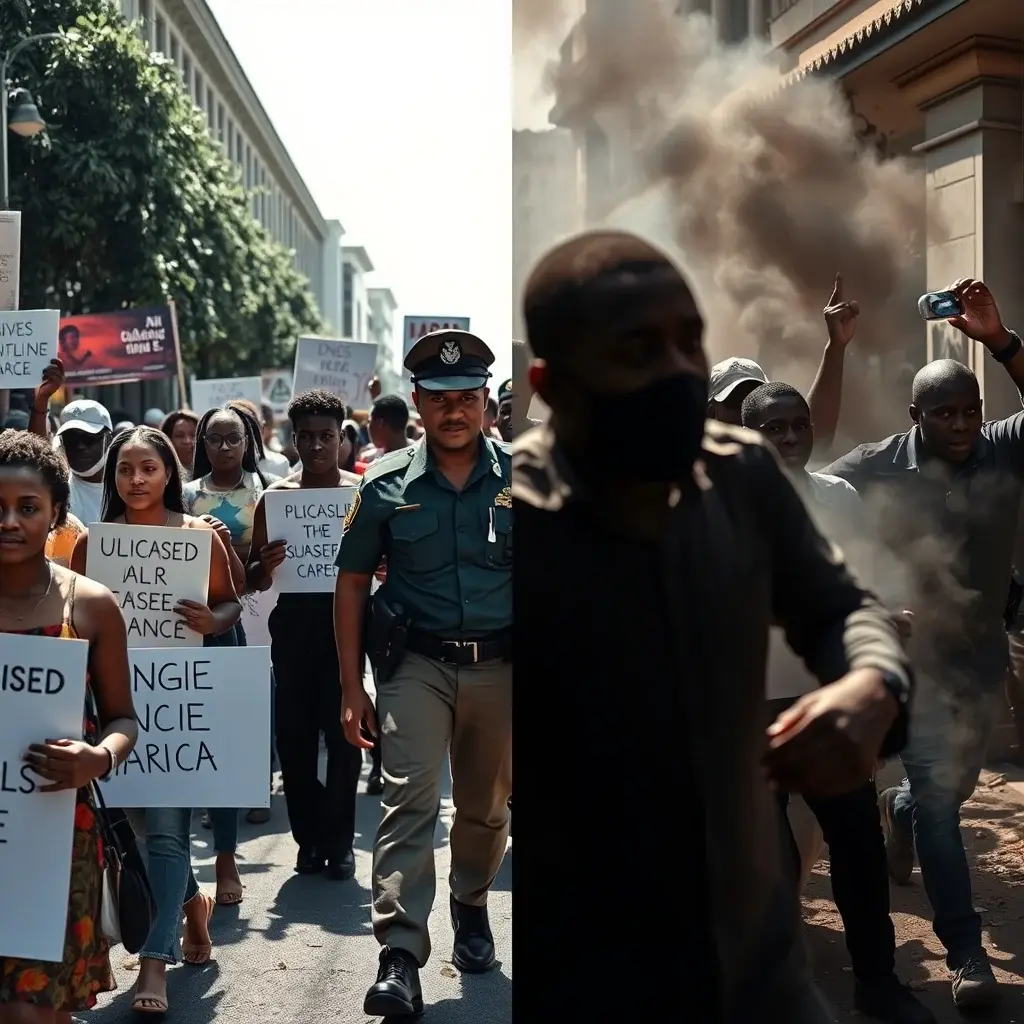
Accra, Ghana – A growing concern is emerging in Ghana regarding the nature of public demonstrations, questioning whether the line between exercising democratic freedoms and condoning destructive behaviour is becoming blurred. This trend, observed in recent times, prompts a critical examination of whether society is inadvertently rewarding unacceptable actions under the guise of protest and democratic expression.
The Foundation of Democratic Expression
Freedom of expression is a cornerstone of any robust democracy, allowing citizens to voice dissent and hold their leaders accountable without fear of reprisal. However, this freedom is intrinsically linked to responsibility and respect for the law.
Historically, democratic societies have navigated the challenge of balancing the right to protest with the need for public order. An incident during the 2010 G20 Toronto Summit in Canada serves as a stark illustration. A protester, attempting to provoke a police officer with a bagel on a stick, was later arrested and charged after allegedly participating in the destruction of police property during escalating unrest.
The lesson from such events is clear: protected freedoms do not extend to criminal acts. While the right to demonstrate is fundamental, it does not grant a license for violence, property damage, or endangering others.
The Fading Line in Ghana
In Ghana, a nation that has earned global respect for its democratic progress and peaceful transitions of power, there is a discernible shift. Some public demonstrations appear to be transforming from organized efforts to present grievances or advocate for change into spectacles of confrontation and destruction.
This drift is concerning because it can undermine the very causes the protesters aim to champion. When violent clashes and property damage overshadow legitimate concerns, public trust erodes, and the credibility of activist movements is jeopardized.
The distinction between a demonstration—an organized presentation of ideas—and a protest—an expression of disapproval—is crucial. Neither inherently requires violence, destruction, or aggression towards law enforcement or innocent citizens.
The Role of Media and Societal Perception
Adding complexity to the situation is the role some media platforms play. In the pursuit of ratings or to advance specific political narratives, certain media personalities may amplify unverified claims and inflammatory rhetoric. This can inadvertently portray confrontation as bravery and political hostility as patriotism, potentially encouraging behaviour that destabilizes democratic systems.
Media institutions wield significant influence, and with that comes a responsibility to foster informed public discourse rather than incite anger or spread misinformation that could lead to civil unrest.
Global Parallels and Ghana’s Democratic Maturity
Democratic societies worldwide have established frameworks for managing protests. In countries like Canada and the United States, large-scale demonstrations occur regularly, with participants exercising their rights to march, chant, and challenge policies.
However, there is a widely understood boundary: violence and destruction of property are not tolerated and lead to immediate legal consequences. These societies protect protesters’ rights while simultaneously safeguarding the safety of officers and the public.
Ghana’s democratic journey since its return to constitutional rule has been marked by significant achievements, including peaceful elections and a vibrant media. However, like all democracies, it requires continuous nurturing.
Moving Forward: Responsibility and Dialogue
For Ghana to continue its trajectory as a stable and respected democracy, a collective effort is needed. Citizens must recognize that the right to protest is not a license to destroy. Political leaders should refrain from exploiting protests for partisan gain.
Media institutions must prioritize responsible journalism over sensationalism, ensuring that accountability is promoted without inciting unrest. Crucially, society must cease glorifying actions that undermine law, order, and mutual respect.
True patriotism is demonstrated through the responsible exercise of freedoms and constructive dialogue, not merely through loud opposition. The nation stands at a juncture where it must decide whether to reward courage, wisdom, and dialogue, or chaos and confrontation. A society that celebrates disorder risks becoming its victim.
The critical question for Ghanaians to consider is whether current trends are strengthening their democracy or inadvertently weakening it by normalizing unacceptable behaviour.










Leave a Reply