
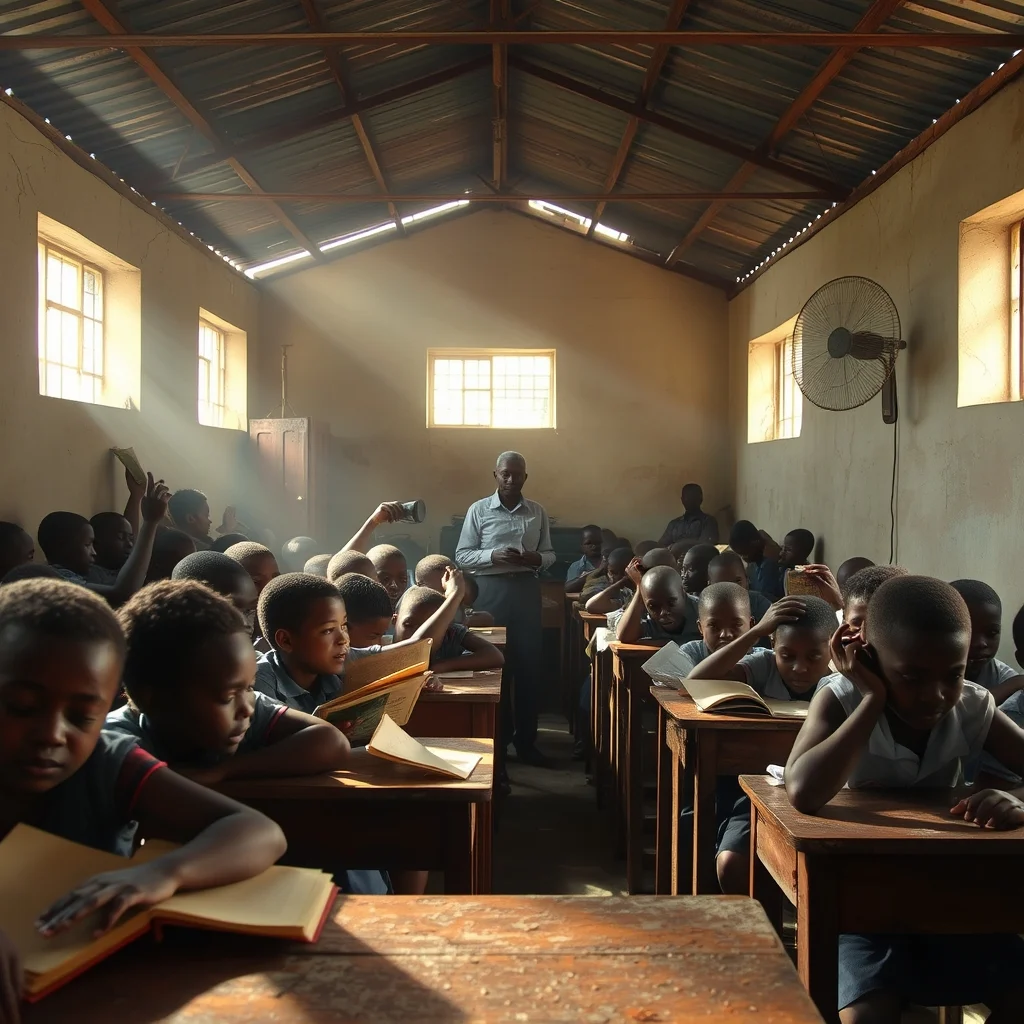
Pupils at Alajo 1 Basic School in Accra are struggling to concentrate on lessons as extreme heat makes their classrooms feel like ovens. The issue, exacerbated by poor ventilation and rising urban temperatures, is impacting learning outcomes and raising concerns among educators and researchers about the long-term effects on academic performance.
Battling the Heat to Learn
Inside a Basic Six classroom at Alajo 1 Basic School, the late morning sun intensifies, turning the room into an uncomfortable space for learning. Students resort to fanning themselves with exercise books and textbooks, their focus divided between the teacher’s lesson and the oppressive heat.
Eleven-year-old Farhana Surag describes the daily struggle. “When we are in class and the teacher is teaching, we feel hot. You will see pupils fanning themselves because there is heat in the classroom,” she stated.
Even the classroom’s overhead fan offers little relief. “We have a fan in the classroom, but it is not helping. Sometimes it blows hot air, so we put it off,” Farhana explained, highlighting the inadequacy of existing cooling systems.
Concentration Compromised
The combination of rising temperatures, humidity, and poor airflow significantly hinders students’ ability to concentrate. Farhana admits, “Sometimes I understand what the teacher is teaching… and sometimes I don’t. When there is heat in the classroom, I sometimes find it difficult to concentrate.”
Elizabeth Francis, another pupil, experiences similar difficulties. “I come to school to learn, but sometimes the heat in the classroom makes it difficult,” she said. “When the teacher is teaching, I feel uncomfortable, and I cannot concentrate well, so there are times I do not understand the lesson.”
Fixed seating arrangements further complicate matters, preventing students from moving closer to the fan. Elizabeth noted, “The fan in the class does not reach where I sit, and because we have fixed seating positions, I cannot move closer to it.”
The problem intensifies when the sun is strong, with heat absorbed by the roof radiating into the classroom. “The heat is worse when the sun is very strong. It makes the roofing hot, and that heat spreads into the classroom through the windows,” Elizabeth added.
Teachers Observe Declining Engagement
Teachers confirm the noticeable impact on their students’ engagement and comprehension. Heartwill Awudi, an educator at the school, observes, “When it is too hot, the students don’t concentrate. By the time you finish teaching, some of them have missed key points.”
“Sometimes it is unbearable… for both teachers and students,” Madam Awudi stated, underscoring the pervasive discomfort.
She points to the physical design of many classrooms as a significant factor. Inadequate ventilation, often relying on small openings, combined with metal roofing and the absence of ceilings in some cases, traps heat indoors.
“Many of the classrooms do not have ceiling fans, and ventilation is poor. The roofing also contributes to the heat,” Madam Awudi noted.
Researchers Quantify the Heat
To move beyond anecdotal evidence, researchers from the Geography Department of the University of Ghana are scientifically measuring classroom conditions. Monitoring devices are recording temperature and humidity levels to provide concrete data on the learning environment.
Betty Avanu Davidson, a research assistant on the project, explained the importance of this data. “These devices record temperature, relative humidity, and dew point. It helps us understand exactly what conditions the students are experiencing,” she said.
“Students can tell you they feel hot, but we also need scientific data to support that. This helps us validate what they are experiencing.”
Preliminary findings indicate that classroom temperatures can reach between 30 and 31 degrees Celsius, with high humidity exacerbating the perceived heat.
Urban Heat Island Effect Amplifies the Problem
Professor Ebenezer Amankwaa, a climate researcher and Senior Lecturer in Human Geography at the University of Ghana, links the issue to the broader urban heat island effect. This phenomenon causes cities to be significantly warmer than surrounding rural areas due to heat absorption by buildings and infrastructure.
“Temperatures in many schools are rising, and this is affecting how children learn and how they perform,” Prof Amankwaa stated. He explained that these conditions worsen classroom heat, especially in areas with poor ventilation and limited tree cover.
Prolonged exposure to excessive heat poses health risks to children, including headaches and heat rashes, and can impair cognitive function. “It leads to loss of concentration, and that has direct implications for learning outcomes,” he warned.
A Growing Climate and Development Challenge
The situation in Accra schools is representative of a wider challenge across Ghana. As global temperatures rise due to climate change, many schools with inadequate infrastructure are becoming less conducive to learning.
Ghana’s national climate adaptation plans recognize that delayed responses to climate risks could hinder development and disproportionately affect vulnerable populations, including children. Farhana worries about the future, stating, “I want to be a journalist in the future because I want to talk about things happening in the country… but I am afraid the condition in the classroom may affect my performance.”
Researchers emphasize that the impacts of climate change are no longer theoretical but are a daily reality for many students facing overheated classrooms.










Leave a Reply