
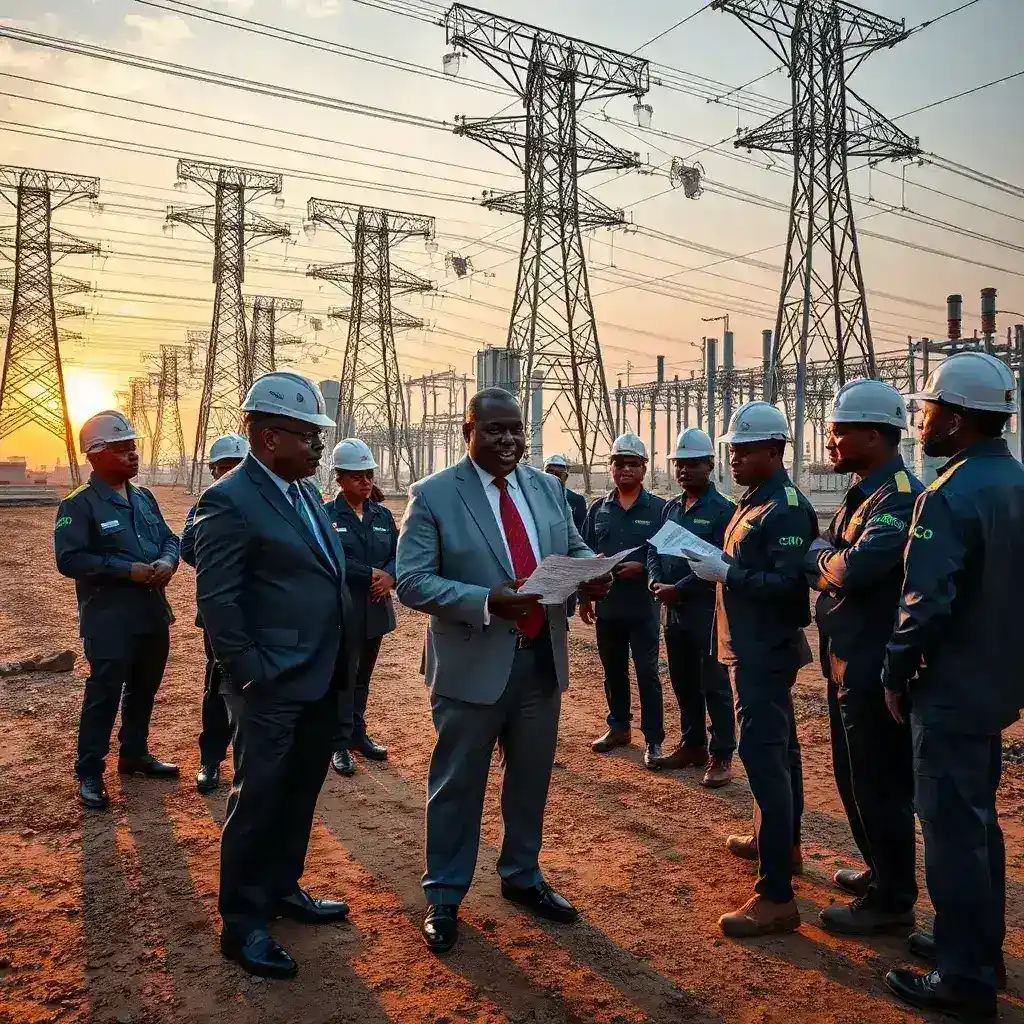
Kumasi, Ghana – Energy and Green Transition Minister, John Abdulai Jinapor, conducted an inspection of critical power infrastructure projects in Kumasi on [Insert Date of Inspection, e.g., Tuesday, October 26, 2023]. The tour, aimed at enhancing electricity supply and reinforcing the national grid, saw the Minister and his technical team briefed by GRIDCo Chief Executive, Frank Otchere, on the progress of ongoing works in the Ashanti Region.
Context: Strengthening Ghana’s Power Infrastructure
Ghana’s energy sector has faced persistent challenges related to transmission and distribution, impacting the reliability of power supply to consumers. GRIDCo, the Ghana Grid Company Limited, is responsible for the operation, maintenance, and expansion of the national transmission infrastructure. These projects in Kumasi are part of a larger national strategy to upgrade aging facilities and expand capacity to meet growing demand.
The Ministry of Energy and Green Transition plays a pivotal role in overseeing the development and implementation of energy policies and projects. This inspection underscores the government’s commitment to addressing infrastructure deficits and ensuring a stable energy supply, which is crucial for economic development and the well-being of citizens.
On-Site Progress and Key Interventions
During the tour, Minister Jinapor visited several project sites where GRIDCo is actively engaged in upgrading and expanding power transmission facilities. The Chief Executive, Frank Otchere, provided detailed updates on the status of these interventions, highlighting the technical complexities and the progress made to date.
Key projects include the reinforcement of existing transmission lines and substations, as well as the potential installation of new equipment designed to increase the capacity and efficiency of power flow. Officials emphasized that these upgrades are vital for strengthening the national grid’s ability to transmit electricity reliably across the region and beyond.
The interventions are strategically designed to reduce transmission losses and improve voltage stability, thereby ensuring that power generated reaches end-users with minimal interruption. This focus on grid enhancement is a cornerstone of efforts to improve the overall quality and reliability of electricity services.
Expert Insights and Data Support
According to GRIDCo reports, the Ashanti Region is a significant hub for industrial and commercial activity, necessitating a robust power supply. Investments in transmission infrastructure are directly linked to economic growth, as a stable grid supports businesses and attracts further investment.
Industry analysts note that while generation capacity has seen improvements over the years, transmission and distribution infrastructure often lag, creating bottlenecks. Projects like those inspected by the Minister are crucial for bridging this gap. For instance, upgrades to substations can significantly enhance their capacity to handle increased power loads, preventing outages during peak demand periods.
The successful completion of these projects is expected to contribute to a reduction in the frequency and duration of power outages, a common concern for residents and businesses in the region. Improved grid stability also facilitates the integration of renewable energy sources, aligning with the Ministry’s green transition agenda.
Implications for Consumers and Industry
For households in Kumasi and the wider Ashanti Region, the successful completion of these GRIDCo projects promises more reliable access to electricity. This translates to fewer disruptions for domestic activities, improved living standards, and reduced reliance on alternative power sources like generators, which can be costly and environmentally unfriendly.
Businesses and industries stand to benefit significantly from enhanced grid stability. Reduced power outages mean increased productivity, lower operational costs, and greater certainty for manufacturing and service sectors. This improved energy security can also enhance Ghana’s attractiveness for foreign direct investment.
The reinforcement of the national grid is a step towards a more resilient and efficient energy ecosystem. As the nation continues to grow and its energy demands evolve, such infrastructure investments are paramount. What to watch next will be the timeline for the completion of these projects and their tangible impact on power supply stability in the Ashanti Region and the broader national grid.










Leave a Reply