

South Africa’s highest court, the Constitutional Court, has ruled that foreign nationals can no longer reapply for asylum once their initial application has been rejected. This landmark decision, delivered recently, aims to prevent administrative chaos and a potential ‘never-ending cycle’ of applications that could hinder deportations.
Background of the Ruling
The ruling stems from a case brought by two nationals from Burundi whose asylum applications were initially rejected in 2014. They reapplied in 2018, arguing that changed circumstances in Burundi, specifically political violence following the 2015 presidential election, warranted a new review. This unrest saw at least 70 people killed after then-President Pierre Nkurunziza sought a controversial third term.
While the two Burundians initially won their case in the Supreme Court of Appeal, the Constitutional Court has now overturned this decision. As the final court of appeal, its judgment sets a precedent for all future asylum cases in the country.
Minister Welcomes Decision
Leon Schreiber, the Minister of Home Affairs, hailed the Constitutional Court’s ruling as a significant victory. He stated that it combats the ‘abuse’ of the asylum system by individuals who might otherwise exploit loopholes for extended stays.
Schreiber, a member of the Democratic Alliance (DA) within the coalition government led by President Cyril Ramaphosa’s African National Congress (ANC), emphasized that the Department of Home Affairs strongly argued against the Supreme Court of Appeal’s prior ruling. He explained that allowing multiple applications would grant individuals ‘multiple bites at the cherry’ and enable them to ‘constantly abuse the system’.
Broader Context: Migration and Xenophobia in South Africa
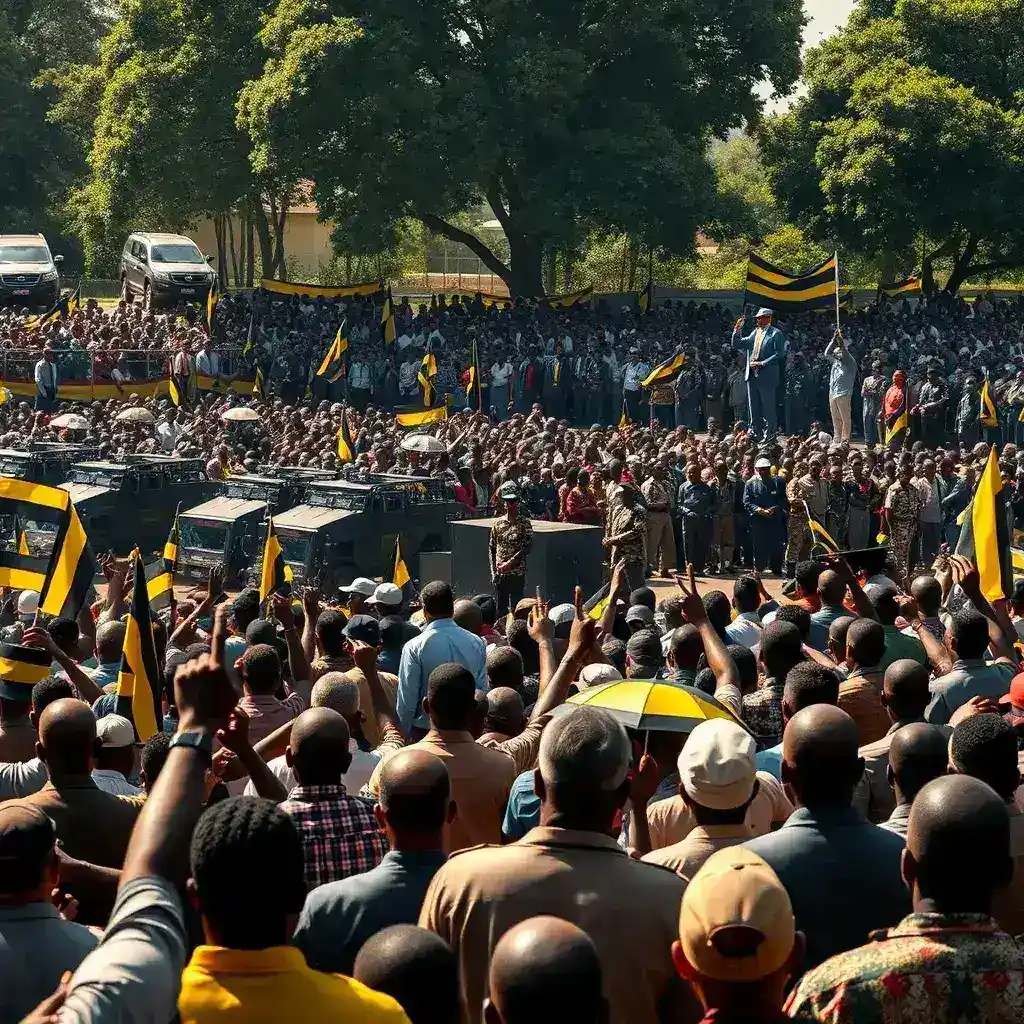
This legal development occurs against a backdrop of heightened tensions surrounding undocumented migrants in South Africa. The nation has recently witnessed widespread protests, with thousands demanding mass deportations of foreigners. These sentiments have led to concerns from several African governments, who have warned their citizens in South Africa about potential attacks.
President Ramaphosa has publicly addressed these issues, attributing recent anti-immigrant attacks to ‘opportunists’ rather than the general populace. He asserted in an open letter that the violent protests and criminal acts do not represent the views of South Africans or the government’s policy.
South Africa hosts a substantial migrant population, with official figures indicating around 2.4 million migrants, constituting just under 4% of the total population. However, unofficial estimates suggest a significantly higher number of undocumented individuals residing in the country. As Africa’s most industrialized economy, South Africa remains a primary destination for job seekers from across the continent.
Expert Perspectives and Data
The United Nations refugee agency (UNHCR) reported that in 2025, South Africa was home to over 167,000 refugees and asylum seekers. The primary countries of origin for these individuals include Burundi, the Democratic Republic of Congo, Somalia, South Sudan, Rwanda, and Zimbabwe.
Minister Schreiber reiterated that the ruling is crucial for the government’s objective of establishing a more ‘effective and fair system to manage refugees and asylum seekers’. The decision is seen as a step towards restoring order and predictability within the country’s immigration and asylum processes.
Implications for the Future
The Constitutional Court’s decision is likely to streamline the asylum process by preventing endless appeals. This could lead to faster processing times for legitimate asylum claims and more efficient management of deportations for those whose applications are definitively rejected. It also signals a firmer stance by the judiciary on the management of asylum claims, potentially impacting how future immigration policies are shaped and enforced.
Moving forward, attention will be on how the Department of Home Affairs implements this ruling and whether it leads to a reduction in the administrative backlog. The government’s ability to balance robust border control with its humanitarian obligations will remain a critical point of observation, especially in light of ongoing public sentiment regarding immigration.







Leave a Reply