
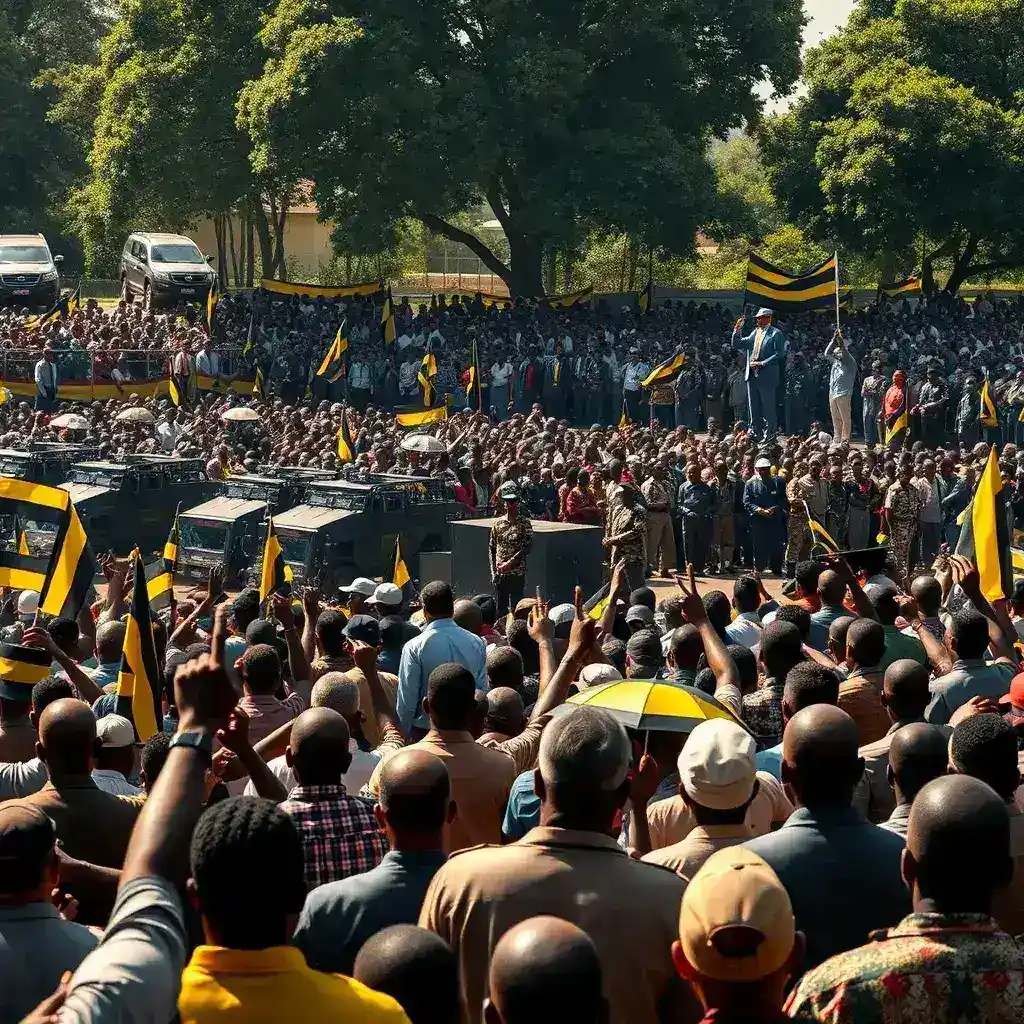
Yoweri Museveni, Uganda’s 81-year-old president, was sworn in for an unprecedented seventh consecutive term on Wednesday in Kampala, following a victory in January elections widely contested by opposition figures. This inauguration solidifies his position as one of Africa’s longest-serving leaders, extending his rule which began in 1986.
Context of Extended Rule
Museveni first assumed power as a rebel leader, promising to end years of political instability and dictatorship in Uganda. Over his nearly four-decade tenure, he has overseen periods of relative peace and significant infrastructure development, which he often cites as achievements of his leadership.
However, his long rule has also been marked by growing concerns over democratic freedoms and human rights. The recent January elections saw Museveni declared the winner with over 70% of the vote, a result immediately rejected by his main challenger, popular musician-turned-politician Bobi Wine. Wine, whose real name is Robert Kyagulanyi Ssentamu, alleged widespread ballot-stuffing and voter intimidation, claiming the election was fundamentally flawed.
Inauguration Amidst Heavy Security
The swearing-in ceremony, held at the Kololo Independence Grounds, was conducted under a heavy security presence, including deployed armored tanks. Police stated these measures were necessary to maintain public order and prevent any disruptions.
The government declared the day a public holiday, with supporters of President Museveni gathering to celebrate the commencement of his new term, which is expected to conclude in 2031.
President’s Vision for the New Term
In his address to the attendees, President Museveni framed his seventh term as a call to action for all Ugandans. “No more sleep for all Ugandans,” he declared, urging citizens to focus on wealth creation and job opportunities.
He emphasized building upon the progress achieved over the past 40 years, highlighting peace and infrastructure development as key successes. Museveni also indicated that anticipated oil revenues would be crucial in stimulating economic growth and reducing poverty.
“We must protect what has been achieved, correct what still needs improvement and move forward together as one country,” the president stated, calling for national unity.
International Attendance and Opposition Reaction
Several African leaders attended the inauguration, including Presidents Samia Suluhu Hassan of Tanzania, Félix Tshisekedi of the Democratic Republic of Congo, Salva Kiir of South Sudan, and Hassan Sheikh Mohamud of Somalia. Their presence underscored regional engagement with Uganda’s political landscape.
Conversely, opposition leader Bobi Wine, who has since left Uganda citing fears for his safety, maintains that the election results were illegitimate. He has called for Ugandans to resist what he describes as a dictatorial regime and fight for their democracy.
The government has consistently denied allegations of electoral malpractice, with Museveni himself accusing the opposition of attempting to destabilize the country through violence, labeling them as “terrorists.”
Human Rights Concerns and Legal Developments
Human rights organizations have raised serious concerns regarding the post-election crackdown. Amnesty International reported that at least 16 unarmed individuals were allegedly killed by military and police forces between January 15 and 18. These reports add to ongoing criticism of the security forces’ conduct.
The situation of other opposition figures, such as Kizza Besigye, remains a point of concern. Besigye has been detained since late 2024 on charges he denies, including illegal possession of firearms and attempting to procure weapons abroad.
In a significant legislative move, Uganda recently passed a Sovereignty Bill. This law criminalizes actions perceived as promoting foreign interests over national ones and designates recipients of foreign funding as “agents of foreigners,” a move critics argue could stifle dissent and civil society engagement.
Succession Speculation
With a significant portion of Uganda’s population having known no other president, the question of succession looms large. While Museveni has not announced any retirement plans, analysts suggest this current term might be his last.
Speculation often centers on his son, Lt. Gen. Muhoozi Kainerugaba, who holds a senior military position. However, Kainerugaba has faced criticism for his aggressive social media rhetoric, including past threats directed at opposition figures like Bobi Wine, raising questions about his potential leadership style.
Looking Ahead
As President Museveni embarks on his seventh term, Uganda faces a complex landscape defined by economic aspirations tied to oil, persistent human rights concerns, and a deeply divided political opposition. The effectiveness of the new Sovereignty Bill in shaping civil society discourse and the potential trajectory of succession plans will be critical elements to watch in the coming years.










Leave a Reply