
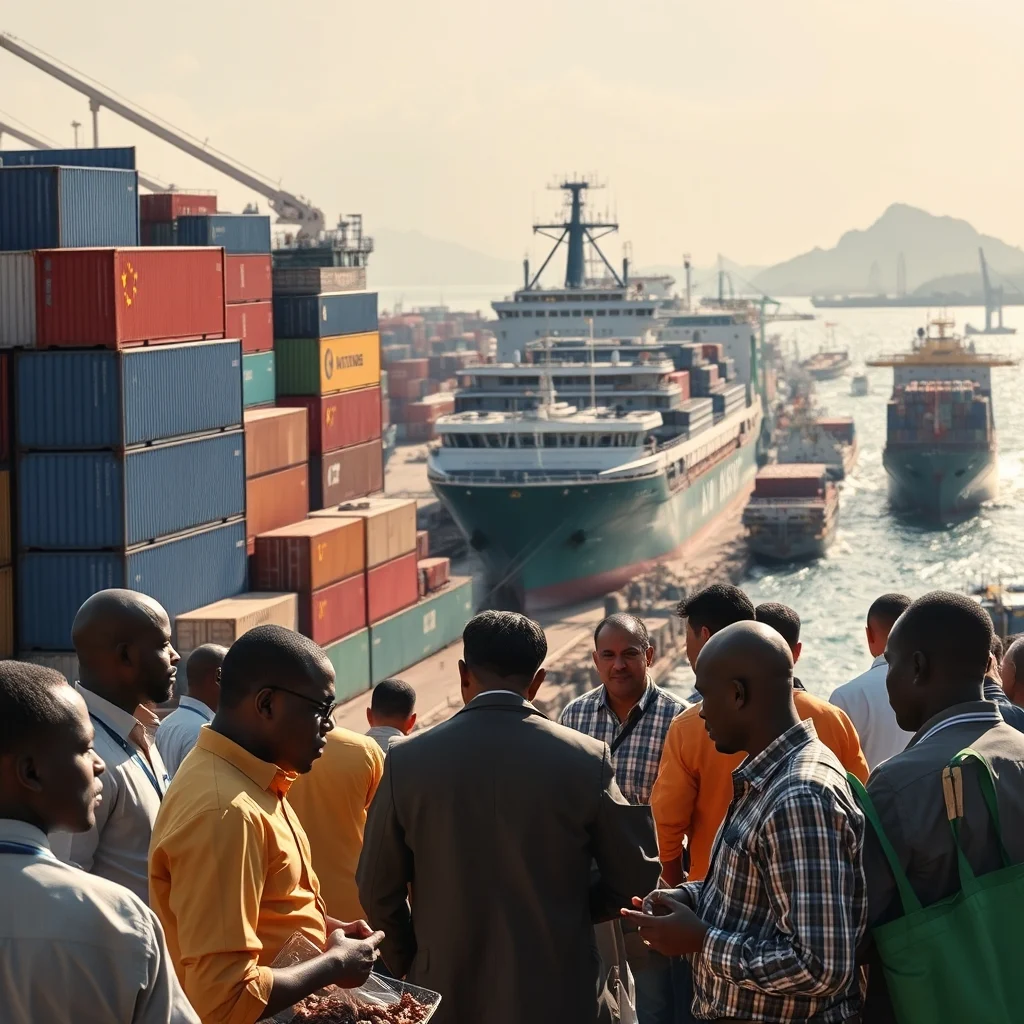
China is set to eliminate import tariffs for 53 African nations starting Friday, December 1st, extending a duty-free policy previously applied to 33 least-developed countries. This significant trade liberalization initiative, effective until April 30, 2028, aims to boost African exports to China, though analysts suggest its economic impact may be modest and concentrated, while also highlighting China’s growing geopolitical influence on the continent. Eswatini is the sole exception, excluded due to its continued diplomatic recognition of Taiwan.
Context: A New Era of Sino-African Trade
This expansion marks a substantial increase in China’s zero-tariff policy for African nations, which had already been implemented for 33 countries as of December 2024. Beijing is positioning this move as a demonstration of its commitment to Africa and a stark contrast to protectionist policies elsewhere, particularly referencing trade actions by the United States.
The US has previously imposed tariffs on some African nations, though many of these duties have since been reduced or struck down. China’s proactive approach aims to enhance its soft power and solidify its image as a favorable economic partner for the continent.
Broader Trade Imbalances and Opportunities
While the zero-tariff policy is lauded for its potential to increase African agricultural exports, thereby improving rural incomes and potentially reducing poverty, it does little to address the persistent and widening trade deficit between China and Africa. Last year, Africa’s trade deficit with China surged by 65% to approximately $102 billion.
African exports to China are predominantly raw materials and minerals, such as crude oil and metallic ores. Major trading partners include Angola, the Democratic Republic of Congo, and South Africa. The effectiveness of the new policy is expected to vary across the continent.
More developed and industrialized economies like South Africa and Morocco are better positioned to leverage the tariff reduction to expand their exports. However, countries facing structural constraints such as limited industrial capacity, weak logistics, and a heavy reliance on raw commodity exports may see less immediate benefit. These underlying issues require more comprehensive solutions than tariff reductions alone.
Expert Perspectives on Economic Impact
Analysts suggest the short-term economic impact will likely be modest and concentrated in countries already possessing export capacity. “Over the long term, however, the potential could be more meaningful, especially if African countries are able to expand production, diversify exports, and move up the value chain,” stated Alfred Schipke, director of the East Asian Institute in Singapore.
Amit Jain, an expert in China-Africa relations, points to evolving Chinese consumer demand as a potential avenue for growth. Increasing consumption of products like coffee and nuts presents new market opportunities for African producers. Economist Ken Gichinga concurs, believing the measures will help close the trade deficit and foster African business prosperity, specifically citing potential boosts for Kenya’s avocado, macadamia nut, coffee, tea, and leather sectors.
However, Wangari Kebuchi, an Africa fiscal policy economist, cautions that while the policy offers welcome short-term support for foreign exchange and modest gains in agriculture, mining, and logistics, significant medium and long-term fiscal benefits are unlikely to materialize from market access alone. “The structural problem has not changed. Africa continues to export raw materials and import manufactured goods. That asymmetry drives persistent trade deficits,” she noted. Kebuchi emphasizes the need for African governments to use improved market access as leverage for industrial policy.
The Eswatini Exception: A Political Statement
The exclusion of Eswatini from the tariff-free regime is widely seen as a political maneuver rather than an economic one. Eswatini remains one of the few African nations maintaining diplomatic ties with Taiwan, which China considers a renegade province. This move underscores China’s strategy of “weaponizing its ties with African countries,” demonstrating that relations with Beijing come with conditions.
This exclusion serves as a clear message from China regarding its expectations for diplomatic recognition and its approach to international relations, particularly concerning Taiwan. It highlights how geopolitical considerations can influence economic policies and bilateral relationships.
Looking Ahead: Industrial Policy and Diversification
The expanded zero-tariff policy prompts critical questions for African nations about how to best leverage improved market access. The focus will likely shift towards developing industrial policies that promote value addition, diversification of exports beyond raw materials, and strengthening domestic production capabilities. The long-term success of this initiative will depend not only on China’s trade policies but also on Africa’s strategic response to foster sustainable economic growth and reduce its trade imbalances.









Leave a Reply