
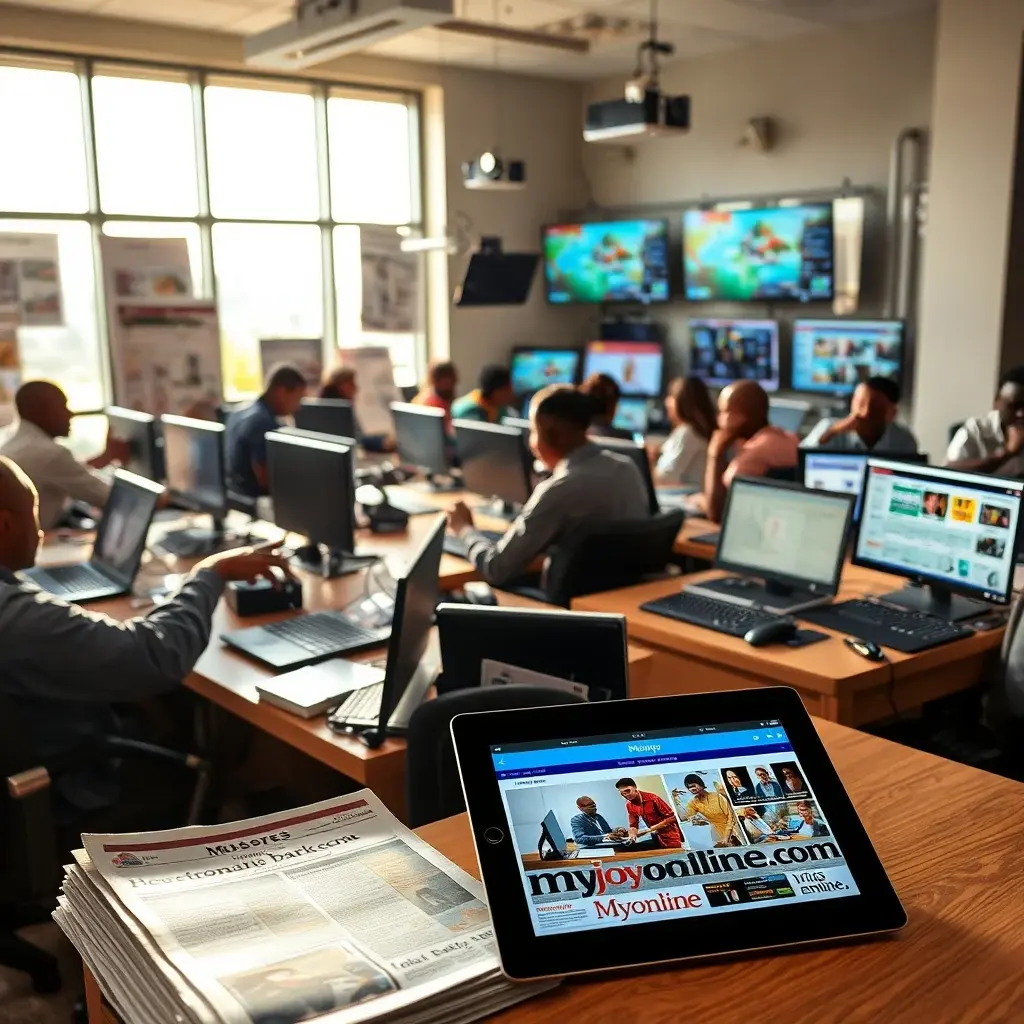
Accra, Ghana – May 15, 2026 – As the digital age continues its relentless march, the way news is consumed and presented in Ghana is undergoing a significant transformation. Today, May 15, 2026, a review of front pages from leading Ghanaian newspapers, as highlighted by Myjoyonline.com, reveals a media landscape grappling with the implications of online platforms and evolving reader habits.
The Shifting Sands of News Consumption
For decades, the printed newspaper front page served as the primary gateway to the day’s most critical information for many Ghanaians. These pages, meticulously curated by editors, set the national agenda and dictated public discourse.
However, the rise of the internet and mobile technology has fundamentally altered this dynamic. Ghanaians now have instant access to a vast array of news sources, from international outlets to local blogs and social media feeds, often before traditional print media can even hit the stands.
Digitalization’s Double-Edged Sword
The digitalization of media presents both opportunities and challenges for Ghanaian news organizations. Online platforms allow for wider reach, faster dissemination of information, and interactive engagement with audiences.
News outlets can now publish breaking stories in real-time, supplement articles with multimedia content like videos and infographics, and track reader engagement through analytics. This immediacy and interactivity are crucial in a fast-paced world.
Conversely, the digital shift also intensifies competition. Traditional newspapers face pressure not only from each other but also from digital-native news sites, citizen journalists, and social media influencers. The revenue model for print media, heavily reliant on advertising and circulation, is particularly vulnerable.
Navigating the New Media Ecosystem
News aggregators and online portals, such as Myjoyonline.com, play a critical role in this evolving ecosystem. By compiling front pages and headlines from various publications, they offer a snapshot of the media’s focus for the day, while also driving traffic to the original sources.
This aggregation model underscores the interconnectedness of the modern media landscape. It highlights how digital platforms can amplify the reach of traditional media, but also raises questions about the sustainability of print journalism if readers consume headlines online without visiting the original newspaper websites.
Expert Views on the Transition
Media analysts observe that Ghanaian news organizations are actively exploring hybrid models, blending print and digital strategies. “The key is to offer a seamless experience across all platforms,” notes Dr. Kwabena Mensah, a media studies lecturer at the University of Ghana. “Readers expect consistency and convenience, whether they are reading a physical paper or scrolling through a website on their phone.”
Data from the National Communications Authority indicates a steady increase in internet penetration and mobile phone usage across Ghana, further cementing the trend towards digital news consumption. By the end of 2025, over 60% of the population had access to the internet, a figure projected to rise.
Implications for the Ghanaian Reader and Industry
For the average Ghanaian reader, this digital evolution means access to a broader spectrum of news and perspectives than ever before. It empowers individuals to seek out information that aligns with their interests and to fact-check information from multiple sources.
However, it also necessitates a greater degree of media literacy. With the proliferation of online content, discerning credible news from misinformation or ‘fake news’ becomes paramount. Readers must cultivate critical thinking skills to navigate the digital information environment effectively.
For the media industry, the future lies in innovation and adaptation. News organizations that successfully integrate digital technologies, diversify revenue streams (e.g., through subscriptions, paywalls, or sponsored content), and prioritize engaging, high-quality journalism will be best positioned to thrive.
What to Watch Next
The coming years will likely see further experimentation with digital storytelling formats, AI-powered news delivery, and perhaps even new forms of journalistic collaboration. The challenge for Ghanaian media will be to harness these technological advancements while upholding the core principles of accuracy, fairness, and public service journalism. The ability of print media to retain relevance and find sustainable digital models will be a critical trend to monitor.










Leave a Reply