
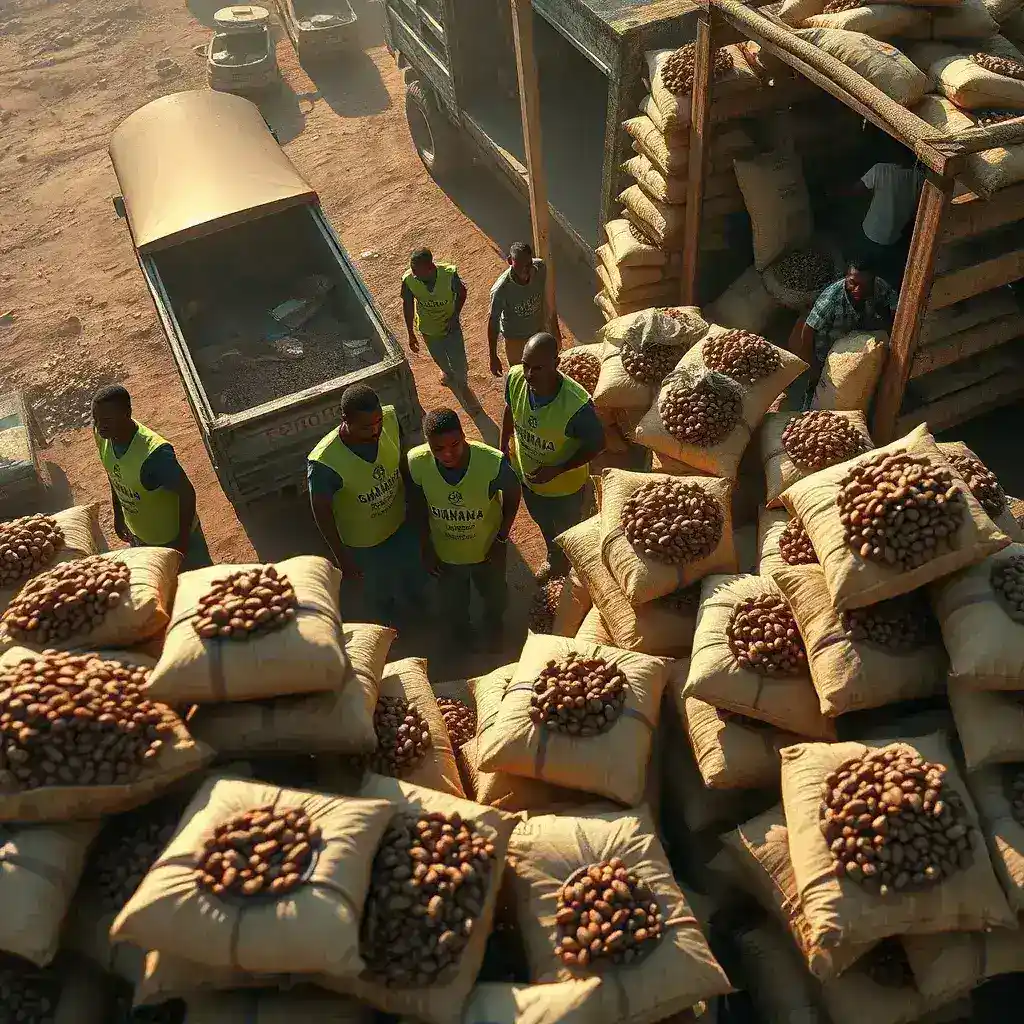
Ghana Cocoa Board (COCOBOD) has accused some officials at licensed buying companies (LBCs) of diverting government funds to purchase cocoa beans smuggled from neighboring Ivory Coast. This practice, spread across four border regions, is reportedly depriving local farmers of income and jeopardizing Ghana’s reputation for high-quality cocoa, according to Jake Kudjo Semahar, director of special services at COCOBOD.
This situation marks a significant reversal from previous smuggling trends, where Ghanaian beans were trafficked into Ivory Coast and Togo. “We were fighting smuggling of Ghana’s cocoa to the Ivory Coast; now the reverse is the situation, and we should be concerned,” Semahar stated, highlighting the gravity of the shift.
Context of the Price Discrepancy
The primary driver behind this illicit trade is a substantial price gap between cocoa beans in Ghana and Ivory Coast. Ivory Coast is currently selling cocoa at an equivalent of 1,200 cedis ($107.33) per 64-kg bag. In contrast, Ghana’s official farmgate price stands at 2,587 cedis per bag.
Semahar explained that some LBC officers and clerks are exploiting this price differential to generate personal illicit profits. This exploitation directly impacts the earnings of Ghanaian farmers.
Licensed Buyers’ Response
The Licensed Cocoa Buyers Association of Ghana (LCBAG) has distanced its member companies from direct responsibility for these alleged actions. Vitus Dzah, General Secretary of LCBAG, told Reuters that no licensed buying company would officially sanction such purchases.
Dzah attributed the problem to individual purchasing clerks acting out of personal greed. “They go to the extent of giving money to middlemen who go inside the Ivory Coast and buy the cocoa for them,” he revealed. He also noted that LBCs had experienced significant financial losses from a similar situation during the 2004/2005 season.
Deepening Liquidity Crisis Concerns
These allegations exacerbate existing concerns about a prolonged liquidity crisis that has been affecting Ghana’s cocoa sector for months. Farmers have reportedly not been paid for beans delivered since November 2025, adding financial strain to the agricultural community.
“Apart from denying farmers their income, Ghana is effectively subsidising producers in the Ivory Coast,” Semahar warned. He further cautioned that blending foreign beans with Ghanaian supplies could erode the premium quality status that gives the country’s cocoa its global market advantage.
Crackdown Underway
COCOBOD’s anti-smuggling unit has initiated action, arresting four suspects and impounding over 100 bags of Ivorian cocoa last week in Nkrankwanta, Dormaa West District. Semahar described this operation as the beginning of a wider crackdown against the practice.
The board has launched a formal investigation into the matter. COCOBOD indicated that sanctions would be imposed if the involvement of LBCs is confirmed at an institutional level, signaling a firm stance against the illegal trade.
Future Implications and Watch Points
This situation poses a significant threat to Ghana’s cocoa industry, potentially undermining its hard-earned reputation for quality and impacting farmer livelihoods. The success of COCOBOD’s investigation and subsequent enforcement actions will be crucial in determining the future of Ghana’s cocoa trade. Market participants will be closely watching for any institutional accountability and the effectiveness of measures to prevent future occurrences. The ongoing liquidity crisis also remains a critical factor that could influence the sector’s stability and farmer morale.







Leave a Reply