
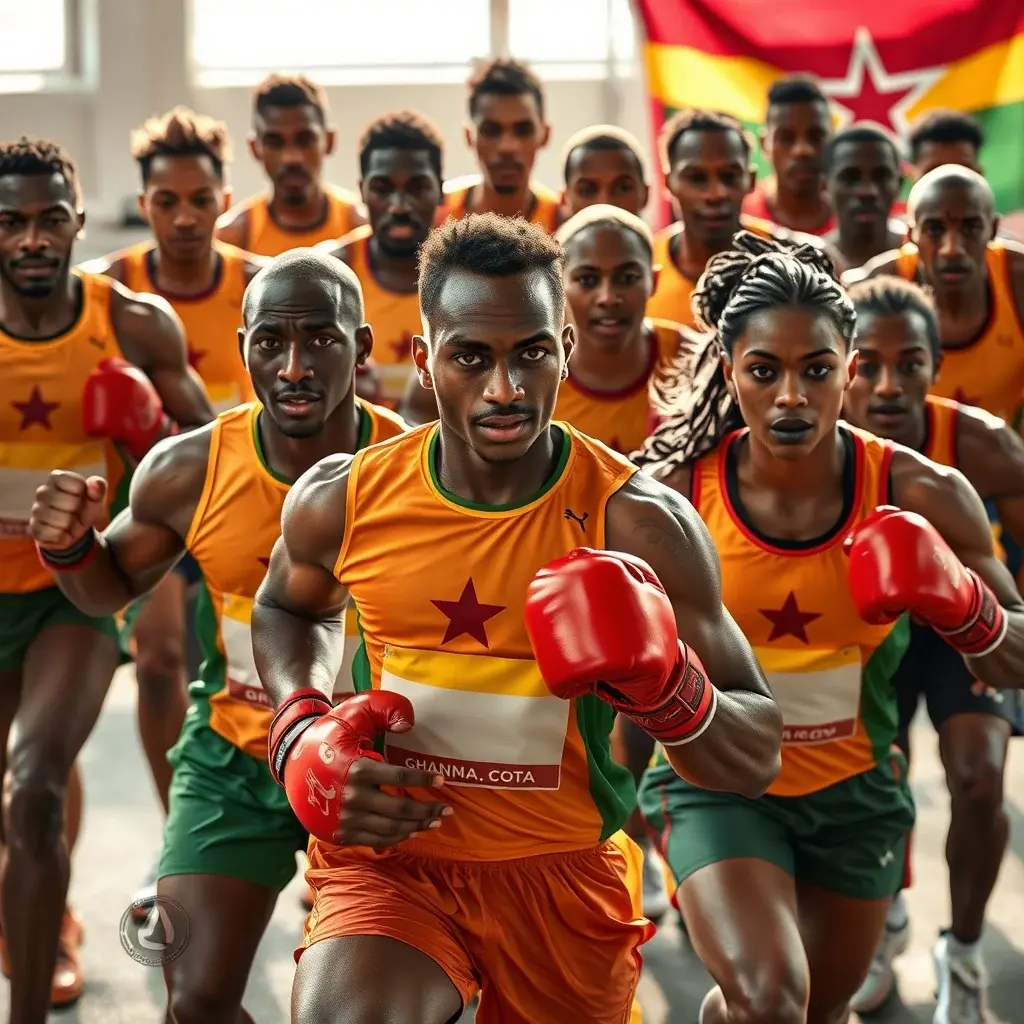
The Ghana Olympic Committee (GOC) will send a reduced delegation of 40 athletes and accompanying officials to the Commonwealth Games 2026 in Glasgow, a significant decrease from its previous participation, according to GOC President Richard Akpokavie.
Reduced Delegation Size
Speaking at the GOC’s Annual General Meeting on Saturday, Akpokavie confirmed the plan to send a team comprising 40 athletes, coaches, medical officers, and safeguarding officers, led by a Chef de Mission.
This number marks a substantial drop from the 100-strong contingent, consisting of 60 men and 40 women, that represented Ghana at the Birmingham 2022 Commonwealth Games.
Impact of Commonwealth Games Federation Decisions
The decision to reduce the delegation size is partly influenced by a resolution from the Commonwealth Games Federation (CGF) to cut its sporting program. In October 2024, the CGF decided to reduce the number of sports from 19 to 10.
This cost-saving measure followed the withdrawal of the Australian state of Victoria as the host due to escalating costs. Consequently, disciplines such as cricket, field hockey, rugby sevens, squash, and wrestling have been removed from the program.
Commonwealth Games Context
The Commonwealth Games, a major multi-sport event involving athletes from Commonwealth nations and territories, is scheduled to take place in Glasgow from July 23 to August 2, 2026.
The reduction in the number of sports directly impacts the athletes Ghana can field, as fewer disciplines mean fewer qualification opportunities and a smaller overall team size is feasible.
Ghana’s Previous Performance and Future Outlook
Ghana has historically participated in various sports at the Commonwealth Games, showcasing its athletic talent across different disciplines.
The scaled-down contingent for 2026 suggests a strategic refocusing for the GOC, potentially concentrating resources on sports where Ghanaian athletes have a stronger chance of success or where the reduced program still offers competitive avenues.
Broader Implications for Commonwealth Sports
The CGF’s decision to curtail the sporting program highlights the financial pressures facing host cities and the broader Commonwealth Games movement.
This move could influence future bids for hosting rights and potentially lead to more streamlined, cost-effective events in the years to come.
For athletes and National Olympic Committees like Ghana’s, the reduced program necessitates adaptation and strategic planning to maximize participation and performance within the new framework.
What to Watch Next
As the 2026 Commonwealth Games approach, attention will be on which specific sports remain on the CGF’s shortened list and how Ghana’s 40-strong delegation prepares to compete. The GOC’s strategic choices in athlete selection and resource allocation will be crucial in determining their success on the Glasgow stage, offering a preview of potential shifts in participation strategies for smaller nations within the Commonwealth sports ecosystem.



Leave a Reply