
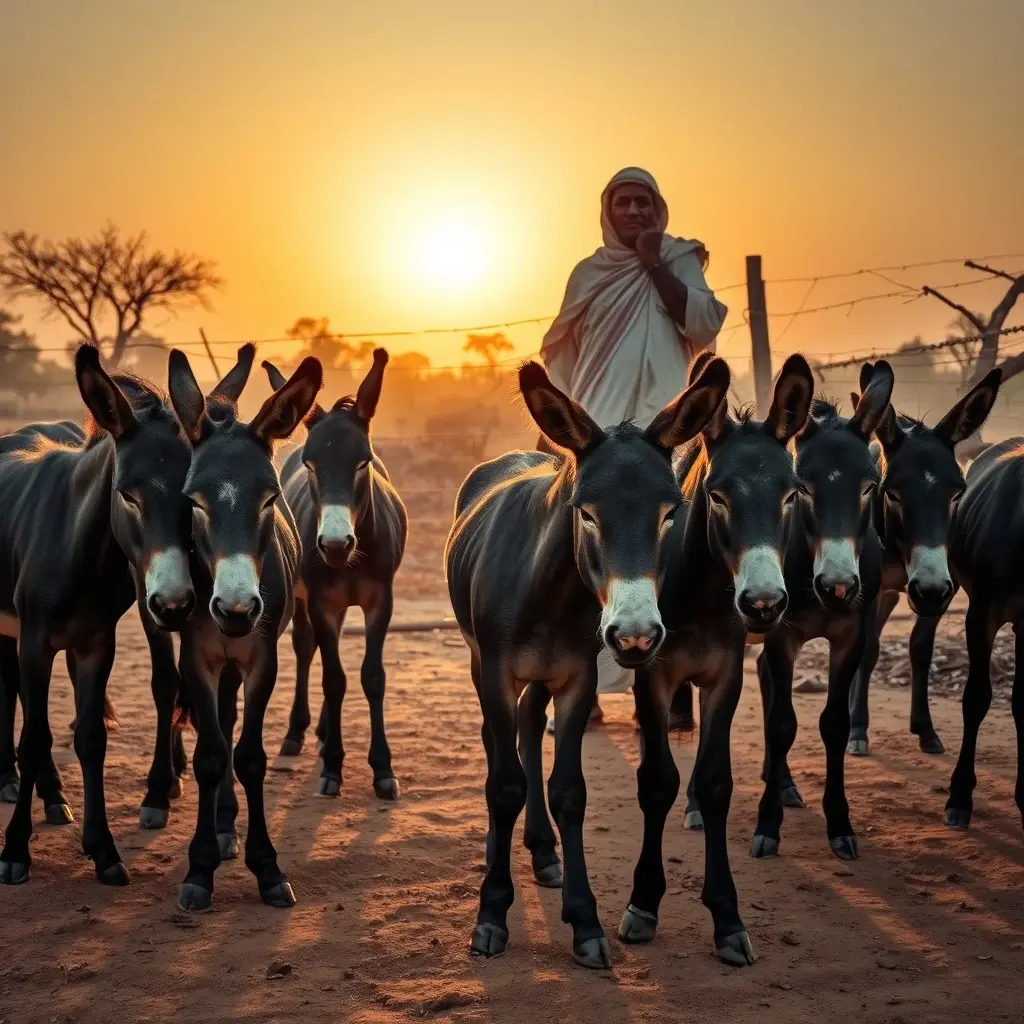
Animal welfare advocates and agricultural researchers in Ghana are sounding the alarm over the rapidly declining donkey population, urging immediate government action to curb the illegal trade of donkey hides. The Fight Against Donkey Extinction (FADE) project, led by Roger Kanton, warns that Ghana’s donkeys could soon vanish if stronger enforcement measures are not implemented to halt increasing slaughter, particularly in northern Ghana.
Critical Role of Donkeys in Rural Economies
Donkeys are an indispensable asset to many rural communities across Ghana, especially in the northern regions. They serve as crucial workhorses for farming, providing essential labor for tilling land and transporting crops. Furthermore, donkeys are vital for moving goods and people, acting as a primary mode of transportation in areas with limited infrastructure.
Their role extends to agriculture through manure production, which fertilizes farmlands and supports crop yields. The potential loss of these animals threatens to undermine the economic stability and daily survival of countless families who rely on them for their livelihoods.
Cultural Beliefs Complicate Donkey Welfare
Compounding the crisis are deeply ingrained cultural beliefs regarding donkey care in some communities. Roger Kanton highlighted that in areas like Bolga, certain ethnic groups, including the Frafra and Nankani people, hold the view that sick donkeys cannot be effectively treated. They believe that a donkey’s health is a matter between the animal and its God, discouraging veterinary intervention and leading to neglect.
This perspective poses a significant challenge to welfare efforts, as it can hinder the adoption of necessary treatments and preventative care, leaving the animals vulnerable to disease and suffering.
The International Demand Driving the Trade
The primary driver behind the escalating slaughter of donkeys is the international demand for their hides. These hides are a key ingredient in the production of ejiao, a traditional Chinese medicine believed to have various health benefits, including treating anemia and improving skin health. This global market creates a lucrative incentive for illegal poaching and slaughter.
Animal welfare groups have consistently pointed to this international demand as the root cause of the unsustainable trade, which directly impacts local communities and animal welfare. The economic pressure to meet this demand often overrides concerns for the animals’ well-being.
Calls for Policy Enforcement and Intervention
Advocates like Roger Kanton are demanding that the Ghanaian government step up and enforce existing laws against the illegal donkey hide trade. He emphasized that regional bodies like the Economic Community of West African States (ECOWAS) and the African Union (AU) have already established laws prohibiting this trade.
As a member of these organizations, Ghana is obligated to implement and enforce these regulations. Kanton stressed that the focus should be on enforcing the existing legal framework rather than creating new policies. “The law already exists… So what we’re saying is that since Ghana is a member of these two bodies, it beholds government to implement those laws. That is all,” he stated.
Data and Expert Concerns
While specific up-to-date figures on Ghana’s donkey population are scarce, anecdotal evidence and reports from animal welfare organizations paint a grim picture. FADE has documented numerous instances of donkey slaughter in northern Ghana, indicating a severe decline. Researchers note that the trend mirrors similar crises in other African countries like Kenya and Tanzania, where donkey populations have been decimated by the hide trade.
Dr. Emily Carter, an agricultural economist specializing in livestock in West Africa, commented, “The economic contribution of donkeys to smallholder farmers cannot be overstated. Losing them would create a significant gap in agricultural productivity and rural transportation, disproportionately affecting the most vulnerable populations.”
Implications for Ghana and Beyond
The potential extinction of donkeys in Ghana carries profound implications. Economically, it threatens the livelihoods of thousands of farmers and traders who depend on these animals. Socially, it could disrupt community life and increase the burden on women and children, who often undertake the task of fetching water and firewood, a role donkeys frequently facilitate.
Environmentally, the loss of donkeys could lead to increased reliance on less sustainable methods of farming and transportation, potentially impacting land use and resource management. The situation serves as a stark warning for other nations facing similar pressures from the international wildlife and traditional medicine trade.
What to Watch Next
The coming months will be critical in determining the fate of Ghana’s donkeys. All eyes will be on the government’s response to the renewed calls for enforcement. Observers will be watching for increased patrols in known slaughter hotspots, stricter penalties for traffickers, and potentially, government-led public awareness campaigns about the value of donkeys and the illegality of the trade. International cooperation with consumer countries may also become a key factor in curbing demand. The success of these measures will dictate whether Ghana can pull its donkey population back from the brink of extinction.









Leave a Reply